

How Citizen Science Can Help Address Plastic Pollution
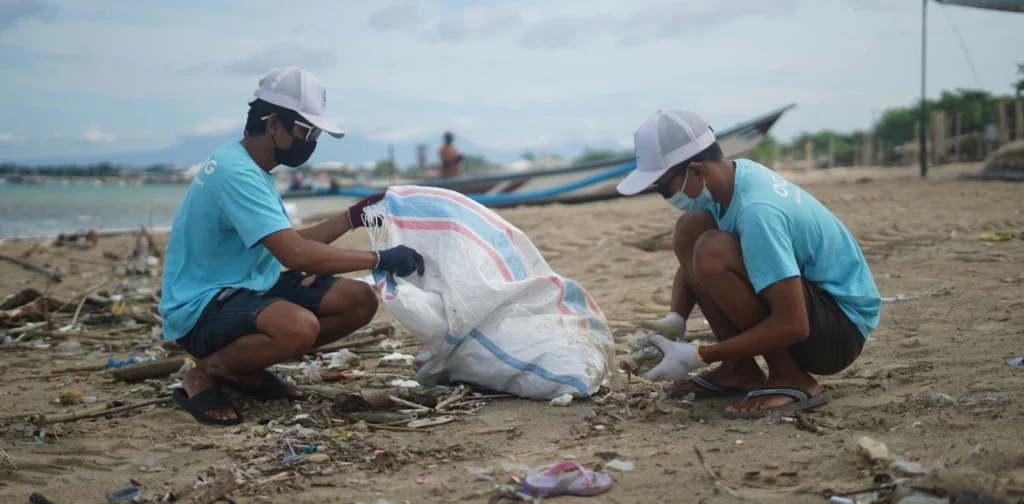
Photo: OCG Saving The Ocean on Unsplash.
Plastic packaging has brought convenience into our lives to the point that we might not think twice about its presence in our households. However, this has resulted in a mounting global plastic pollution problem, affecting human and planetary health. How can citizen science play a part in reducing plastic pollution?
Citizen Science for Plastic Pollution
Plastic is everywhere, and that has become a problem. Annual plastic production has grown significantly from 234 million tonnes (Mt) in 2000 to 460 Mt in 2019. Consequently, plastic waste generation has more than doubled, reaching 353 Mt in 2019. Of that amount, only 9% was recycled, while the rest were doomed to stay as waste because plastic does not decompose. In short, the current plastic lifecycle is far from circular.
Implementing effective plastic waste management requires a systemic approach—one that involves all actors from governments and businesses to civil society organizations and the public at large. In this case, citizen science can help generate valuable data and monitor plastic waste while engaging the public.
Citizen science generally refers to the active involvement of the general public in scientific research alongside professional scientists. Here, the public can contribute their knowledge, effort, and resources through data collection and monitoring. In the context of plastic waste, the activity can include beach cleanups, sample collection, and waste tracking.
Raising Awareness and Influencing Actions
Citizen science can bring many benefits to plastic waste monitoring. A study identifies several strengths of the method, such as cost-effectiveness and increased public participation and awareness. On a more complex level, the benefits extend to the enhanced knowledge and resources for policymaking, facilitation of contextualized decision-making, and the potential to contribute to national SDG reporting.
Furthermore, as plastic has woven itself deeply into our daily lives, citizen science can offer people a way to closely examine their plastic consumption. In a study on a nationwide citizen science initiative to track plastic waste, UK researchers found that participants gained better awareness of their own plastic waste. About 45% of them reported counting more waste than they expected.
This awareness also influenced their actions. The participants of the study also showed improved willingness to utilize reuse and refill systems and to engage politically with the issue. By the end, around 56% of them were aware of the Global Plastic Treaty, and 80% supported policies to ban unnecessary single-use plastic and reduce plastic production.
Part of a Bigger Effort
The public’s direct involvement in supporting scientific research and initiatives is essential to turning the tide on urgent global issues, just like plastic pollution. Still, several limitations exist, including methodological inconsistency, gaps in data quality, and interoperability issues. Establishing standardized protocols can help address these problems and lend credibility to citizen science in policymaking processes.
Alongside public involvement, tackling plastic pollution also requires a broader, more systemic approach from governments and businesses. Creating robust policies, initiating partnerships, and taking bold actions to reduce plastic pollution and improve plastic lifecycle circularity remain crucial.
Editor: Nazalea Kusuma
Co-create positive impact for people and the planet.
Amidst today’s increasingly complex global challenges, equipping yourself, team, and communities with interdisciplinary and cross-sectoral insights on sustainability-related issues and sustainable development is no longer optional — it is a strategic necessity to stay ahead and stay relevant.
 Building Bridges Between Environmental Policy and Mental Health
  We May Surpass 1.5°C Soon, But We Can Do Something About It
  From European Heat to the Himalayan Flood: The Transboundary Nature of Climate Risk
  Noise Pollution Is Making Us Sick, and Climate Change Is Making It Worse
  Beyond Fashion: The Environmental Cost Behind Animal Leather
  Addressing the Hidden Risk of Microplastics from Offshore Infrastructures