

Clean Cooking as a Developmental Multiplier in Africa
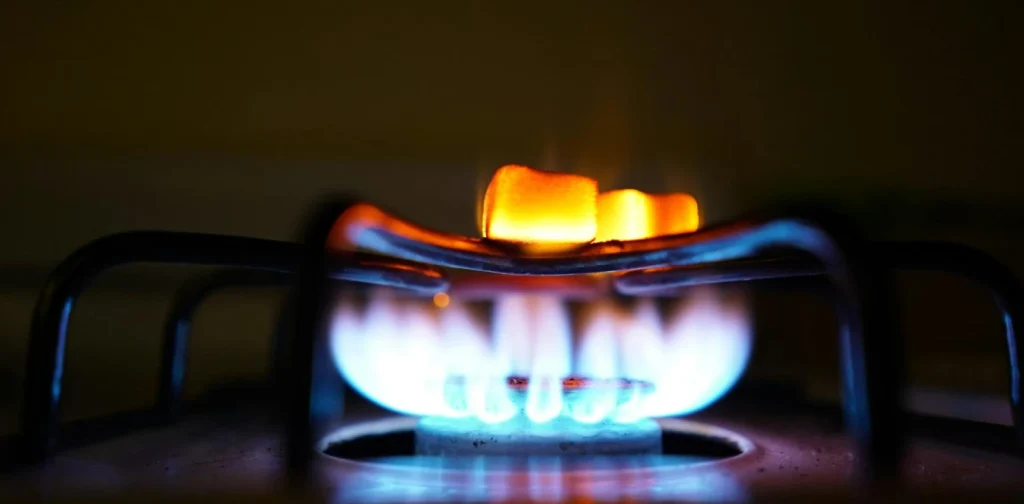
Photo: Dilyar Sultan on Pexels.
Every morning, before the sun rises over many African nations, millions of women leave their homes. Not for work, not for school, but to find wood to cook breakfast. By the time their first meal is ready, hours have passed, smoke has filled their lungs, and the day’s possibilities have already narrowed. In the architecture of Africa’s development future, the kitchen may be one of the most strategic starting points, and clean cooking is among the main pathways.
The Clean Cooking Gap
Clean cooking refers to the use of fuels and technologies that produce minimal harmful emissions during food preparation. These systems include liquefied petroleum gas (LPG), electricity, biogas, and improved biomass stoves. Its opposite, traditional or dirty cooking, relies on open fires and solid fuels such as wood, charcoal, coal, and dung. In sub-Saharan Africa, the latter remains the overwhelming norm.
As of 2023, approximately 960 million people in sub-Saharan Africa lacked access to clean cooking. It is also the only region in the world where that number continues to rise, driven by population growth that exceeds adoption efforts. More than 2 billion people globally lacked clean cooking access that same year, and sub-Saharan Africa accounted for roughly half that gap. These statistics describe an access gap, but what they signal is a development problem.
What It Costs
The most immediate cost of this gap is human life. Household air pollution from solid fuel combustion causes an estimated 2.9 million premature deaths annually. These deaths occur disproportionately among women and children through strokes, ischemic heart diseases, and lower respiratory infections.
Another consequence is time poverty. Women in communities dependent on biomass can spend up to 20 hours per week collecting firewood alone. The time used to collect wood is estimated at 2-4 hours per day for many rural women in sub-Saharan Africa. This time burden compounds as deforestation worsens and women are forced to walk further as forest stocks decline.
Additionally, the environmental cost is significant. An estimated 27-34% of wood fuel harvested globally is nonrenewable. Sub-Saharan Africa loses approximately 3.9 million hectares of forest annually, with fuel wood collection being a significant driver. Moreover, wood fuels contribute 1.0–1.2 GtCO₂e (Carbon Dioxide Equivalent) per year, representing about 1.9–2.3% of global emissions.
Ultimately, these are not isolated problems. They are compounding symptoms of the same structural gap, and they provide essential context for why clean cooking is not merely a health concern, but a multifaceted developmental priority.
Clean Cooking as a Developmental Multiplier
In sustainable development, a developmental multiplier refers to the concept of a single action or investment that produces a larger compound effect on related areas. Clean cooking is precisely that. Approximately 85% of the entire 2030 Agenda is mutually reinforcing with SDG 7 for clean, affordable energy. Clean cooking sits within that framework. It is at the intersection of health, gender, climate, and economic issues.
For one, clean cooking is healthier on the body. More than that, the health benefits of clean cooking carry over to the numbers. A cost-benefit analysis of improved cookstove (ICS) interventions (including transitions to improved wood-burning stoves, LPG, and electric stoves) finds that health benefits generate the largest share of total welfare gains. They even exceed the climate and fuel-cost benefits in most scenarios. Clean cooking’s first multiplier operates through the body, but its return can be measured in the workforce and the economy.
For women, especially, clean cooking acts as a time and economic empowerment multiplier. The transition to clean cooking is not only a domestic shift. It generates employment across an entire supply chain, from stove manufacturing and fuel distribution to retail, maintenance, and community outreach. The IEA’s Africa Energy Outlook confirms that around 4 million additional energy-related jobs are needed across the continent, and many of those jobs offer improved opportunities for women. Furthermore, research clearly establishes that time reallocation, such as from unpaid care work, is one of the primary mechanisms through which women gain economic participation and agency.
Environmentally, the transition is sound. It frees women from the burden of firewood collection while simultaneously reducing demand for solid fuels. Beside not contributing to deforestation, the IEA estimates that achieving universal clean cooking access could save up to 1.5 Gt CO₂eq by 2030, with 900 Mt of that reduction in sub-Saharan Africa alone.
Transition in Progress
With such clear, cascading benefits, the case for clean cooking is convincing. Hence, progress is underway. Over the past five years, Kenya and Nigeria each extended clean cooking access to about 2.7% of their populations annually.
Additionally, direct investment in Africa’s clean cooking infrastructure reached approximately $675 million in 2023. This was a 10% year-on-year increase and was led by growth in liquefied petroleum gas (LPG).
What’s more, the 2024 IEA Summit on Clean Cooking in Africa secured $2.2 billion in public and private sector commitments. This was supported by policy pledges from twelve African governments, and from that time, $470 million has already been dispersed.
Overcoming Hurdles
However, despite the strength of evidence, clean cooking has long been treated as an “orphan” sector in development finance. It lacks the institutional champions and political visibility that large-scale electrification infrastructure has historically enjoyed.
This is the core of the problem. Clean cooking is a distributed, household-level intervention, and that makes it structurally harder to finance than a power grid. Private sector companies still find it difficult to build viable business models in low-income markets without de-risking mechanisms. Currently, nearly two-thirds of sub-Saharan Africans would need to spend more than 10% of their household income to afford clean cooking solutions. This is a barrier that investment alone cannot solve without accompanying subsidy frameworks.
The result is a persistent funding gap. The IEA estimates that annual investment in clean cooking needs to reach $8 billion by 2030, with sub-Saharan Africa alone requiring up to $4 billion of that total. Currently, the funding only reaches up to around 2.5 billion.
Therefore, cross-sectoral and multi-stakeholder collaboration is key. The broader architecture of development finance must catch up with the continent’s needs. To do so, the best support could come from the strategic combination of domestic and international green investment, policy, and participation from the private sector. For something that sits at the care, climate, health, and the environment nexus, the efforts would be worth it.
Editor: Nazalea Kusuma
Co-create positive impact for people and the planet.
Amidst today’s increasingly complex global challenges, equipping yourself, team, and communities with interdisciplinary and cross-sectoral insights on sustainability-related issues and sustainable development is no longer optional — it is a strategic necessity to stay ahead and stay relevant.
 Whimsymaxxing and Beyond: Rethinking the Waste Behind Viral Trends
  Seeking Guidance from Karl Marx to Face the Climate Catastrophe
  Indonesia’s Greenwashing Diplomacy at COP31 and Beyond
  The Textile Industry Is Growing, and So Is Textile Wastewater
  EESG: We Need a New Economic Narrative for Sustainability in the Age of AI, Energy Crisis, and Geopolitical Divide
  The Continued Struggle for Equality and Dignity in Women’s Sportswear