

To be or not to be a family: Understanding the reproductive agency crisis

Photo: nahmapdj on Unsplash.
As living beings who crave connections, family might be the closest bond humans have. However, conversations on building families get more complex today amid multiple crises, posing questions about people’s reproductive agency and rights.
An Agency Crisis
Forming a family is, and has long been, a traditional rite of passage for most people. Once we reach certain ages, we are expected to find a life partner, get married, and have children. This can be a choice for some people as much as it is a survival for others. The former is a privilege only few can afford, especially amid fluctuating population dynamics.
The global population reached 8 billion people in 2022, a spectacular figure many have warned is a sign of overpopulation. Yet there are countries experiencing low fertility rates at the same time. The fertility rate is the average number of children a woman is expected to have in her lifetime. South Korea is among the lowest with a fertility rate of 0.80 in 2026, well below the 2.1 rate needed to maintain a stable population without migration.
Amid all the chaos, a report by UNFPA argues that we have been looking at the wrong problem. It warns us of a reproductive agency crisis, where people do not have the ability to make their own free and informed choices about reproductive matters. Reproductive agency goes beyond the ability to say yes or no without coercion. It also requires a full range of conditions that enable people to exercise true choice.
Systemic Misalignment
The report draws on insights from an online survey, conducted by UNFPA and YouGov, of more than 14,000 adults. Respondents included men and women across 14 countries.
Most people want two children, the survey shows. However, there are significant proportions of people who admit to having to change their reproductive aspirations along with their life circumstances. The change occurs both ways: to make room for more children or to make peace with fewer.
This change is rarely a matter of personal choice. Popular narratives often frame population issues as matters that depend solely on women’s decisions. Still, even with the wider availability of contraceptives and fertility treatments, women are seldom able to decide freely on this matter. Shame, harassment, and other societal stigma ascribed to their roles as childbearers remain as barriers.
Still, both men and women have aspirations for parenthood, and these change over time. The report notes misalignments between systemic factors and individual aspirations that fail to provide the security people need to start a family. In other words, people’s fertility aspirations often go unfulfilled due to multiple barriers, both in preventing and realizing pregnancy.
Economic, Health, and Others
The greatest barrier is economic, with 39% of 10,000 people citing financial limitations as a factor influencing their reproductive decisions. In line with this, respondents also state unemployment and job insecurity (21%) as well as housing concerns (19%) as obstacles to having more children.
There are also health concerns, as reproductive health is first and foremost a health issue. Several health issues were reported by 24% of respondents as barriers to reproductive agency. Issues vary, such as difficulty conceiving, lack of healthcare services, and general poor health conditions. This aspect includes the presence of safe and accessible abortion services for unintended pregnancies, which in some countries heavily depend on legal decisions.
Furthermore, fears about a future marred by environmental crises and conflicts are a deciding factor for 19% of respondents to have fewer children. Additionally, more women (13%) than men (8%) reported disproportionate caregiving responsibilities as a barrier to reaching their desired number of children.
Enabling Reproductive Agency
Understanding the external factors influencing reproductive decisions helps frame the issue as a systemic one rather than solely an individual choice. Exercising reproductive agency means giving people the power to decide. They can freely choose whether or not to have children, and how many, without the demand to raise fertility rate or curb overpopulation. UNFPA underscores that this can boost the long-term health and wellbeing of people and therefore their families and communities.
Thus, systemic interventions are required to create an enabling environment in which people can exercise their reproductive agency. Focusing on multi-pronged supporting policies is key. These are ones that can help expand healthcare services, strengthen economic measures to enable job opportunities and stable incomes, and ensure protection against climate threats. No less important is making sure that information on reproduction can be accessed as widely as possible, to help people make informed decisions about their bodies and demand legal reform when necessary.
Editor: Nazalea Kusuma

Co-create positive impact for people and the planet.
Amidst today’s increasingly complex global challenges, equipping yourself, team, and communities with interdisciplinary and cross-sectoral insights on sustainability-related issues and sustainable development is no longer optional — it is a strategic necessity to stay ahead and stay relevant.
 Whimsymaxxing and Beyond: Rethinking the Waste Behind Viral Trends
 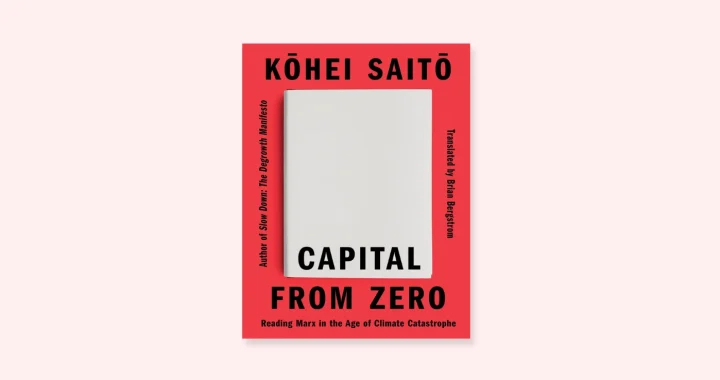 Seeking Guidance from Karl Marx to Face the Climate Catastrophe
  Indonesia’s Greenwashing Diplomacy at COP31 and Beyond
  The Textile Industry Is Growing, and So Is Textile Wastewater
  EESG: We Need a New Economic Narrative for Sustainability in the Age of AI, Energy Crisis, and Geopolitical Divide
  The Continued Struggle for Equality and Dignity in Women’s Sportswear