

Looking into Aging Alone, Shrinking Households, and the Struggling Care Systems
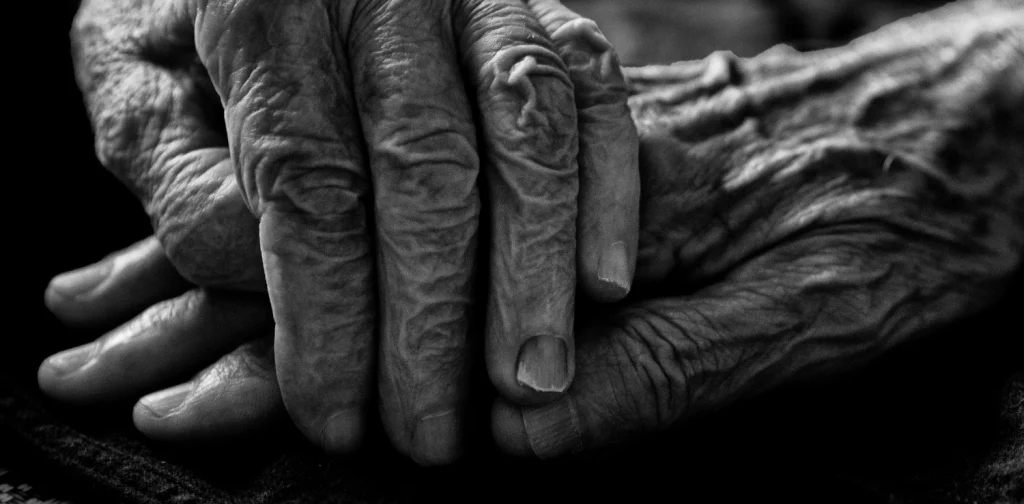
Photo: André Ulysses De Salis on Pexels.
A quiet crisis is taking shape. People are living longer than ever before, but increasingly, most of them are aging alone. As urbanization draws younger generations away from their hometowns and birth rates continue to fall, the multigenerational households that once anchored elder care across cultures are quietly disappearing. Left in its place is an aging population that formal care systems were never fully designed to support.
Who Is Aging Alone, and Where?
The scale of the shift is hard to overstate. By 2030, roughly one in six people on the planet will be over 60. By 2050, the global population of older adults will have doubled to over two billion, 80% of which will be living in low and middle-income countries.
At the same time, household sizes are shrinking. In China alone, about 150 million older adults are now considered “empty nesters”. These are adults whose children have left home, often for cities far away. This reality is expected to represent 90% of elderly households by 2030.
Familial Caregiving
In much of Asia and Africa, the expectation that families, particularly one’s children, will care for aging parents is deeply embedded in cultural identity. This is known as filial piety in Confucian tradition. Meanwhile, in many African communities, it takes different forms but carries a similar weight. For generations, these values held.
But research comparing Indonesia, Malaysia, and Singapore now shows that what was once described as a sacred moral obligation is dwindling. It is increasingly running into the hard realities of urban migration, economic pressure, and shrinking family sizes. In rural China and South Korea, as young adults migrate to cities for work, elderly parents remaining in rural areas meet a different reality. They face not just physical isolation, but profound social and emotional disconnection that formal systems are rarely equipped to address.
The researchers conclude that elder neglect, when it happens, is not primarily a moral failure. The issue is a structural one, shaped by the growing distance between what families want to do and what they are actually able to do.
The Gendered Weight of Care
When families do still provide care, it almost never falls equally. According to the Commonwealth Fund’s international health policy survey, up to 81% of caregivers for older people globally are female. In the United States alone, more than 60% of the country’s 53 million family caregivers are women.
Research on caregiving in low and middle-income countries confirms that the health burden of informal caregiving lands most heavily on women. Women caregivers report higher rates of anxiety, depression, and long-term economic insecurity. For older women themselves, the picture is no more equitable; they are more likely to outlive their partner, live alone in widowhood, and face greater barriers to healthcare, income, and social support than their male peers.
The consequences stretch beyond the individual. The ILO estimates that unpaid care responsibilities prevent 708 million women from participating in the formal labor market. If counted as economic output, unpaid care work could exceed 40% of GDP in some countries, yet it remains largely invisible in national accounting, policymaking, and public conversation.
Care Systems for Older People
Those who are aging alone are not just a demographic footnote. The WHO has called for an urgent overhaul of care systems worldwide, noting that around two in three people who reach old age will eventually need sustained support with the basic activities of daily life. Only one in four countries, however, currently has the financial and political resources to provide integrated care that meets this need.
In more wealthy countries, nursing homes, assisted living, and publicly funded home care exist, yet even these are straining. A 2024 OECD report found that out-of-pocket care costs represent, on average, 70% of an older person’s median income. Furthermore, public systems still leave nearly half of older adults with care needs at risk of poverty.
In much of Africa, the picture is more severe. A systematic review of long-term care in developing countries found that institutional care across the continent remains scarce and heavily under-resourced. In estimates, some countries have as few as 0.4 formal care workers per 100 older adults, against a minimum benchmark of 4.2.
Expensive where it exists, absent where it doesn’t—formal elder care is one of the most unequally distributed resources in the world.
The Aging Population as a Common Responsibility
It would be a mistake to frame the issue as families simply not doing enough. Research is clear that shrinking family networks, combined with care systems still designed around assumptions of family availability, leave older adults structurally exposed. Aging alone is becoming an issue regardless of one’s culture, income, or geography.
Some countries are beginning to respond. Innovative community models exist, such as dementia villages in the Netherlands and intergenerational housing schemes in parts of Asia. These suggest that care does not have to mean either burdening families or institutionalizing older people. But these remain exceptions. For a thorough transformation, governments must be ready to treat elder care as a public good rather than a private responsibility.
Editor: Nazalea Kusuma

Co-create positive impact for people and the planet.
Amidst today’s increasingly complex global challenges, equipping yourself, team, and communities with interdisciplinary and cross-sectoral insights on sustainability-related issues and sustainable development is no longer optional — it is a strategic necessity to stay ahead and stay relevant.
 Risk of Transboundary Air Pollution Increases as Extreme Heat Continues
  Whimsymaxxing and Beyond: Rethinking the Waste Behind Viral Trends
  Seeking Guidance from Karl Marx to Face the Climate Catastrophe
  Indonesia’s Greenwashing Diplomacy at COP31 and Beyond
  The Textile Industry Is Growing, and So Is Textile Wastewater
  EESG: We Need a New Economic Narrative for Sustainability in the Age of AI, Energy Crisis, and Geopolitical Divide