

Understanding the Regional Impacts of Climate Change on Malaria in Africa
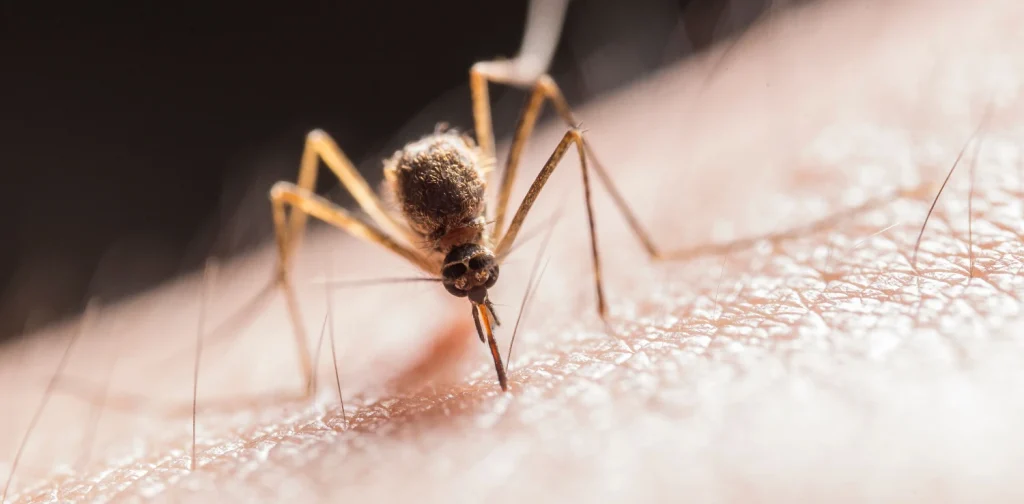
Photo: Jimmy Chan on Pexels.
In 1880, French physician Alphonse Laveran discovered the parasite that causes malaria in a patient’s blood. Eighteen years later, six Italian malariologists demonstrated that the disease was transmitted by Anopheles mosquitoes. More than a century later, malaria remains a major global health threat, particularly in tropical regions. Today, climate change might be making it worse. While rising temperatures occur across the globe, the impacts on malaria are more prevalent in regions already struggling with the disease. In this light, examining the impacts of climate change on malaria in Africa is crucial.
Malaria and the Climate
Temperature plays a key role in malaria transmission because it affects both the life cycle of ectothermic Anopheles mosquitoes and the thermal sensitivity of Plasmodium parasites. Laboratory studies show that Plasmodium falciparum transmission by Anopheles gambiae is the highest at around 25°C, while declines sharply at temperatures below 16°C and above 34°C.
Hydrological conditions also shape malaria transmissions by influencing mosquito breeding habitats. Droughts are typically followed by a decline in malaria prevalence within one to two months as larvae and eggs fail to survive. In contrast, flood relates to higher malaria prevalence. Typically, floodwaters create new breeding sites that support mosquito population growth within two to three months.
Over the past century, malaria prevalence has shown a close relationship with the climate. Scientists estimate that human-driven climate change has been contributing to a small increase in the average prevalence of malaria in sub-Saharan Africa since 1901.
The Varying Impacts of Climate Change on Malaria in Africa
Climate change may not be a major driver of malaria in Africa, either historically or in future projections. Its effects, however, are there. They are obvious particularly across sub-Saharan Africa, though not evenly distributed. Research predicts that higher elevation and higher latitude regions will experience an increased malaria burden over the coming decades. Meanwhile, rising temperatures in lower latitude and lower elevation regions should support efforts to eliminate Plasmodium falciparum.
Overall, experts project that human-driven climate change would add an average of one malaria case per 1,000 people across Africa. Southern Africa is expected to account for about 91% of the additional cases, while Eastern Africa accounts for about 84%. Then, malaria prevalence in both regions is projected to remain elevated through the end of the century. Even under a low emissions scenario that limits global warming to less than 2°C, projections are still worrying. Supposedly, both regions would experience an additional one to three cases per 1,000 people by 2100.
In contrast, the study predicts a net decline in malaria prevalence under future climate change in West and Central Africa. Under a high emissions scenario, prevalence could decrease by up to 45 cases per 1,000 people in West Africa and 16 cases per 1,000 people in Central Africa. This decline is attributed to air temperature that increasingly exceeds the range most favorable for malaria transmissions.
In addition, climate change also raises concern about the resurgence of malaria by altering the distribution of mosquito vectors. The continued spread of Anopheles stephensi in Africa could amplify this risk because the species is more heat tolerant than Anopheles gambiae. As global temperatures rise, its geographic range and transmission season are expected to expand.
Developments in Malaria Control Interventions
Since the 1990s, experts have been recommending the use of pyrethroid-treated bed nets to protect against malaria-transmitting mosquitoes. However, their effectiveness has declined as mosquito resistance to pyrethroids has increased. In response, the New Nets Project developed two next generation bed nets. They are Interceptor G2, which combines pyrethroids with chlorfenapyr, and Royal Guard, which combines pyrethroids with pyriproxyfen.
Global malaria control has also advanced through coordinated local and international initiatives. The Global Malaria Eradication Program from 1955 to 1969, followed by Roll Back Malaria and the Global technical strategy for malaria 2016-2030, contributed to substantial reductions in malaria prevalence. In 2014, 20 African countries introduced the RTS,S malaria vaccine to strengthen malaria prevention. More recently, the Africa Epidemic Fund, established in 2025, aims to strengthen the capacity of African countries to respond to public health emergencies.
Despite advances in treatment, vaccine development, and prevention, the global burden of malaria remains high. In 2024, the WHO estimated 282 million malaria cases and 610,000 deaths across 80 countries. The WHO African Region accounted for 95% of both cases and deaths, with children under five representing about 75% of malaria deaths in the region. This continuing burden underscores the need for stronger control strategies, particularly as climate change is expected to expand malaria transmission in vulnerable regions. These changes may potentially undermine malaria elimination efforts, especially in regions with weak health systems and limited resources.
Strengthening Malaria Control Efforts amid Climate Change
Nevertheless, controlling the spread of malaria in Africa and beyond is not impossible. The design of malaria control programs, however, need to respond to climate change at both the local and global levels.
One approach is to use weather-based early warning systems to anticipate short-term changes in malaria transmission. Strengthening disease surveillance, health services, vector control, and economic development can also help offset the impacts of climate change on malaria in most regions. Together, these measures can keep the goal of eliminating malaria within the next generation achievable despite a changing climate.
Climate change mitigation is another essential component of preventing malaria resurgence. Limiting global warming below 2°C should prevent an average of five additional malaria cases per 1,000 people in highland areas of Eastern and Southern Africa by 2100.
In regions where climate change is expected to increase malaria transmission, combining conventional interventions with new innovations could produce greater and more sustainable impacts. Achieving this will require increased investment, strong and trusted leadership, and the active involvement of health workers in climate related decision making. Ultimately, the health sector must strengthen its capacity to respond to climate change and other crises to protect public health and improve long-term resilience.
Editor: Nazalea Kusuma

Co-create positive impact for people and the planet.
Amidst today’s increasingly complex global challenges, equipping yourself, team, and communities with interdisciplinary and cross-sectoral insights on sustainability-related issues and sustainable development is no longer optional — it is a strategic necessity to stay ahead and stay relevant.
 Behavior Change for the Planet: Is composting worth it?
  Building Bridges Between Environmental Policy and Mental Health
  We May Surpass 1.5°C Soon, But We Can Do Something About It
  From European Heat to the Himalayan Flood: The Transboundary Nature of Climate Risk
  Noise Pollution Is Making Us Sick, and Climate Change Is Making It Worse
  Beyond Fashion: The Environmental Cost Behind Animal Leather