

Online Scrap Yard: What a Digital Marketplace Changes for Asia’s Recycling Trade
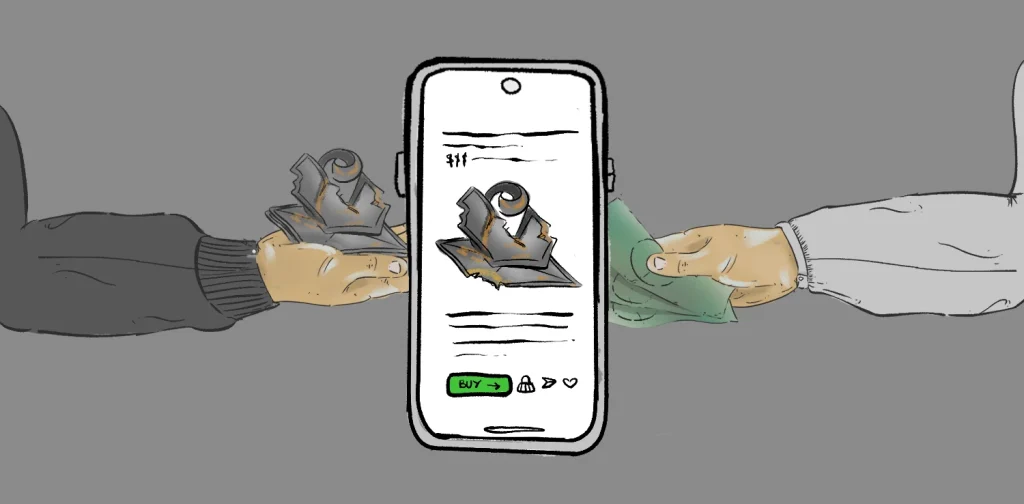
Illustration by Irhan Prabasukma.
Let’s follow an old washing machine on its way to becoming new steel. A collector weighs it. A shop buys it, an aggregator sells it on, and eventually a mill melts it down. At almost every step, the price is agreed verbally, the payment is usually cash, and the paperwork, if there is any, is thin. This is how most of Asia’s scrap gets back into the lifecycle for recycling. Can a digital scrap marketplace improve this sporadic, informal system for better waste management?
Why It Matters Now
The world generated 62 million tonnes of e-waste in 2022, according to the UN’s Global E-waste Monitor. But only 22.3% was documented as properly recycled. By 2030, experts expect the total to hit 82 million tonnes, while the documented rate slips to around 20%.
Meanwhile, demand for clean scrap is rising. Steelmakers are moving to electric arc furnaces, which produced 30.3% of the world’s crude steel in 2025. They run mostly on scrap, hence the global steep scrap use reaching around 630 million tonnes. . Every tonne used saves roughly 1.5 tonnes of CO2 and 1.4 tonnes of iron ore, and recycled aluminum takes 95% less energy than new metal.
The undocumented share does not vanish; it moves through informal hands. Toxics Link estimates that around 70% of India’s e-waste is handled informally, and Vietnam has an estimated three million informal waste collectors.
Troubleshooting the Informal Scrap System
That system has been the backbone of most of Asia’s recycling. Until today, informal waste workers (IWW) have been significantly supporting waste management across the continent. Yet, they remain largely unappreciated and unprotected, and so do their process.
There is a distinct lack of standardization, transparency, and protection in the informality of how they collect, sort, sell, and buy scraps. Sellers rarely know what their material is worth. Buyers cannot always check who and what they are dealing with. And manufacturers cannot prove what has been recycled, just as Extended Producer Responsibility rules start to demand it.
I saw this up close on the very first deal on ScrapTrade, which I am a part of. A seller in India had 22 tonnes of stripped, cut copper wire and 26 tonnes of used beverage can (UBC) scrap. They wanted to export. They were ready to let it all go at the local rate, well below what it would fetch abroad, because nobody had shown them otherwise.
Then, our account manager walked them through what the material was worth, how similar scrap trades internationally, and where the buyers were. The seller finished with a margin 24% higher than the local deal would have given. The buyer had the material inspected and verified before paying, with delivery arriving on time and payment cleared without delay.
What Changes When the Scrap Trade Goes Online
It was our first deal, and we have changed a lot since. But it showed me how differently the two sides think. The seller wanted to clear stock at a margin they could live with; the buyer was weighing that day’s opportunity. Meanwhile, neither could see the whole market. Getting both perspectives and one price onto the same screen is most of what a digital scrap marketplace is for.
None of this means the scrap yard is going away. Someone still has to sort, weigh, and process the material. What moves online is the part that has always been always invisible: the price, who you are dealing with, proof of what is for sale, and the payment. It does not completely formalize the sector, but it supports the actors and the process to their benefits. Furthermore, it should help improve transparency across the entire value chain, contributing to the data necessary to mitigate pollution.
A digital scrap marketplace has to fix four things a phone call cannot. First, price. A seller sees reference prices and competing bids instead of taking the first number offered. Next is identity, because every account belongs to a verified person or business. Then, proof, such as a geotagged video showing exactly what is for sale before anyone commits. And, finally, payment. Holding money in escrow until the buyer confirms the material matches the listing protects both sides and heads off most disputes.
It is already happening. In Chennai, Kabadiwalla Connect piloted a device that registers waste pickers as suppliers and QR-codes each batch. Bhopal’s The Kabadiwala says it has brought more than 5,000 kabadiwalas in 15 cities onto an app with electronic weighing. In Indonesia, Octopus reported in 2022 that more than 12,000 collectors had opened bank accounts after joining. In Ho Chi Minh City, VECA alerts nearby buyers when a seller places an order and shows prices on screen.
Limiting What Could Go Wrong
Going digital does not automatically make the trade fairer. Many collectors and small shop owners are older or don’t own a smartphone. UN Women also points to phone access and digital skills as barriers for women collectors in Vietnam. A platform that takes a big cut or quietly sets prices can squeeze sellers as hard as the old chain did. One that bypasses the neighbourhood scrap shop can take its business away. And who owns the trading data?
I’d also add a risk from my own side of the industry, the platforms. It is tempting to design for buyers first, because that is where the revenue is. But then, sellers get an app that looks modern but does not change what they are paid. If you are funding a platform, ask what sellers earn, not how many signed up.
Whether you are building a platform or deciding which one to support, it is worth holding it to five tests. First, everyone should be able to see the price and what grade it is for. Second, every trader must be verified and visible throughout the entire process. The third one is ensuring the proper documentation of the material before the deal so every kilo is traceable. Fourth, everyone must be sure the money is held safely until delivery is confirmed. And finally, the platform should work for small players—this means ensuring access with local languages, basic phones, and perhaps, partnerships with yards, cooperatives, and local governments.
Building on the Trust
Scrap has always run on trust. Software will not replace that, and it should not even try. What it can do is let a seller check a price before shaking on it. Whether a digital scrap marketplace helps Asia’s recyclers depends on whether the very people who collect, sort, and sell the material have a say in how it is built.
So if you want to build a platform, sit down with collectors before you write a line of code. If you want to back one, test it the way a seller would. Ask what grade the price is for, what weight they will be paid on, and when and how they will be paid. A fair platform will answer all three without hesitating. If it cannot, keep looking.
Editor: Nazalea Kusuma
Co-create positive impact for people and the planet.
Amidst today’s increasingly complex global challenges, equipping yourself, team, and communities with interdisciplinary and cross-sectoral insights on sustainability-related issues and sustainable development is no longer optional — it is a strategic necessity to stay ahead and stay relevant.
 Why Does Child Labor Persist?
 F for Fairness: A year on, TFFF must reach the people who protect forests
 Risk of Transboundary Air Pollution Increases as Extreme Heat Continues
 Whimsymaxxing and Beyond: Rethinking the Waste Behind Viral Trends
 Seeking Guidance from Karl Marx to Face the Climate Catastrophe
 Indonesia’s Greenwashing Diplomacy at COP31 and Beyond