

Challenging Access to Clean Water in Mining Regions
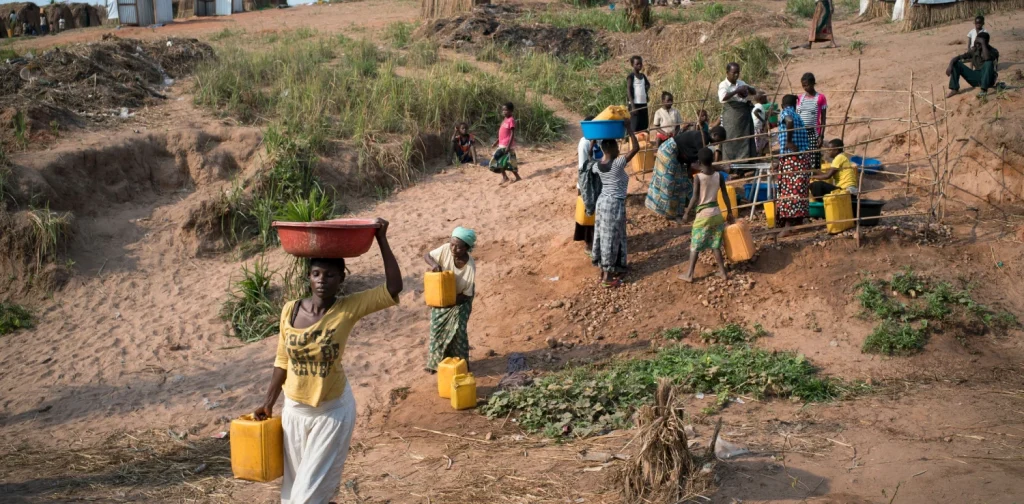
Photo: Alain Nkingi on Pexels.
The mining industry is infamous for its negative impacts on the environment. Yet, the demand keeps increasing each year. Even the supposedly more environmentally friendly renewable energy sector relies on raw materials extracted from mines. Unfortunately, mineral wealth often does not translate to local prosperity, as communities in resource-rich regions struggle for access to clean water.
Mining and Water
Water is integral to mining processes. But mining often harms water, whether as a resource or a dumping ground for waste. Surface water sources around mines, such as rivers and lakes, are likely to dry up due to mining’s high water needs. For instance, mines in the deserts of northeastern Nevada, United States, consumed over 580 billion gallons of water between 1986 and 2001.
Beyond high water consumption, the mining industry produces substantial waste. Water plays a critical role in processing ores to extract valuable metals, and this extraction process produces waste that requires careful management. Acid mine drainage (AMD) is also a major environmental concern. When mining waste containing sulfide minerals reacts with water and oxygen, sulfuric acid is produced.
Inadequate mine waste management often results in the contamination of water resources. AMD, for example, poses a serious threat if it leaks into the environment or is mobilised by acid rain. Then, water quality deteriorates when mining-related metals contaminate aquatic systems. This can lead to the destruction of fish populations and adverse impacts on human health. From 2008 to 2017, poor mining waste-disposal in Canada was estimated to have caused over 340 deaths, polluted hundreds of kilometers of waterways, and threatened the livelihoods of local communities.
Mining and Clean Water Issues Around the World
The Tsolum River on Vancouver Island, Canada, previously supported abundant populations of coho, pink, chum, and cutthroat salmon. Then, in 1964, the Mount Washington Copper Company initiated a mining project in the area. By 1966, the company had abandoned the site, but significant ecosystem destruction remained. The coho salmon population declined from 15,000 to only 14 by 1987, illustrating the severe impact of AMD on aquatic life.
The impacts are also often transboundary. In early 2025, Thai government authorities tested for pollution in the Kok and Sai rivers. They found unsafe levels of arsenic and other heavy metals, likely caused by the unregulated gold mining in Myanmar’s southern Shan state.
Furthermore, mining activities may deepen existing inequities. Sometimes, clean water scarcity in an area precedes mining operations. But more often than not, they exacerbate the condition. Take South Africa, for example. The country holds about 70% of the world’s platinum reserves, along with other minerals, many of which are located in arid regions such as the Northern Cape. Beyond climate and population pressures, pollution-induced water scarcity from urbanisation, deforestation, and mining has further reduced available clean water resources.
The inequity is also evident in the Democratic Republic of the Congo, where mineral wealth has not translated into broad-based prosperity that includes access to clean water. The country holds the world’s largest cobalt reserves, accounting for approximately 50–70% of global supply, among others. Yet, nearly 64% of the population lives in extreme poverty, and 54% lack access to clean water.
Pushback from Local Communities
Communities are increasingly voicing concerns regarding the impacts of mining activities in their regions. Unfortunately, the outcomes are not always favorable.
In Bembou Silaty, Guinea, residents formed an association to oppose mining activities. The village women established a group called “Allawalli”, meaning “God, help us” in the Fula language. This initiative responded to contamination of the river they used for bathing, cooking, and agriculture, caused by bauxite mining operations. Although 50 million Guinean francs (approximately $5,700) were provided as compensation, the residents’ severe economic hardship, intensified by the destruction of their farmland, rendered the funds insufficient.
The Wangan and Jagalingou (W&J) Aboriginal community in Central Queensland, Australia, has faced a similar situation. For more than four years, this Indigenous community has sought to protect the sacred Doongmabulla springs from contamination caused by coal mining waste generated by the company Adani. Although extensive campaigning and traditional ceremonies have been conducted, the legal dispute continues.
Meanwhile, Indigenous Nama people in the Cape Town region, South Africa, proved that issues can remain unresolved even after legal success. Their ancestral land, Namaqualand, is rich in diamonds. It was converted into a mining zone, resulting in extensive open pits. The Nama people fought a protracted legal battle over their land and mining operations and ultimately won. However, they have yet to experience tangible benefits from this outcome.
Better Accountability and Responsibility
Environmental damage, social disruptions, and even human rights violations related to mining are happening across the globe. There needs to be a bigger conversation about responsible mining practices, especially when these critical minerals are essential for global energy transition. Therefore, fundamentally, it is vital to strengthen the legal frameworks and their implementation to ensure that these mines operate within global standards for environmental impacts and human rights.
Editor: Nazalea Kusuma
Co-create positive impact for people and the planet.
Amidst today’s increasingly complex global challenges, equipping yourself, team, and communities with interdisciplinary and cross-sectoral insights on sustainability-related issues and sustainable development is no longer optional — it is a strategic necessity to stay ahead and stay relevant.
 Online Scrap Yard: What a Digital Marketplace Changes for Asia’s Recycling Trade
 Why Does Child Labor Persist?
 F for Fairness: A year on, TFFF must reach the people who protect forests
 Risk of Transboundary Air Pollution Increases as Extreme Heat Continues
 Whimsymaxxing and Beyond: Rethinking the Waste Behind Viral Trends
 Seeking Guidance from Karl Marx to Face the Climate Catastrophe