

Nurturing India’s Climate Consciousness: How villages and cities can teach each other
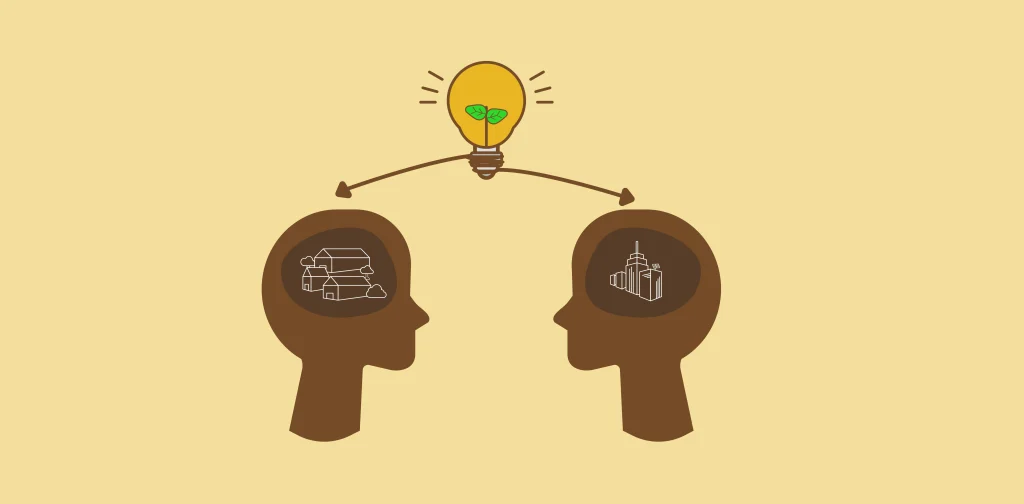
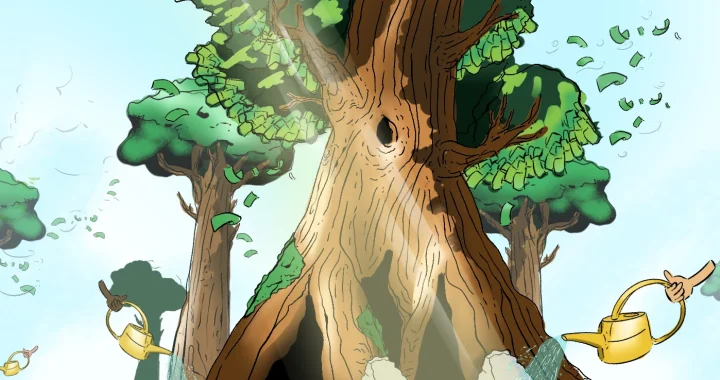
Illustration by Irhan Prabasukma.
The Prithvi Sukta, the Earth hymn of the Atharva Veda, is a prayer spoken by people who knew that they would wound the ground they lived on. “I am the son of Earth, Earth is my Mother,” the reciter says. Later in the same hymn, they say, “Let what I dig from thee, O Earth, rapidly spring and grow again… and let me not pierce through thy vitals or thy heart.”
It is a simple yet very hard statement to understand. It assumes that human beings take from the Earth, that the taking leaves a mark, and that the mark creates an obligation to give back. Climate consciousness begins here, long before the first emission inventory came into the picture.
The term itself is new, and it expands the climate branch into more subdomains. It is crucial to understand that climate consciousness is not the same as climate awareness. Awareness is knowing the effects of climate change—that the planet is warming, or that coastal cities are sinking. Consciousness is living while knowing, and taking an active part in decisions like what a household buys, what a city builds, what a school teaches, and what the budget pays for. In simpler terms, it is awareness that has become a habit. By that test, a country can be aware and still not conscious. Its citizens worry, while its institutions carry on.
The Growing Climate Consciousness in India
On the first measure, India is not behind. In the UNDP People’s Climate Vote, 77% of Indians want stronger government action, close to the global figure of 80%. That figure is behind Brazil at 85%, but already ahead of the United States at 66%.
The findings echoed in the Yale-CVoter’s Winter 2025–26 survey in India. It found that 88% of respondents were worried about global warming. No less than 84% even said they had felt its effects. But those responses came after a brief explanation on the term “global warming”. About 36% of respondents said they had never heard the term, and only 12% said they knew a lot about it. Indians are already living the consequences, even where the term has not fully arrived. This is, in essence, a gap in language.
Bridging the Urban–Rural Gap
That gap is one that runs along the rural–urban line.
Rural India tends to meet climate change at work. A farmer reads the late arrival of the monsoon by the timing of the first shower. A mali knows which sapling will hold in alkaline soil and which will not. In Hardoi Nagar Van (urban forest), where the soil is hard and alkaline, staff arrange water tankers and sugarcane moist bagasse throughout the summer. This knowledge is specific, practical, and mostly unrecorded. It is passed on as instructions and stories, not as what we call “data”.
At the same time, Urban India meets the same problems through different systems. They know of forecasts, heat warnings, air quality readings, and phone alerts. These can be scaled up quickly, but they can also be thin at the base. An urban resident may track the temperature on a phone, but may not feel it at that level, or appreciate how much modern living has made life easier.
The Nagar Van (urban forest) sits between the two. At Naulakhi Nagar Van in Ujjain, Madhya Pradesh, visitors arrive looking for the tree tied to their birth star. Meanwhile, daily-wage workers from nearby villages keep the forest alive every day. The knowledge is rural and traditional; the demand is urban.
Urban–Rural Knowledge Exchange
The exchange should, and must, always run both ways. Urban India can learn patience and attention from rural India. They can learn how to read a season, how to repair what already exists, and how to know what a landscape can bear. Rural India needs from the city what it rarely gets: forecasts it can understand and trust, insurance that pays, warnings in its own language, and a claim on the budget. So, cities can learn from villages how to use what is at hand, and in turn, villages can learn to use local materials with modern machinery and digital data.
India has argued many times that a country lifting millions out of poverty cannot carry the same burden as the countries that caused the crisis. That argument is stronger when India does its part at home.
The Gita says, “Whatever standards a great person sets; all the world pursues.”
The same is true of nations. India does not need to birth climate consciousness among its people. It just needs to understand all possible languages of climate among rural communities and urban dwellers alike. It needs, furthermore, to get into the habit of speaking and thinking in them so what is already in classrooms, payrolls, budgets, and the traffic between villages and cities can be put to practice.
Editor: Nazalea Kusuma
Co-create positive impact for people and the planet.
Amidst today’s increasingly complex global challenges, equipping yourself, team, and communities with interdisciplinary and cross-sectoral insights on sustainability-related issues and sustainable development is no longer optional — it is a strategic necessity to stay ahead and stay relevant.

Arkraj Biswas
Arkraj Biswas is a Research Associate with the National CAMPA authority at India's Ministry of Environment, Forest and Climate Change. He holds an M.Sc in Environment & Sustainable Development from Banaras Hindu University, and writes on urban forestry, climate governance, and rural–urban knowledge exchange.
 Looking into Moon Mining and Its Potential Issues
 Learning from Indigenous Philosophies: Reconnecting People and Nature for Wellbeing
 Challenging Access to Clean Water in Mining Regions
 Online Scrap Yard: What a Digital Marketplace Changes for Asia’s Recycling Trade
 Why Does Child Labor Persist?
 F for Fairness: A year on, TFFF must reach the people who protect forests