

How Extreme Heat Affects Human Livability
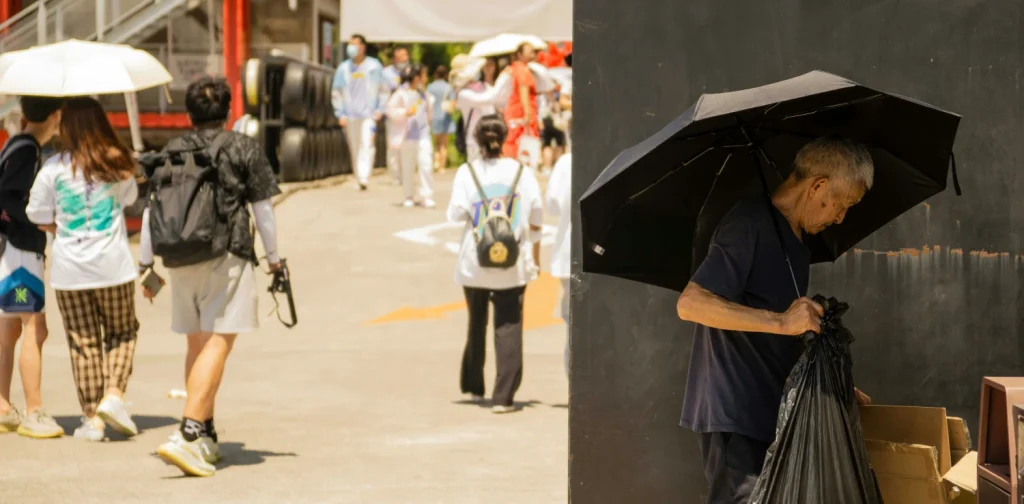
Photo: Rancheng Zhu on Unsplash.
Be it hot or cold, the climate around us shapes our wellbeing. However, what happens when the world heats up to unusual degrees, as it currently does? Research explores how rising global temperatures can influence livability and people’s ability to perform mundane tasks.
Heat and Health
So much of our reality is now characterized by heat. We have seen the phrase ‘hottest year on record’ at least twice since 2023 and how the Earth’s landscape is changing in consequence. Glaciers are melting fast, and soils are cracking due to a lack of moisture.
Similarly, prolonged exposure to extreme heat has major health implications for people. It disrupts our ability to regulate body temperature, making our cardiovascular and respiratory systems work harder to stabilize it. Extreme heat can also exacerbate underlying health conditions related to both systems.
A study led by Parsons and published in Environmental Research: Health examines the ways rising global temperatures affect how people operate daily. In short, heat challenges human livability, referring to the maximum level of physical activity one can perform in a given climate without experiencing unchecked heat spikes.
Under a ‘livable’ condition, people should be able to engage in ordinary activities that may increase body temperature, such as walking and doing housework, without suffering from the heat itself.
Livability in Hot Days
However, the study finds that about 35% of the global population already lives in areas where peak hot days can hinder young people from performing light- to moderate housework and other basic activities. On average, people aged 18–40 can lose around 50 livable hours per year. For older people aged 65 and above, the limitations to livability are greater, around 900 hours each year on average.
The study measures it using the HEAT-Lim model, which calculates maximum sweat rate and maximum skin wettedness to assess one’s ability to regulate body temperature. This ability reduces over time, which is why older people face greater challenges.
Other factors influencing people’s livability in extreme heat include area topography and climate determinants. In India and China, for instance, limitations are more severe in lowlands compared to elevated areas.
The impacts of extreme heat are also more pronounced in populations that lack adaptive capacity, including the ability to afford cooling systems. Countries with lower capacity to adapt face heightened risk, particularly outdoor workers, who are highly exposed to extreme heat.
Strengthening Adaptation
The study highlights two notable concerns affecting livability: a steady rise in temperature and uneven adaptive capacity. Therefore, a multipronged approach is required to halt global warming and strengthen resilience against heat, especially as the older population is expected to grow.
Governments, businesses, and civil society must strengthen and coordinate in their decarbonization efforts through a just and inclusive energy transition before the heat impacts people’s lives even more than it already is. In the meantime, expanding social protection coverage, establishing a robust heat monitoring mechanism, and investing in the implementation of nature-based solutions are also key to strengthening adaptation in the time of ever-rising heat.
Editor: Nazalea Kusuma

Co-create positive impact for people and the planet.
Amidst today’s increasingly complex global challenges, equipping yourself, team, and communities with interdisciplinary and cross-sectoral insights on sustainability-related issues and sustainable development is no longer optional — it is a strategic necessity to stay ahead and stay relevant.
 Noise Pollution Is Making Us Sick, and Climate Change Is Making It Worse
  Beyond Fashion: The Environmental Cost Behind Animal Leather
  Addressing the Hidden Risk of Microplastics from Offshore Infrastructures
  Addressing Antimicrobial Resistance as More Than a Medical Issue
  Holding Harmful Industries Liable for Harm to Human Life and the Environment
  Clearing the Air of Despair Surrounding the Climate Crisis with Data