

Risk of Transboundary Air Pollution Increases as Extreme Heat Continues
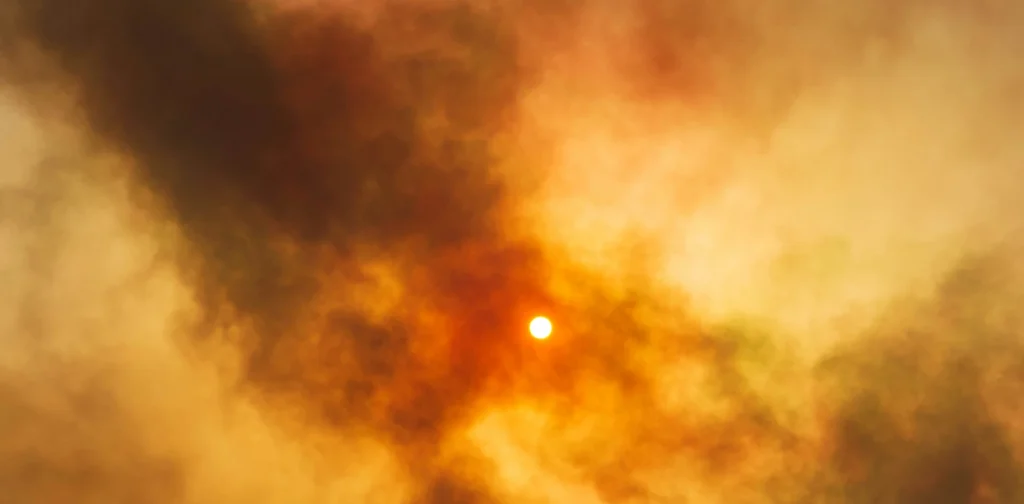
Photo: Teodor Ted on Unsplash.
With temperature rise repeatedly breaking records, extreme heat seems to be the headline of recent years. The year 2026 is not faring better. Heatwaves swoop across Europe, and strong El Niño casts super dry seasons in parts of the Pacific. This sweltering heat affects air quality, and the impacts are transboundary.
Increasing Ozone Pollution
Temperature rise directly impacts air pollution levels by accelerating the formation of ground-level ozone. This deadly but often overlooked pollutant is formed primarily through chemical reactions between nitrogen oxides—mainly emitted by fossil fuel combustions—and volatile organic compounds (VOCs) from natural and anthropogenic sources. Then, sunlight exposure and high temperature increases the formation of ground-level ozone, which means the concentration is likely to increase during hotter and drier months.
The Atmosphere Watch 2026 report from the European Union’s Copernicus found that 40% of the world’s population was exposed to extremely high levels of ozone pollution in 2026. Countries in the Northern Hemisphere are more sensitive to the pollutant due to the higher landmass and population, with Asia suffering extremely high and persistent exposure between January and August. Samples from five key cities in Asia reveal around 53% of the population were exposed to extremely poor air quality. This means people were breathing air with >110 µg/m3 ozone concentration during peak warmest seasons, way above WHO’s recommendation of below 60 µg/m3. Meanwhile, Europe and North America recorded notable days of high exposure amid summer heatwaves.
However, one of the most dangerous things about air pollution is that it is transboundary and can travel far. The State of Global Air 2025 report notes that while ozone pollution tends to concentrate more in urban areas due to higher emission sources, it can also travel across regions and country borders, bringing along adverse health outcomes associated with the pollutants. The most severe ones include premature death, lung impairments, and cardiovascular issues. Even at low levels, researchers have noted inflammation in airways caused by ozone pollution.
Transboundary Haze from Wildfires
Prolonged hot days with low precipitation can also increase the risk of wildfires. Besides the obvious danger of fire, wildfires also produce harmful haze containing tiny PM2.5. The microscopic particles are among the deadliest pollutants, where long-term exposure to PM2.5 contributed to 4.14 million deaths globally in 2019.
The year 2026 has recorded several large wildfire events across the world. In July, massive fires exacerbated by extreme heat occurred in France and Spain. The burning of around 50,000 hectares of land in each occurrence has forced thousands to relocate. Copernicus Atmosphere Monitoring Service shows extreme carbon emissions from fire hotspots in Spain’s Madrid and France’s Avila regions, the highest recorded since 2003.
Meanwhile, Copernicus’ report also noted Indonesia’s ongoing wildfire in West and Central Kalimantan provinces. The areas are home to vast peatland areas that can burn easily under dry conditions and are difficult to manage once large fires start. Footages from Palangka Raya, Central Kalimantan, reveal what the people have to grapple with since the fires started: thick, poisonous smoke that turns the sky orange. Thousands of people are suffering from respiratory infections, as are wild animals residing in or near the burning areas.
Indonesia is among the countries heavily affected by the strong El Niño, where rains that otherwise can help dispel the toxic haze have been extremely rare. Moreover, these fires cause significant air quality decline stretching kilometers away from the sources, with neighboring countries like Singapore and Malaysia bearing the impacts of the transboundary smoke.
A Long and Winding Road
The impacts of air pollution on human health have been well-documented for years. Beyond just the respiratory systems, the harmful particles can enter the bloodstream and reach almost all of our organs, including our hearts, livers and kidneys, as well as reproductive and metabolic systems.
Moreover, the health burden is not shared equally, but is closely linked to social and economic disparities. WHO’s study shows that low-income countries have a bigger disease burden than high-income ones, with around 107 deaths per 100,000 attributable to PM2.5 occurring annually. In comparison, the number for high-income countries is at 16 deaths per 100,000.
Ultimately, the struggle for clean air is a long and painful road. Protecting the right to clean air falls under the obligations of all governments through robust regulations also orienting towards minimizing greenhouse gas emissions. Furthermore, strengthening disaster management is essential, particularly in relation to wildfires as they heighten the risks of air pollution and transboundary haze. This path includes holding businesses accountable for potential harms related to their operations, such as pollution and land-clearing, that may trigger widespread calamity.
Reinforcing international cooperation on managing and reducing risks and impacts of transboundary haze is also crucial. At the same time, the private sector must be willing and committed to move past business-as-usual and demonstrate responsibility in safeguarding the health and wellbeing of people, biodiversity, and the environment.
Editor: Nazalea Kusuma

Co-create positive impact for people and the planet.
Amidst today’s increasingly complex global challenges, equipping yourself, team, and communities with interdisciplinary and cross-sectoral insights on sustainability-related issues and sustainable development is no longer optional — it is a strategic necessity to stay ahead and stay relevant.
 Whimsymaxxing and Beyond: Rethinking the Waste Behind Viral Trends
 Seeking Guidance from Karl Marx to Face the Climate Catastrophe
 Indonesia’s Greenwashing Diplomacy at COP31 and Beyond
 The Textile Industry Is Growing, and So Is Textile Wastewater
 EESG: We Need a New Economic Narrative for Sustainability in the Age of AI, Energy Crisis, and Geopolitical Divide
 The Continued Struggle for Equality and Dignity in Women’s Sportswear