

F for Fairness: A year on, TFFF must reach the people who protect forests
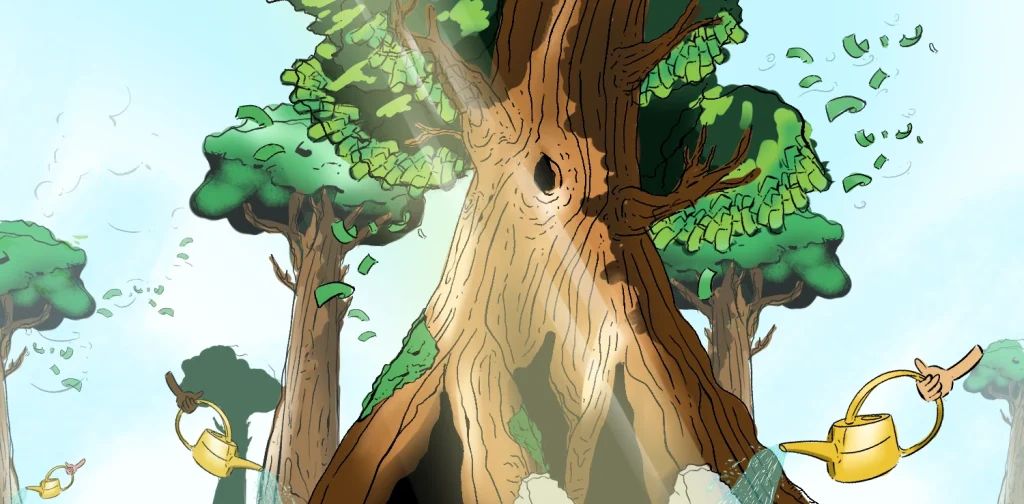
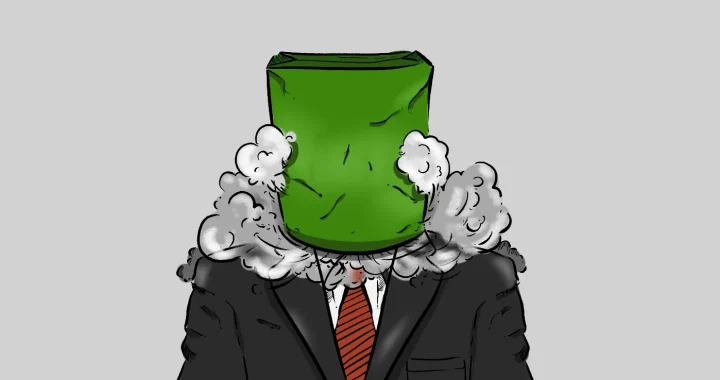
Illustration by Irhan Prabasukma.
In November 2025, at the United Nations climate summit in Belém, Brazil, world leaders launched the Tropical Forest Forever Facility (TFFF). The mechanism was new, but the idea itself was simple: pay tropical countries for keeping their forests standing. Almost a year later, and with COP31 opening in Antalya, Turkiye, soon, it is a good moment to ask two questions. Is the fund making progress? And when the money finally flows, will it reach the people who actually look after the forest?
Losing Forests
The wellbeing of forests is closely intertwined with at least two parts of the triple planetary crisis: climate change and biodiversity loss. They serve as a natural carbon sink, reducing the amount of greenhouse gas carbon in the atmosphere. Tropical forests, more specifically, are also home to most terrestrial biodiversity on the planet.
Yet, human activities have been persistently eating away at them. From mining and the industrialization of agriculture to attempts at decarbonization and green transition, anthropogenic activities have disrupted—and even destroyed—forest dynamics. FAO’s Global Forest Resources Assessment 2025 reported the loss of over 40 million hectares of global forest area between 2015 and 2025 despite existing conservation and anti-deforestation efforts.
How TFFF Is Meant to Work
Thus far, most forest conservation mechanisms revolve around funding the reduction of deforestation rates. Take REDD+, for example. UNFCCC explains that, “Under the framework, developing countries can receive results-based payments for emission reductions when they reduce deforestation.”
TFFF, meanwhile, is more about incentivizing the safekeeping of existing forests. It utilizes the blended finance model to raise money from governments and private investors, invest it, and use the profits to fund countries with tropical forests. As Dialogue Earth explains, a country would receive about 4 USD a year for each hectare of forest it keeps. Conversely, for every hectare cleared, between 400 and 800 USD would be taken away. Damaged forest would cost 100 USD per hectare.
To qualify, a country must keep its yearly forest loss below 0.5% and show a declining deforestation trend. The fund also makes a promise that earlier forest financing mechanisms did not. TFFF mandates that at least 20%of every payment must go to Indigenous peoples and local communities (IPLC).
Progress So Far
The World Bank hosts the fund for TFFF. Its board includes forest countries such as Brazil, Indonesia, and the Democratic Republic of Congo, as well as Germany, France, the Netherlands, and Norway. After almost one year in, the fund has secured 7.3 billion dollars from governments. It hopes to reach 10 billion by the end of this year, depending on Norway’s pledge of 3 billion dollars.
Two facts stand out. First, forest countries are among the biggest funders. Brazil and Indonesia each pledged one billion dollars at launch. Meanwhile, some “rich” donors committed only a few million. Second, experts expect no payments before 2028. That leaves time to get the rules right, especially on who actually receives the money.
The Benefit-Sharing Gap
Benefit-sharing means deciding who gets what share. For TFFF, it refers to who actually receives how much of the money earned from a forest. Under the current design, payments go to national governments, which then decide how the 20% reaches IPLCs. Indigenous Peoples Rights International has warned that this could let governments or local elites capture the money, especially where communities have no legal title to their land.
History supports this worry. At the 2021 climate summit in Glasgow, donors pledged 1.7 billion dollars to support Indigenous and community forest guardians. A year later, only a meager 2.1% of the money paid out had reached those communities directly.
At a meeting in Brazzaville last year, community leaders from the Amazon, the Congo Basin, Mesoamerica, and Southeast Asia asked for the fund’s 20% share to be paid directly to them, not passed through governments. This request is not without reason. Indigenous lands hold about 36% percent of the world’s intact forests. The identities, cultures, spirituality, and wellbeing of Indigenous peoples are closely tied to the lands they live in. As such, they are nature’s core caretaker with invaluable knowledge regarding natural preservation, including forests.
What Fair Payment for Results Should Look Like
Payment for results means money is paid only after forest protection is proven, usually by satellite. To make these payments fair, the fund and its member countries should agree on four things before the first dollar flows.
First, open direct routes for communities. They already exist. In Indonesia, for instance, there is the Nusantara Fund. Run by Indigenous, farmer, and environmental groups, it sends small grants straight to community bank accounts with little paperwork. One coffee group used about 3,300 dollars to build a processing site. Similar community-run funds are also growing in other forest regions. TFFF should utilize trusted systems like these to relay the 20%.
Second, publish the rules. Every country that receives money should publish a benefit-sharing plan that shows who gets what, when, and why. This transparency and clarity is not only necessary but also feasible. Indonesia’s East Kalimantan adopted such a plan for an earlier World Bank forest program.
Third, reward local results, not only national ones. Countries can pass money down to the districts and villages that protect the most forest, using clear scores. More than 40 regions in Indonesia already use such scores to share public money. The same idea could work in Brazil, Peru, or Gabon.
Fourth, give IPLC a seat at the table. Beyond lip service or cursory titles, they should be present in TFFF’s own committees as well as each country’s. That way, Indigenous and local community representatives can help decide how the money is used.
What Really Matters
The Tropical Forest Forever Facility is a test for the whole world, not only for forest countries. If it works, it could change how the world pays for nature. It could reframe conservation funding from short-term projects to steady, long-term benefits.
However, fair payment is key. The TFFF should also review the price itself. Some experts argue that 4 USD per hectare is too low to stop clearing when palm oil, soy, or cattle pay far more. And fair price for communities matters, too, because 20% of an already small amount is very little. Furthermore, if the money stays in national treasuries and never reaches forest villages, communities will lose trust and the forests will keep falling.
COP31 is the moment for governments, investors, and civil societies of the world to agree that fair benefit-sharing is not an extra. It is what will make the fund work.
Editor: Nazalea Kusuma
Co-create positive impact for people and the planet.
Amidst today’s increasingly complex global challenges, equipping yourself, team, and communities with interdisciplinary and cross-sectoral insights on sustainability-related issues and sustainable development is no longer optional — it is a strategic necessity to stay ahead and stay relevant.
 Risk of Transboundary Air Pollution Increases as Extreme Heat Continues
 Whimsymaxxing and Beyond: Rethinking the Waste Behind Viral Trends
 Seeking Guidance from Karl Marx to Face the Climate Catastrophe
 Indonesia’s Greenwashing Diplomacy at COP31 and Beyond
 The Textile Industry Is Growing, and So Is Textile Wastewater
 EESG: We Need a New Economic Narrative for Sustainability in the Age of AI, Energy Crisis, and Geopolitical Divide