

Challenging Climate Disinformation Against Indigenous Peoples in Asia
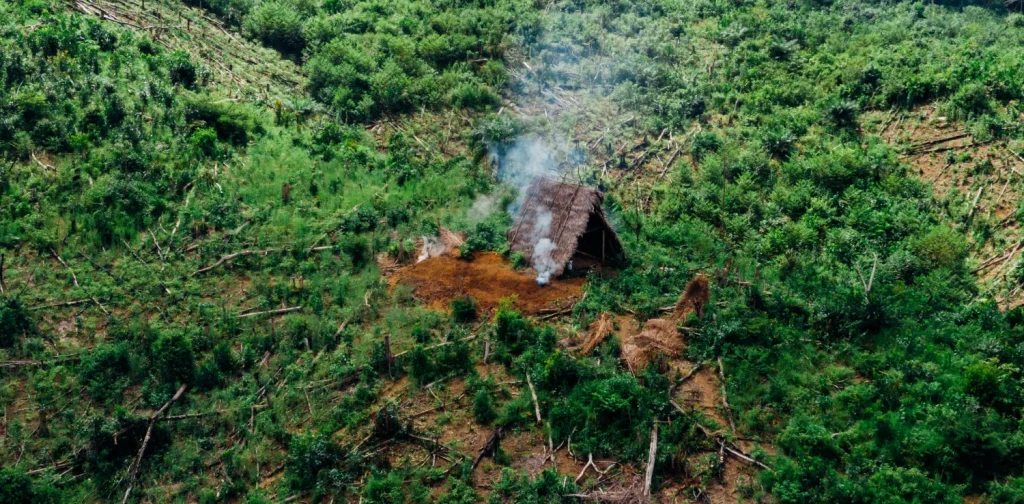
Photo: K on Pexels.
Despite occurring on a worldwide scale and impacting everyone, climate change is not equal. Those who contribute the least to the crisis are often bearing the biggest impacts, including Indigenous peoples, whose lives are intrinsically intertwined with nature. Moreover, their perspectives and practices are often misrepresented in the public eye, leading to harmful climate disinformation.
Climate Change, Indigenous Peoples, and Climate Disinformation in Asia
Indigenous peoples have been stewards of nature for centuries through their wisdom and way of life. Their knowledge has been passed down for generations, despite historical colonialism and persisting persecution. Today, Indigenous peoples account for around six percent of the global population and manage around 80% of the Earth’s biodiversity and 40% of Protected Areas and ecologically intact landscapes.
Their close connection to nature also means Indigenous peoples are bearing the brunt of climate change. This rings true in Asia, home to two-third of the global Indigenous population. It is also, concerningly, warming twice as fast compared to other regions.
This worrying trend heightens the risk of extreme weather events detrimental to people’s lives, ecosystem wellbeing, and economic activities. And all of these are occurring against years-long efforts to uphold the rights of Indigenous peoples to live a dignified life, which remain contested to this day.
One pervasive issue that ties them is climate disinformation. In this context, it refers to the deliberate overlooking and/or misrepresenting of the actual conditions, knowledge systems, and practices of Indigenous peoples in the public discourse surrounding climate change. Narratives that are only half-true or even completely unfaithful to the lived reality pose a huge risk of painting Indigenous peoples in unfavorable light, and, therefore, can exacerbate power imbalances between the communities and the state.
Case Study: Thailand
In Thailand, climate disinformation against Indigenous peoples clouds the recurring issue of air pollution. For several years now, Thailand has been struggling with severe levels of PM 2.5 pollution. These harmful tiny pollutants are linked to respiratory issues and multiple chronic diseases.
A notable case study hails from northern Thailand, in Chiang Mai. In March 2026, the air quality monitoring platform IQAir classified the air quality at Chiang Mai as unhealthy, with an AQI above 150 and PM2.5 as the dominant pollutant. The popular, mainstream narrative cites agricultural burning during the dry season as one of the major drivers.
But according to Phachara Khamchamnan, in a podcast with Prachatham Media, the statement is not entirely true. The misperception of Indigenous Peoples as the culprit of the fires and pollution stem from lack of public understanding of Indigenous practices. This misperception may then result in stigmatization of Indigenous communities in Chiang Mai. Indigenous agricultural methods often involve controlled and planned burning to obtain organic fertilizer and eliminate weeds. Khamchamnan does not deny that burning emits pollutants. However, he elaborates that they do it during particular rainy periods, so that the rain could expel the smoke and dust in the following days.
The Thai government has since restricted traditional agricultural burning as part of a broader effort to address PM 2.5 pollution. The regulation encourages farmers to avoid open burning and, instead, direct residues for biomass production or utilize industrial processing. Violations may result in penalties of possible revocation of land-use rights.
Case Study: Indonesia
Meanwhile, Indigenous communities in Indonesia have been striving to advance the legal recognition of their Indigenous customary forests. Residing within Indigenous territories, these forests are managed based on legally recognized ancestral rights and local wisdom. Moreover, Indigenous customary forests are vital to biodiversity protection, climate balance, and community livelihoods.
As of August 2026, around 332,611 hectares have been legally recognized as customary forests by the Indonesian Ministry of Forestry. There is a long way to go yet, with around 1,791,937 hectares of land still having no legal recognition.
The problem grows more complex when external activities are threatening to encroach these territories. East Kalimantan has lost 2.27 million hectares of forest between 1988 and 2024. For a long time, the biggest reason was the expansion of the palm oil industry. However, a new threat has emerged. Notably, it is one of climate disinformation: critical mineral mining. The mining area in East Kalimantan increased 17,861 hectares in just one year, from 2023 to 2024.
This is where the real story might not appear as the headline. The growing demand for critical minerals essential for energy transition often leads to excessive mining activities in Indigenous lands and territories. It is a form of greenwashing, where narratives frame them as ‘sustainable’ and ‘green’ but fail to acknowledge damages that may arise from such projects.
There are many such cases in Indonesia, like the development of mining locations and Indonesia’s new capital city (IKN). Most of the times, Indigenous communities are left out of the conversation in the face of projects that threaten their lives and lands.
Amplifying Indigenous Voices
As Indigenous peoples fight for their rights, climate disinformation is a massive disservice against their efforts. Therefore, journalists and media practitioners play a pivotal role in amplifying the voices and perspectives of Indigenous peoples.
One way to encourage this is by equipping journalists with the necessary skills to gather data, report, and produce factual reporting that both tackle climate disinformation and strengthen Indigenous voices. One example is the initiative “Amplifying Public Interest Content Against Climate Disinformation”, supported by the Digital Democracy Initiative (DDI) through a partnership between International Media Support (IMS) and Love Frankie. The program offers an opportunity for journalists to examine the interplay between local issues, possible climate disinformation, and actual realities faced by Indigenous peoples.
At the same time, legal recognition of Indigenous rights remains vital in safeguarding their welfare and wellbeing, especially in light of the climate crisis. Governments must create and uphold robust regulations that protect Indigenous communities and their territories in the face of industrial expansion—including in green transition efforts. Businesses, then, must practice due diligence to comply with regulations and conduct responsible practices to ensure no harm when engaging with Indigenous peoples, their lands, and their cultures.

Co-create positive impact for people and the planet.
Amidst today’s increasingly complex global challenges, equipping yourself, team, and communities with interdisciplinary and cross-sectoral insights on sustainability-related issues and sustainable development is no longer optional — it is a strategic necessity to stay ahead and stay relevant.
 Women, Marriage, and Career: Addressing Gender Inequality in Marriage and the Workplace
 Nurturing India’s Climate Consciousness: How villages and cities can teach each other
 Looking into Moon Mining and Its Potential Issues
 Learning from Indigenous Philosophies: Reconnecting People and Nature for Wellbeing
 Challenging Access to Clean Water in Mining Regions
 Online Scrap Yard: What a Digital Marketplace Changes for Asia’s Recycling Trade