

Children’s Vulnerability Against Extreme Heat
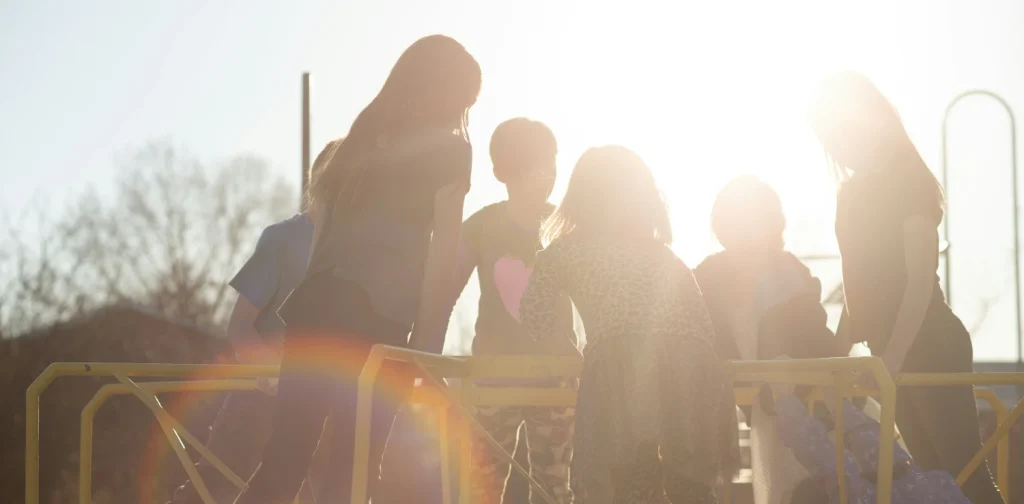
Photo: Jess Zoerb on Unsplash.
The impact of extreme heat is harsh on our body. Now, imagine how it is for children who are still in the developing phase. As human-induced greenhouse gas emissions continue to crank up the planet’s temperatures, more attention should be directed to understanding how heat affects children. It is key to accelerating heat mitigation and adaptation measures for their wellbeing amidst climate change.
Rising Temperatures
Since 2023, the planet’s temperatures have been breaking records year after year. Unsurprisingly, the dry season of 2026 is significantly hotter than before. Europe experienced record-breaking heat in June, impacting over 150 million people and causing 1,300 casualties.
This heat event is not a new issue. In May 2026, several countries in South Asia reported soaring temperatures above the usual, reaching around 45–50°C. Meanwhile, Africa was warming faster than the global average in 2025. While experts have long warned about rising temperatures, measures for heat preparedness remain lacking. Consequently, casualties remain high.
Children in Extreme Heat
Children are among the groups bearing the brunt of the sweltering heat. For instance, in France, two children were found dead in a car on June 22, likely from heatwave.
While our body generally has the ability to regulate itself through sweating, this thermoregulation system is still less developed in infants and young children. Their smaller bodies heat up faster, all the while having less capacity to release heat via sweating. Moreover, children are still dependent on adults to cool themselves externally, including to move places and even drink.
This vulnerability is heightened and differentiated by various factors, including socio-economic status and locations. UNICEF’s analysis shows that around 466 million children live in areas whose number of hot days have doubled compared to the 1960s, without the infrastructure to endure it.
Adverse Health Outcomes
Heat can influence children’s wellbeing even before they are born. Hot weather creates additional pressure to pregnant women’s bodies, who are already experiencing major physiological changes to accommodate a new life.
McElroy et al. (2022) highlights that fetal growth and metabolism can increase the body’s internal heat production. Simultaneously, they decrease the mother’s capacity to cope with heat stress. These conditions can then impact the baby by triggering early spontaneous labor. Without sufficient health support, this could lead to long-term complications or even death for the baby.
Exposure to extreme heat can also increase risk of physical injuries for children. A study in Guangzhou city linked extreme heat with a 12.5-17.1% increased risk of unintentional injuries among children, such as falling, burns, and road injuries. Increased outdoor activities during hotter months, combined with children’s limited adaptability and self-preservation skills elevated the risk of getting hurt.
Meanwhile, a UK researcher warns of the risk of unintentional drowning, especially as outdoor activities near water increases as kids try to alleviate the uncomfortable weather. Numerous studies have also found increased visits to emergency care units and hospitalizations associated with extreme heat exposure among children due to dehydration and stomach bacterial infection.
Multiple Threats, Unsteady Systems
Concerningly, extreme heat is not the only climate hazard happening right now. Around the world, millions of children are facing multiple and overlapping climate threats. UNICEF’s Children Climate Risk Report 2026 estimates around 296 million children are currently exposed to drought, extreme heat, and heatwaves simultaneously.
All three are closely linked and can intensify each other. Heat dries out soils, which in turn worsens drought and disrupts crop growth. UNICEF indicates that food insecurity driven by climate-related hazards can push 28 million more children into wasting and 40 million more into stunting by 2050. The combination of climate hazards hits the critical systems that support children’s development.
Heat impacts extend to education, too. On a biological level, heat affects children’s learning and development process. A study from New York University found that children who are exposed to days with maximum temperature above 30°C are almost 7% less likely to achieve foundational literacy and numeracy milestones compared to their peers in cooler environments.
At the same time, school closure gets more frequent during heat events. Supposedly, this is a way to safeguard students’ and teachers’ wellbeing. But these shutdowns mark schools’ struggle to keep up with the ever-increasing heat, notably due to the lack of cooling systems in the premises.
Some children then settle for struggling with online lessons. Some others, however, cannot study at all. School absences are also common in drought-stricken areas as household demands on children increase. This includes water fetching or agricultural work, which force them to miss school and diminish their educational performance.
Heat Resilience Is Urgent
“We have just lived through the eleven hottest years ever recorded. Climate disasters are becoming more frequent, more destructive, and more costly,” said UN Secretary-General António Guterres at the London Climate Week.
With the backdrop of the more severe and encompassing climate crisis, accelerating efforts to mitigate and adapt to extreme heat is imperative and urgent. Children’s sensitivity to heat is inherent and cannot be changed. Therefore, governments must focus on strengthening access to and the resilience of systems and infrastructures most relied on by children.
This includes supporting healthcare facilities to become climate-resilient, both in infrastructure and workforce. Mobilizing resources must be a government priority. Ensuring that primary healthcare facilities have reliable access to medical tools, safe water and sanitation, and energy sources to keep up with potential patient increase is critical. Additionally, guaranteeing continuous, life-saving care for children will require health workers to be well-trained, well-informed, and well-supported in managing climate emergencies.
Meanwhile, schools can adapt their cooling systems by creating more green spaces to safeguard outdoor activities and adding air conditioning and water stations to support classroom heat adaptation. As these measures require substantial financial and time resources that may be slow to obtain, schools can simultaneously introduce warning systems and anticipatory guidelines to heatwaves.
Despite the urgency for adaptation strategy, what is equally, if not more, critical is reducing greenhouse gas emissions globally to mitigate extreme heat. Ultimately, climate actions that can effectively save people and the planet hinge on accelerated mitigation and adaptation efforts that leave no one behind.
Editor: Nazalea Kusuma

Co-create positive impact for people and the planet.
Amidst today’s increasingly complex global challenges, equipping yourself, team, and communities with interdisciplinary and cross-sectoral insights on sustainability-related issues and sustainable development is no longer optional — it is a strategic necessity to stay ahead and stay relevant.
 Indonesia’s Greenwashing Diplomacy at COP31 and Beyond
  The Textile Industry Is Growing, and So Is Textile Wastewater
  EESG: We Need a New Economic Narrative for Sustainability in the Age of AI, Energy Crisis, and Geopolitical Divide
  The Continued Struggle for Equality and Dignity in Women’s Sportswear
  Behavior Change for the Planet: Is composting worth it?
  Building Bridges Between Environmental Policy and Mental Health