

How Social Protection Can Support Gender Equality
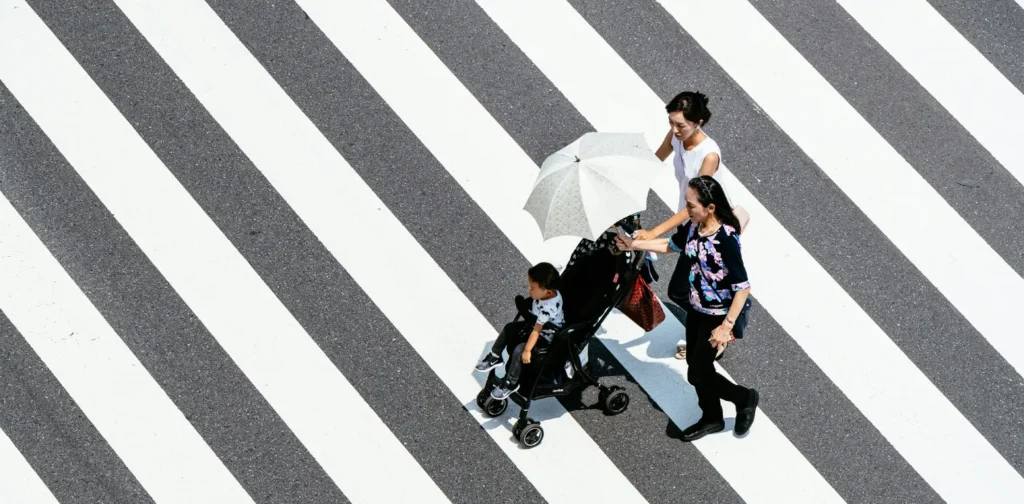
Photo: 2Photo Pots on Unsplash.
Social protection serves as a mechanism to protect ourselves against risks. However, the implementation still lacks comprehensiveness and often does not accommodate the specific risks and challenges women face. Then, what are some of the key requirements for building a gender-responsive social protection system?
Women’s Challenges at Every Stage of Life
The deeply ingrained gender inequalities in society create specific risks and challenges for women throughout their lives. Early in school ages, girls face a bigger risk of dropping their education to help out the family economy. UNICEF data shows that girls are 2.5 times more likely to be out of school than boys in countries affected by conflict.
When women enter the workforce, they still have to grapple with unfair wages in most instances. The gender pay gap remains unclosed, with women earning about 20% less than men on average. Working women also bear the ‘double burden’ of regular work and care work, including cleaning, cooking, and caring for children and older family members, which are still traditionally seen as women’s responsibilities.
Women often have to jump over tall barriers to access information and services about their health, which are often not widely available due to societal taboos or lack of research in the field. Adolescent pregnancies remain a persistent issue, while young mothers with low levels of education often lack the knowledge or money to ensure their kids grow up healthy.
While older women tend to have longer lifespans than men, they are at greater risk of falling into poverty and facing social exclusion due to the pension wage gap and lack of asset ownership. Throughout their life cycle, girls and women are very vulnerable to various kinds of gender-based violence, especially during times of crisis.
How Social Protection Supports Gender Equality?
Women’s complex risks mean that social protection needs to be as comprehensive as possible to protect against these risks. However, its current implementations still have not covered the full extent of the risks.
In a working paper, experts at the International Labour Organization (ILO) explore how social protection can advance gender equality by providing all life-cycle benefits. Their study finds that policies tend to focus on women in their capacity as mothers, while other risks like poverty in old age and unemployment are less visible.
Therefore, enabling the social protection system to support gender equality means gaining a thorough understanding of the structural challenges and inequalities women face throughout their lives and then developing and extending coverage to these areas. A comprehensive and gender-responsive social protection system will provide women from various social and economic conditions with protection against poverty and a necessary stepping stone to fully participate in building a better life.
Key Design Considerations
Governments and policymakers have huge responsibilities to develop a social protection system that covers everyone in need. ILO’s paper identifies key design considerations to promote gender equality:
- Build legal frameworks, policy design, and delivery mechanisms to ensure universal coverage by paying attention to barriers that arise from intersectional discrimination.
- Establish minimum guaranteed benefit levels for a dignified life and ensure adequate benefits for as many people as possible as soon as possible.
- Cover the full set of life-cycle risks to ensure protection throughout life and avoid the compounded impact of life contingencies on women’s income, health, and wellbeing.
- Design and deliver benefits in a way that removes barriers to access and corresponds to women’s lived realities, including those with disabilities.
- Design disability-inclusive benefits by taking into account the extra cost of disability.
- Coordinate social protection benefits with a wide range of services, such as education, health, employment services, childcare and long-term care, and other social services, such as those addressing violence against women.
Read the full paper here.
 Conservation Paradox: Managing the Overabundance of Endangered Koalas in South Australia
  Green Burnout: Sustainability Workers and Climate Activists Are Quietly Falling Apart
  The Warning Signals of Climate Change
  How Land Use and Climate Change Shape the Increasingly Precarious Balance of Global Deadwood Stocks
  The Injustice of Climate Finance: How Climate Change Is Draining Developing Nations
  The Need for One Health in Conservation