

Improving Coastline Protection by Preserving Marshes
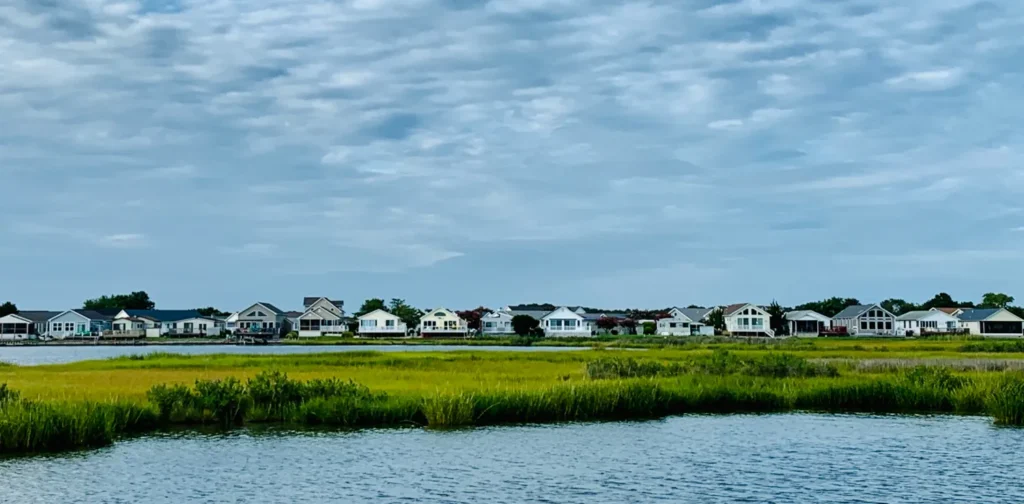
Photo by Seth Hoffman on Unsplash
Climate change is more pressing than ever. It is causing rising sea levels that can lead to coastal flooding, erosion, and more. As significant numbers of human settlements are built within coastal regions, it is essential to protect coastlines and build barriers to keep the population safe and support the ecosystems in these areas. In this light, research has found that preserving marshes can be a viable option for coastal protection efforts.
Coasts and Marshes
Cities and settlements have historically been built near coastlines because these areas provide easy access to trade and transportation. This has led to a natural tendency for populations to migrate toward coastal regions. Currently, about one-third of the world’s population lives in coastal areas, which are twice as dense in population as the global average. Unfortunately, many of these areas are at risk of degradation due to coastal development.
Protecting coastlines and preserving their natural character is becoming increasingly urgent as climate change heightens threats to these areas. Wetlands play a crucial role in this effort, including marshes. They are a type of wetland where grasses and rushes dominate in water-covered areas.
In coastal areas, marshes commonly serve as filters for pollutants, improving water quality by converting dissolved nutrients into plant matter. For many communities, marshes act as a water source and serve as breeding grounds for commercially valuable fish, providing important livelihoods. These ecosystems also become natural buffers against large waves, a crucial role to play as a part of coastline protection efforts.
Marshes as Cost-Effective Coastline Protection
A recent study has revealed that maintaining marshes near protective seawalls can enhance coastline protection. Researchers from the Massachusetts Institute of Technology found that restoring coastal marshes not only safeguards natural ecosystems and the environment but is also economically viable.
While seawalls are built to protect the coastline, they can be expensive to construct and maintain. The study suggests that by preserving coastal marshes, which naturally reduce wave energy, seawalls can be built lower. This practice lowers construction costs while still providing effective storm protection. Even smaller marshes that are only tens of meters wide could create differences in energy absorption.
Furthermore, the study examined how much the height of a seawall can be lowered when marshes are present. Researchers used computer models to simulate how waves interact with different shore profiles by focusing on the characteristics of various salt marsh plants, including their height, stiffness, and density, as well as their seasonal changes.
Research Findings to Policies
In the end, the climate crisis and its impacts are an existential threat that affects all living beings on Earth. While research on possible solutions to current and future problems continues, the real challenge lies in interpreting scientific findings into policies and determining factors for decision-makers. Therefore, global commitment and the dedication of stakeholders to adopt these findings that encourage building with nature are essential for a more resilient and secure future for everyone.
Editor: Kresentia Madina & Nazalea Kusuma

Dinda Rahmania
Dinda Rahmania is an Assistant of International Partnerships at Green Network Asia. She holds a bachelor’s degree in International Relations from President University. As part of the GNA In-House Team, she supports the organization’s partnerships with international organizations, governments, businesses, and civil society worldwide through digital publications, events, capacity building, and research.
 Non-Economic Loss and Damage: Making sense of our intangible loss in a changing climate
  Unpacking SBTi’s Corporate Net-Zero Standard V2.0: Balancing Science and Business Realities
  Farmer Loneliness, the Overlooked Mental Health Crisis Within the Food System
  Conservation Paradox: Managing the Overabundance of Endangered Koalas in South Australia
  Green Burnout: Sustainability Workers and Climate Activists Are Quietly Falling Apart
  The Warning Signals of Climate Change