

UK’s Biodiversity Net Gain Requires Development Projects to Create Positive Impact on Nature
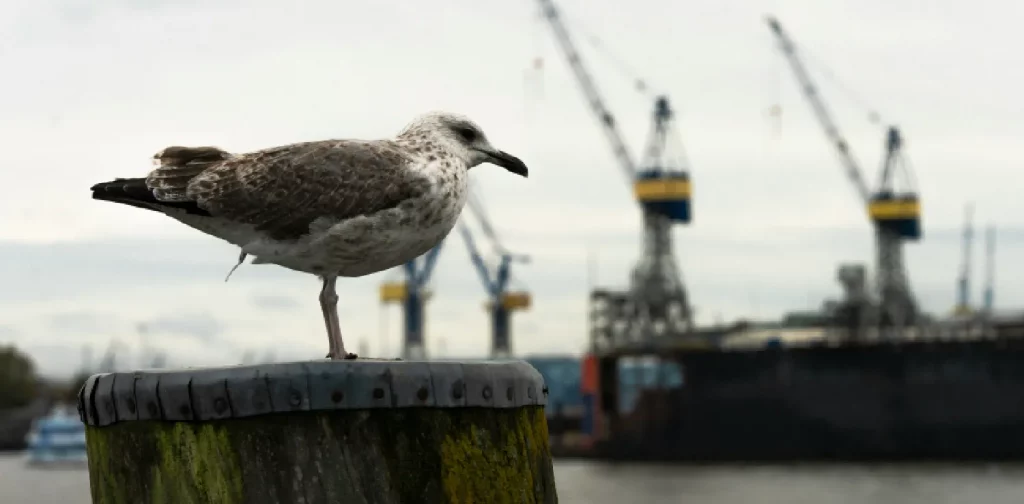
Photo: Maxence Pira on Unsplash.
For too long now, global development has come at the expense of the planet. Between fossil fuels and urban expansions, Earth’s biodiversity and ecosystems have suffered significantly. As an attempt to counteract this problem, the UK government has launched Biodiversity Net Gain (BNG), a framework that requires development projects to have a positive impact on biodiversity. With this framework, habitats for wildlife and other biodiversity should be better than before the development.
Biodiversity Net Gain
Under the Biodiversity Net Gain (BNG) framework, development plans and projects in the UK must deliver at least a 10% increase in biodiversity value of the onsite habitat. During application, projects must include concrete plans to achieve their biodiversity gains.
The increase can be achieved through three options: creating onsite biodiversity gains, creating offsite biodiversity gains, or purchasing biodiversity credits. The biodiversity value in this context is measured in standardized biodiversity units that depend on size, quality, location, and type. The BNG framework provides a calculator for this purpose, namely the statutory biodiversity metric tool.
The BNG framework took effect in February 2024 for major developments and in April 2024 for small developments. This statutory framework applies to all plans and projects with some exemptions, such as developments related to the high-speed railway transport network and developments that do not impact a priority habitat. Meanwhile, nationally significant infrastructure development projects will have to follow this framework starting in late November 2025.
Ambitious Step?
“In theory, it could restore lots of habitats,” said Natalie Duffus, a biology and geographer researcher from the University of Oxford who analyzed the BNG trials.
However, the scheme is not free from critical eye and skepticism. A notable concern is how the biodiversity metric tool may not work well for all wildlife, especially insects. Another concern comes from the lack of effective environmental regulations, robust enforcement, and regulatory staff and ecologists to oversee the pledged habitats.
“BNG’s success hinges on effective environmental regulation, monitoring, and policing, and yet when you look at all our past case studies, they clearly show a failure of environmental enforcement and policing,” said Tom Oliver, a professor of applied ecology at the University of Reading. “You’re putting in a new approach that relies on mechanisms working when they don’t.”
Other criticisms are about how a 10% increase is not enough and how the government is seemingly pawning off biodiversity financing entirely to the private sector.
In the meantime, Duffus calls the Biodiversity Net Gain framework one of the most ambitious schemes globally. “Other places are watching us and seeing how it unfolds. If done well, I think it could inspire a lot of other markets to develop in different countries,” she said. Sweden, Singapore, Scotland, and Wales are reportedly already looking to use BNG to develop their own schemes.

Nazalea Kusuma
Naz is the Manager of International Digital Publications at Green Network Asia. She is an experienced and passionate writer, editor, proofreader, translator, and creative designer with over a decade of portfolio. Her history of living in multiple areas across Southeast Asia and studying Urban and Regional Planning exposed her to diverse peoples and cultures, enriching her perspectives and sharpening her intersectionality mindset in her storytelling and advocacy on sustainability-related issues and sustainable development.
 Conservation Paradox: Managing the Overabundance of Endangered Koalas in South Australia
  Green Burnout: Sustainability Workers and Climate Activists Are Quietly Falling Apart
  The Warning Signals of Climate Change
  How Land Use and Climate Change Shape the Increasingly Precarious Balance of Global Deadwood Stocks
  The Injustice of Climate Finance: How Climate Change Is Draining Developing Nations
  The Need for One Health in Conservation