

SMART-NTU’s New Method to Measure Peatlands’ Carbon Storage and Condition
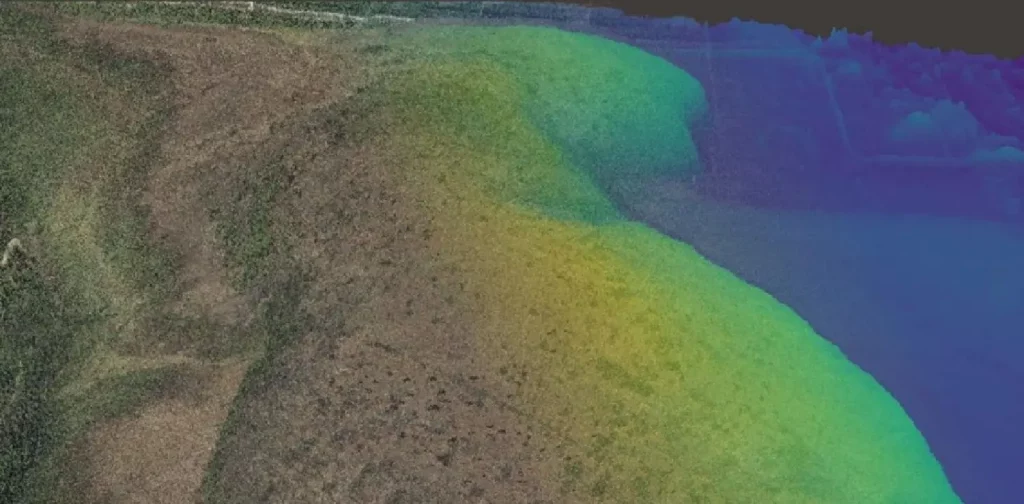
The mounded shape of a raised bog in Valgeraba, Estonia. | Photo: Singapore-MIT Alliance for Research and Technology (SMART).
The natural environment is a fundamental pillar of our lives on Earth. Peatlands, in particular, are essential for their significant role in carbon storage. Therefore, understanding the nature of peatland ecosystems and how to protect them is especially crucial in light of climate change and other crises. Researchers in Singapore have developed a new method to calculate carbon storage in peat bogs to support peatland conservation and restoration.
Global Peatlands Condition
Peatlands are a type of wetland consisting of organic matter from decaying plants that form layers of peat. This ecosystem covers 3-4% of the global land surface. Despite the small number, peatlands store over 600 gigatonnes of carbon, equivalent to 44% of the world’s soil carbon. The International Union for Conservation of Nature (IUCN) called peatlands “indispensable nature-based solutions” for climate mitigation, water regulation, and disaster risk management.
Unfortunately, about 21% of the peatland ecosystems have been degraded and drained due to land-use changes for agriculture and other human-induced activities. The IUCN estimated that the emissions from drained peatlands could reach 1.9 gigatonnes of CO2e per year—equivalent to 5% of greenhouse gas emissions generated from human activities.
Understanding the nature of peatlands and the extent of their carbon storage ability is critical. In this light, researchers at the Singapore-MIT Alliance for Research and Technology (SMART) and Nanyang Technological University, Singapore (NTU Singapore) have developed a method to determine peatland’s conditions and carbon storage ability.
SMART-NTU’s New Method
The new measuring method was developed by the SMART-NTU team with international collaborators from the Massachusetts Institute of Technology, the University of Potsdam, Stanford University, and the University of Minnesota. It aims to calculate the amount of carbon that can be stored in raised peatlands, also known as bogs.
Morphologically, bogs have three-dimensional dome shapes. Obtaining direct sampling to measure carbon stocks in bogs can be challenging due to their various shapes and conditions and their inaccessibility in some tropical areas. To tackle this, the new method uses satellite data to minimize the need for direct field observation and sampling. Unlike previous models, which can only be used to measure limited bog conditions, this new mathematical model applies to any bog in the world.
“Our mathematical model makes it possible to describe and compare the shape of bogs anywhere, including areas in remote parts of the Amazon Basin, New Guinea, and the Congo Basin that are under threat by development but are still poorly known scientifically. Our finding also has practical applications: the three-dimensional shape of a bog determines the carbon it holds and how it can best be restored,” said Dr Alex Cobb, Senior Principal Research Scientist at Singapore-MIT Alliance for Research and Technology.
Encouraging Global Restoration Efforts
The new method developed by SMART-NTU researchers will allow for a better assessment of peatland conditions worldwide. Governments and policymakers can also use the data to better understand the impacts of land-use changes and other human activities on peatland ecosystems. Ultimately, understanding the current ecosystem conditions is crucial to aiding peatland conservation and restoration efforts, thus supporting climate mitigation, halting biodiversity decline, and improving the overall environmental conditions of the planet.
“By estimating the shape of raised peatlands from limited data, our theory makes it possible to plan peatland rewetting more easily and cost-efficiently than has ever been possible,” added Dr Cobb.
Editor: Nazalea Kusuma

Kresentia Madina
Madina is the Assistant Manager of Stakeholder Engagement at Green Network Asia. She holds a bachelor’s degree in English Studies from Universitas Indonesia. As part of the GNA In-House Team, she supports the organization's multi-stakeholder engagement across international organizations, governments, businesses, civil society, and grassroots communities through digital publications, events, capacity building, and research.
 Conservation Paradox: Managing the Overabundance of Endangered Koalas in South Australia
  Green Burnout: Sustainability Workers and Climate Activists Are Quietly Falling Apart
  The Warning Signals of Climate Change
  How Land Use and Climate Change Shape the Increasingly Precarious Balance of Global Deadwood Stocks
  The Injustice of Climate Finance: How Climate Change Is Draining Developing Nations
  The Need for One Health in Conservation