

Embracing the Business Value of Sustainability
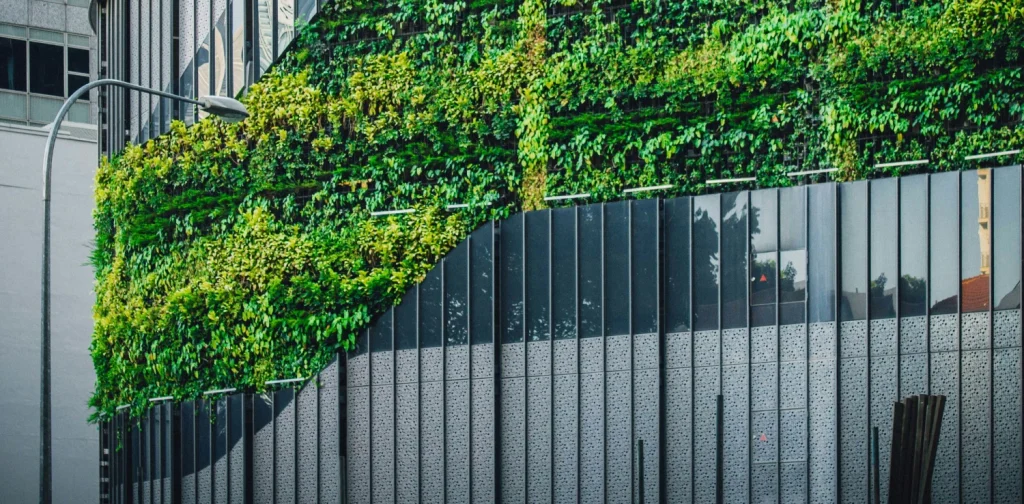
Photo: Lily Banse on Unsplash.
Businesses are key drivers of sustainable growth. Generating 70% of global GDP, they have the opportunities—as well as the responsibilities—to pursue economic growth, at the very least, without incurring environmental or social costs. Better yet, this growth should support the resilience of nature and all levels of society. To do this, recognizing the business value of sustainability is crucial.
Evolution of Corporate Sustainability
Sustainability has existed in business operations for years, but not yet in the form we know it today.
In the early days, businesses considered sustainability mainly as a moral and societal responsibility. The publication of the Brundtland Report (1987) helped put sustainability on the radar, and the mid-1990s saw the rise of corporate social responsibility (CSR). Then, businesses began to incorporate sustainability teams, but they were largely siloed and disconnected from core operations.
Corporate sustainability has evolved and matured into the mainstream in the following years. Businesses invest in internal expertise by appointing Chief Sustainability Officers. And nowadays, sustainability commitments become a public interest and a part of how companies engage stakeholders, alongside the surge in sustainability-related disclosures.
This development opens opportunities for businesses to reorient their governance and activities with sustainability at the core. However, challenges follow, including the cost of fulfilling mandated disclosure requirements. Increasing volatility in the global economy also creates new barriers, signalling a possible need for a change.
Business Value of Sustainability
The idea of sustainability narrative overhaul is echoed by 56% of 884 experts in the ‘Sustainability at a Crossroads’ study. In a report, global organizations BSR and GlobeScan explore how this change can happen by embracing the business value of sustainability.
The report argues that sustainability is not a cost, but a value driver. Leaders and teams must recognize that the business value of sustainability has different facets, thus can require different approaches and yield different results. For instance, implementing energy efficiency measures can result in quantifiable cost reduction, and so is integrating circularity across value chains.
At the same time, conducting a transparent due diligence process on environmental and social impacts in line with established disclosures can build long-term trust with stakeholders and consumers, which may not be as easy to quantify, especially in the short-term. This can also enhance business resilience and reduce operational risks.
Highlighting these broader benefits beyond monetary value is crucial, especially to maintain long-term strategic opportunities from getting obscured by short-term biases.
Transformation Strategies
After recognition comes integration. The report points out that leaders and teams can strengthen alignment between business and sustainability by addressing key transformation requirements. In this case, identifying key players and understanding their priorities can foster stronger internal collaboration, which later will define the transformation’s opportunities, scope, and metrics.
Moreover, building interpersonal awareness, including establishing trust and shared purpose within the company, is also key. Realizing the business value of sustainability means the team must be willing to incorporate both tangible and intangible value drivers into decision-making to help paint the fuller picture of the efforts.
Of course, these efforts require continuous testing and evaluation, as well as an enabling environment and robust external collaboration and partnership to deliver sustainable growth for all ultimately.
Editor: Nazalea Kusuma

Co-create positive impact for people and the planet.
Amidst today’s increasingly complex global challenges, equipping yourself, team, and communities with interdisciplinary and cross-sectoral insights on sustainability-related issues and sustainable development is no longer optional — it is a strategic necessity to stay ahead and stay relevant.
 Formula 1’s Attempts at Sustainable Innovations Through New Power Unit
  The Rise of AI Companions: Support, Substitution, or Something Else?
  Environmental and Geopolitical Risks in the Development of Medog Hydropower Station
  What Australia Can Do to Help Prevent the Next Fire Crisis in Indonesia
  Looking into Gender Inequality in the Water Domain
  How the Earth’s Energy Imbalance Affects the Climate