

Nature-based Solutions (NbS) for Agricultural Water Management
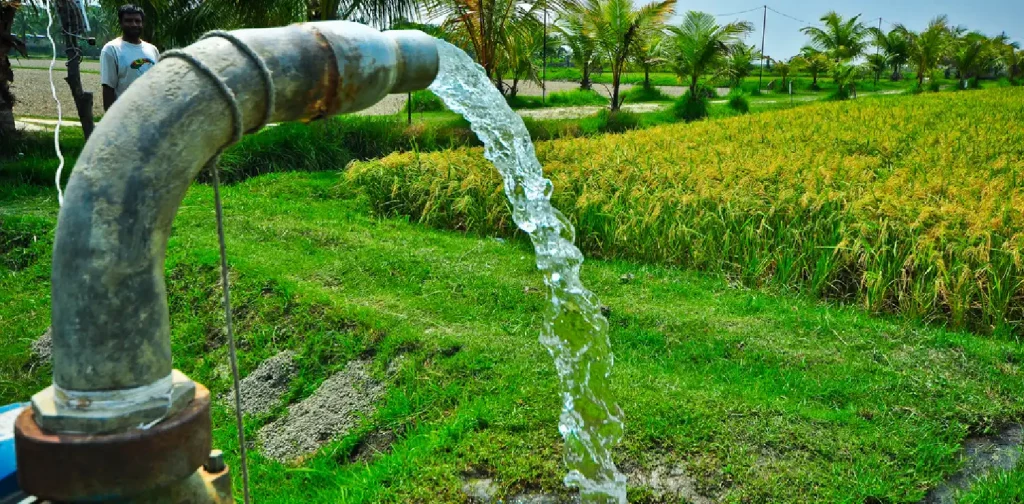
Photo: CGIAR on Flickr.
Water is an essential element in many aspects of our lives, including in enhancing agriculture and global food security. At the same time, however, increasing water demand has exacerbated water scarcity issues globally. Nature-based Solutions (NbS) offer promising approaches to agricultural water management, addressing challenges and making it more sustainable.
Increased Demand for Agricultural Water
The demand for water is increasing as the world’s population grows. Data from the World Bank shows that the population is predicted to reach over 10 billion by 2050. Consequently, agricultural production will increase to fulfill people’s demand for food. This also means an increase in water supply demand.
In this case, proper management of agricultural water is crucial. There are several ways to improve water availability and quality, such as wastewater treatment, large-scale desalination, and transporting water over long distances. However, these approaches may not always be practical or affordable.
A nature-based approach can offer an effective alternative solution to addressing this issue.
Nature-based Solutions (NbS)
According to the International Union for Conservation of Nature (IUCN), nature-based solutions refer to approaches to addressing societal issues through the protection, sustainable management, and restoration of ecosystems. This approach aims to benefit both human welfare and biodiversity.
In an agricultural context, Nature-based Solutions (NbS) can replicate natural processes and further develop functional waterland management approaches that strive to increase agricultural output while simultaneously strengthening food security and improving water availability.
Natural-based Solutions primarily focus on reducing external impacts on water and land resources while enhancing water-related ecosystem services for sustainable agriculture. In other words, NbS activities should ensure sustainable ecosystems that offer lasting contributions to the present and upcoming generations.
Types of Ecosystem Treatments
Based on the NbS concept, ecosystem conditions play an important role in determining water availability and quality. Therefore, it is important to apply treatments such as protecting, rehabilitating, or modifying ecosystems to improve agricultural water systems.
There are three types of ecosystem treatments that can be applied according to the Food Agricultural Organization (FAO):
- Type 1: This type has none or minimal treatments in ecosystems. An example would be the agricultural water management in the traditional cultivation of Wasabi. Wasabi is a native plant from Japan that is used as a spice. The production system of this plant creates a beautiful setting that harmoniously coexists with natural ecosystems. The traditional cultivation method of Wasabi uses small amounts of fertilizers and does not apply chemical substances. Through soil management, Wasabi fields also maintain high water-holding capacities that prevent downstream floods.
- Type 2: This type allows NbS to be applied in ecosystems with partial treatments by creating multifunctional and sustainable ecosystems to improve agricultural water systems. For example, there is water management at Kagera Basin, Africa, where an integrated ecosystems strategy is adopted through a horticultural program to encourage the growing of vegetables that only require little space, have a short growth cycle, and are easily marketable. This program applies strategies such as anticipating climate change effects, growing drought-tolerant crops, using organic fertilizer, small-scale irrigation, and mulching to improve the management of land and water resources in horticulture.
- Type 3: This type uses gray infrastructure to fully restore contaminated or degraded areas while managing ecosystems. For example, in Peru, the local communities, governments, industries, and NGOs in Lima work together to orchestrate conservation and restoration activities and promote the sustainable use of water resources. Practices implemented are wetland restoration, reforestation, as well as other low-impact methods such as rehabilitation of the ‘amunas’ system, which is a part of the traditional water conservation system that captures and channels rainwater during the rainy season in Peru. These practices have a positive impact on ecosystem conditions and can further improve agricultural water systems.
Integrative Study Needed for NbS Improvement
The NbS approach is increasingly effective in addressing various issues related to water availability while maintaining ecosystem balance for agricultural sustainability and world food security. It offers a great contribution to sustainable agricultural practices.
However, this system can be too complicated when applied in a single sector alone. The knowledge foundation for NbS should be trans-disciplinary and integrate scientific and case-specific knowledge with problem-solving experience and practice. In addition, effective finance schemes and stakeholder involvement are critical components. So, a robust collaboration across stakeholders and sectors is required for a successful, scaled-up implementation of Nature-based Solutions for agricultural water management and other sustainable development issues.
Editor: Nazalea Kusuma & Kresentia Madina
 Whimsymaxxing and Beyond: Rethinking the Waste Behind Viral Trends
  Seeking Guidance from Karl Marx to Face the Climate Catastrophe
  Indonesia’s Greenwashing Diplomacy at COP31 and Beyond
  The Textile Industry Is Growing, and So Is Textile Wastewater
  EESG: We Need a New Economic Narrative for Sustainability in the Age of AI, Energy Crisis, and Geopolitical Divide
  The Continued Struggle for Equality and Dignity in Women’s Sportswear