

Advancing Child-Sensitive Social Protection in Indonesia
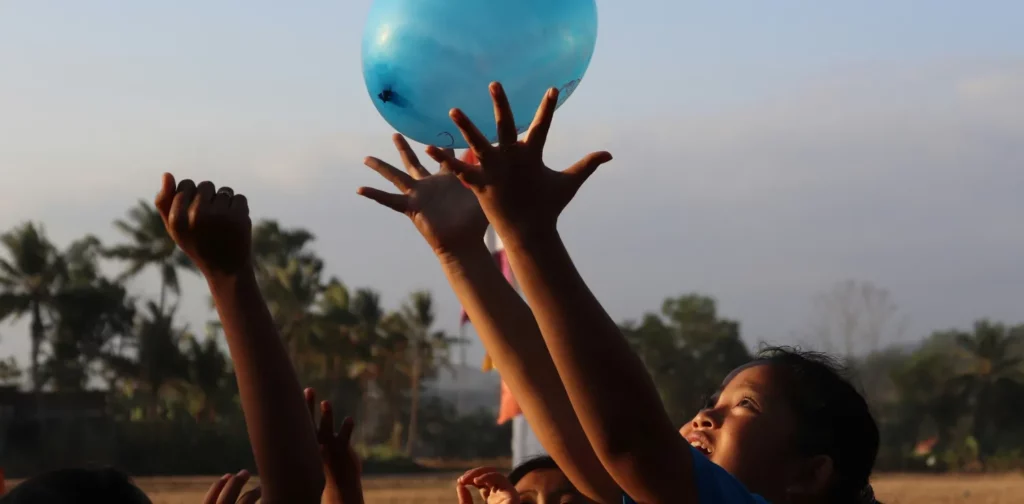
Photo: Mufid Majnun on Unsplash.
Children are our future. Yet, they are still significantly affected by poverty, including in Indonesia. Safeguarding children’s welfare and wellbeing from birth until adulthood is especially crucial, one of which is through social protection. A joint report by Indonesia’s Ministry of Finance and UNICEF explores the implementation of child-sensitive social protection in Indonesia.
Child Poverty in Indonesia
In 2022, 11.8% of approximately 80 million children in Indonesia lived below the national poverty line, the highest among other age groups. Furthermore, the report also stated that the child poverty rate in rural areas was higher (16%) than in urban areas (10%). Apart from regions, the severity of poverty is also determined by the number of children in the household.
Poverty is multidimensional by nature, and it applies to children as well. In addition to monetary poverty, 40% of these children also experience poverty in two or more dimensions of wellbeing.
In this case, social protection is crucial to helping households cope with emergencies like natural disasters and other global crises. Child-sensitive social protection is part of adaptive social protection interventions that can help reduce child poverty, realize children’s rights and potential, and promote economic growth and the inclusive development of society.
Key Challenges
The report identified several issues related to child-sensitive social protection. In general, Indonesia spends less on social assistance than countries with similar income levels. Moreover, government expenditures on children in early years are significantly lower than those for other age groups. This occurred despite the fact that the percentage of child poverty is higher than in youth, working, and elderly age groups.
Furthermore, state-provided social assistance sometimes benefits children only indirectly. For instance, social assistance in the form of a cash transfer is usually received by adults. The report found that social assistance programs often do not consider households’ composition, which can result in a lack of children-specific targets and interventions. So far, only two policies target children specifically: the Family Hope Program (Program Keluarga Harapan) and the Smart Indonesia Program (Program Indonesia Pintar).
There is also an issue of data, where there is a lack of the most up-to-date data on poverty, especially in children. Since poverty is dynamic, meaning there is a risk of going in and out of it throughout one’s life, effectively implementing child-sensitive social protection programs requires up-to-date social registry systems.
Child-Sensitive Social Protection for All
Child-sensitive social protection is fundamental to safeguarding children’s rights and welfare. As the world grapples with the climate crisis, multiple conflicts, social unrest, and economic uncertainty, protecting children and their families against vulnerabilities and potential shocks has never been more crucial.
Therefore, the report outlines four recommended actions to tackle the issues in advancing child-sensitive social protection:
- Adopting a life-cycle approach in designing and implementing social protection programs and increasing investment in the crucial early years.
- Increasing equitable spending on social assistance, either through reforms to the tax and benefit system or efficiency gains through program integration.
- Expanding social assistance for children based on the composition of households.
- Improving the targeting mechanism through an updated social registry or considering a universal child grant.
Read the full report here.
Editor: Nazalea Kusuma

Kresentia Madina
Madina is the Assistant Manager of Stakeholder Engagement at Green Network Asia. She holds a bachelor’s degree in English Studies from Universitas Indonesia. As part of the GNA In-House Team, she supports the organization's multi-stakeholder engagement across international organizations, governments, businesses, civil society, and grassroots communities through digital publications, events, capacity building, and research.
 Whimsymaxxing and Beyond: Rethinking the Waste Behind Viral Trends
  Seeking Guidance from Karl Marx to Face the Climate Catastrophe
  Indonesia’s Greenwashing Diplomacy at COP31 and Beyond
  The Textile Industry Is Growing, and So Is Textile Wastewater
  EESG: We Need a New Economic Narrative for Sustainability in the Age of AI, Energy Crisis, and Geopolitical Divide
  The Continued Struggle for Equality and Dignity in Women’s Sportswear