

Supporting Rewilding to Reverse Ecological Crisis
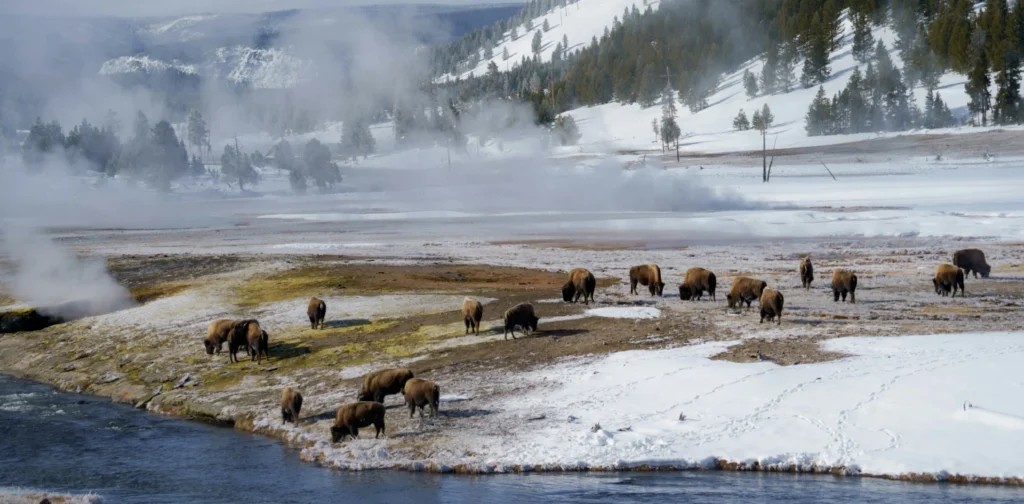
Photo: Ming Chen on Unsplash.
The Earth’s ecosystems are crumbling in the face of rampant ecological crises. From small insects to apex predators, animal populations are dwindling due to habitat loss, pollution, and other anthropogenic causes. Amid the crisis, rewilding offers opportunities to reverse these trends.
Nature-led, Human-enabled
Ecosystems are built upon the interactions between the living organisms and their environment. However, these interactions are collapsing at an alarming rate due to ecological crises. The World Wildlife Fund states that the number of the wildlife population has declined by 73% between 1970 and 2020 due to multiple reasons, from habitat loss to climate change.
Amid the weakening ecosystems, rewilding offers an opportunity for ecosystem restoration. The practice aims to reinstate natural ecosystems, including the communities and processes, as closely as possible to the conditions before disruptions. This includes eliminating invasive species and reintroducing key species to the ecosystems.
The practice of rewilding also emphasizes creating resilient and self-sustaining ecosystems and minimizing human management. However, human management is not completely absent in the practice. Rewilding also requires addressing a wide range of human activities that threaten ecosystems, including overexploitation, land use change, and pollution. Hence, it is nature-led and human-enabled.
IUCN’s Guidelines for Rewilding
While the practice has potential, poorly managed rewilding poses significant risks to biodiversity and local communities. Therefore, harnessing its full potential requires strategies that focus on biodiversity’s interest and welfare.
In October 2025, the IUCN published a guideline for rewilding. The document is developed through a collaboration involving 60 organizations across the globe, with the aim of providing fundamental principles for implementing rewilding projects and integrating them into broader conservation projects.
Essentially, the guideline provides five points that are adapted from Steve Carver et al.’s work (2021). Among the points, the guideline highlights the need for large-scale planning that reflects the dynamism and interconnectivity of natural systems, as well as the importance of creating adaptive, interconnected systems that link ecological knowledge with political, cultural, social, and economic frameworks.
Advancing Ecosystem Conservation
Ecosystem conservation is an urgent global agenda, as reflected in the Kunming-Montreal Global Biodiversity Framework. Thus, supporting rewilding practices becomes an integral part of advancing ecosystem conservation worldwide.
“By embedding rewilding into conservation practice and policy, we are not only restoring ecological integrity but also reimagining our relationship with the living world. This is a hopeful and necessary step towards thriving landscapes where people and nature flourish together”, said Dr Ian Convery, co-author of the guidelines.
Editor: Nazalea Kusuma

Co-create positive impact for people and the planet.
Amidst today’s increasingly complex global challenges, equipping yourself, team, and communities with interdisciplinary and cross-sectoral insights on sustainability-related issues and sustainable development is no longer optional — it is a strategic necessity to stay ahead and stay relevant.
 The Textile Industry Is Growing, and So Is Textile Wastewater
  EESG: We Need a New Economic Narrative for Sustainability in the Age of AI, Energy Crisis, and Geopolitical Divide
  The Continued Struggle for Equality and Dignity in Women’s Sportswear
  Behavior Change for the Planet: Is composting worth it?
  Building Bridges Between Environmental Policy and Mental Health
  We May Surpass 1.5°C Soon, But We Can Do Something About It