

The Need for One Health in Conservation
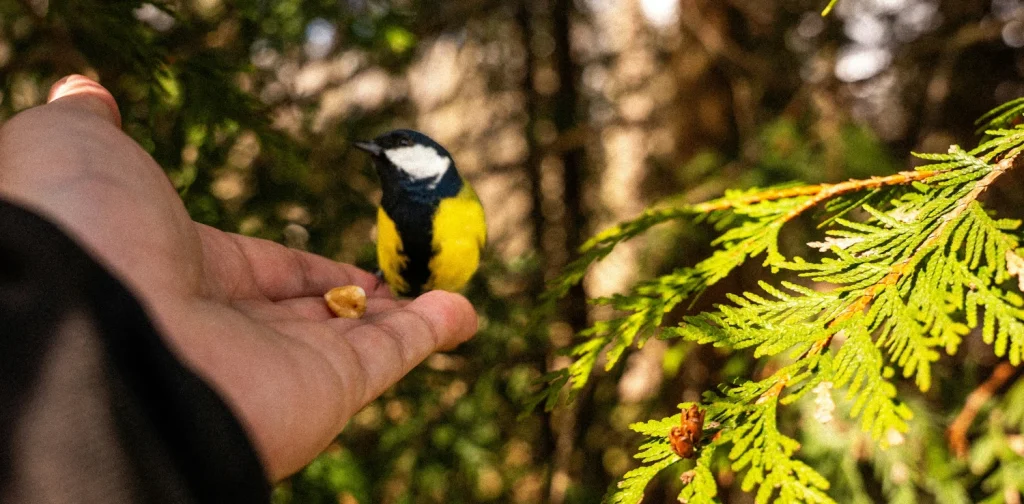
Photo: Charles Puaud on Unsplash.
Our behavior affects nature just as nature affects our wellbeing. At times when excessive consumption and increasing pressures have squeezed humans and wildlife closer, this unmanaged proximity can trigger issues in public health, conservation, and other aspects in the nexus all at the same time. How can One Health offer a solution?
Emerging Diseases
Biodiversity and public health are increasingly linked together as threats of infectious diseases increase. In May 2026, a cluster of Hantavirus infection occurred on a Dutch cruise. It has taken three lives as of May 13, while the extent of its transmission is still being traced. The virus originates from rodents and can infect people who come in contact with the sick rodents’ bodily fluids.
The Hantavirus is an example of zoonotic diseases, diseases that are transmissible from animals to humans. Other examples include salmonella infection, rabies, Ebola, as well as the COVID-19 disease, whose SARS-CoV-2 virus is highly suspected to have spread from bats to humans. Researchers have noted that around 60% of emerging infectious diseases these days are zoonotic, with the majority originating from wildlife.
What causes this prevalency? For one, humans are now in much more contact with animals than before. Major land-use change for agriculture, estate, and other development that encroach wildlife habitat has increased contacts between humans and wildlife, thus heightening risk of spillover of novel infectious diseases.
Another key factor is that biodiversity loss has been closely linked to the increase of zoonotic viruses they carry. A study led by Johnson (2020) analyzing scientific literature on zoonotic viruses indicates that wildlife species suffering population decline due to hunting and trade have over twice as many zoonotic viruses than other threatened species listed for other reasons. Meanwhile, threatened species whose number decreases because of deteriorating habitat quality were likely to host nearly twice as many zoonotic viruses as others.
One Health, the Concept
The close relation between animal, environment, and human health underscores the need to incorporate One Health approach in biodiversity conservation and wildlife management.
The approach explicitly recognizes the link between the health of people, animals, plants, and wider ecosystems. More than that, it seeks to balance and improve their overall health. As it involves many aspects, One Health encourages cross-sectoral collaborations between human, animal, and environmental health experts to tackle issues such as public health, food security, wildlife management, and more.
One example is wildlife health surveillance. In Cambodia, for instance, the Wildlife Conservation Society carries out a surveillance network to report on wildlife sickness and detect early signs of dangerous diseases in wildlife. Once a report is received, typically made by trained rangers on the ground, technical support is deployed in the form of investigation, laboratory testing of samples, and data analysis.
Meanwhile, according to the World Wildlife Fund (WWF), One Health in conservation can also include creating a balanced and healthy ecosystems in in areas of high
wildlife-livestock-human interactions. Because they share resources and living areas, the health of one impacts the health of others more easily.
Invitation to Reimagine
However, while One Health principally does not prioritize one aspect over the other, a study led by Stephen (2023) has noted how the practice has been predominantly human-centric. It is indeed important to manage animal health for the sake of preventing sickness that can affect humans. However, the true holistic approach is also about protecting animals’ rightful health and wellbeing as a population. Only then can One Health help realize the collective health of people and the planet.
Thus, it is high time to reimagine the One Health approach. We need one that centers the principle that “all actions should ensure no species or generation is prevented from reaching good health by the actions to protect other species or generations.” On that note, Goulet et al. (2024) proposes that adopting a sensible One Health approach would entail a framework that can establish detailed wildlife health standards that considers the diverse categories of wildlife.
Another aspect to emphasize is the involvement of Indigenous Peoples and local communities, whose conservation practice and knowledge are indispensable when it comes to understanding nature. They live side by side with wildlife and benefit directly from healthy ecosystems. So, their involvement is central and should provide them with the agency to care for their wellbeing, heritage, and cultures.
Robust Implementation
We share our lives on this Earth with animals, plants, and other living beings. As such, the effort to keep our environment healthy is essentially a big chunk of how we protect our wellbeing.
One Health offers an integrated approach to do that, but the implementation must cover beyond anthropogenic aspects and include the rights and wellbeing of animals and nature. Therefore, robust collaboration between actors in health, conservation, environment, and everything in between is the heart of effective and fruitful implementation. Comprehensive policy and funding support are also key in enabling and developing holistic approaches to safeguard our collective health today and for years to come.
Editor: Nazalea Kusuma
Co-create positive impact for people and the planet.
Amidst today’s increasingly complex global challenges, equipping yourself, team, and communities with interdisciplinary and cross-sectoral insights on sustainability-related issues and sustainable development is no longer optional — it is a strategic necessity to stay ahead and stay relevant.
 EESG: We Need a New Economic Narrative for Sustainability in the Age of AI, Energy Crisis, and Geopolitical Divide
  The Continued Struggle for Equality and Dignity in Women’s Sportswear
  Behavior Change for the Planet: Is composting worth it?
  Building Bridges Between Environmental Policy and Mental Health
  We May Surpass 1.5°C Soon, But We Can Do Something About It
  From European Heat to the Himalayan Flood: The Transboundary Nature of Climate Risk