

Exploring the Economic Contribution of Domestic Workers to Developing Nations
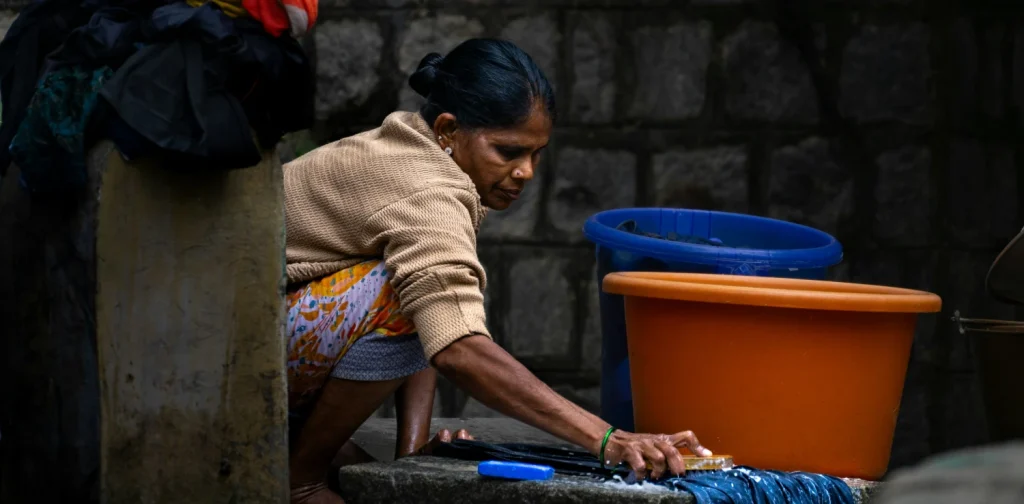
Photo: Ojas Raj on Unsplash.
As social beings, caring for each other is the essence of being humans. In capitalistic systems, the human needs for care translates to the existence of domestic careworkers. Domestic work is work performed in or for a household within an employment relationship and on an occupational basis. Typically, the job entails cleaning, cooking, gardening, and providing private security. But in most cases, the tasks are relatively dependent on their employers, so sometimes they involve taking care of children, elders, and persons with disabilities. Nonetheless, the work that domestic workers put into caring for homes and people is important to the economy, including in developing countries.
Employment Opportunities
Beyond what domestic workers do for households, their significant contribution to the global economy is not to be underestimated. According to the International Labour Organization (ILO) data, domestic workers amount to approximately 2.3% of total global employment with a total of 75 million domestic workers employed by households across the world.
To be more specific, 82% of global domestic workers are in developing and emerging nations due to the scarce opportunities for formal employment in those countries. At the same time, another data shows that a large proportion of migrant domestic workers come from developing countries to work in high-income countries, such as the Arab states and Eastern Asia. This means that their services are in demand in both local and global scopes, with developing countries being the highest providers of domestic workers.
Economic Contributions of Domestic Workers
To measure domestic work’s value, we can look into the amount of remittances from migrant domestic careworkers. According to the World Bank, remittances to developing countries from domestic workers worldwide reached US $466 billion in 2017. Migrant domestic workers from the Asia-Pacific region alone sent US $256 billion home.
Beside their contribution to the national economy, they are also able to alleviate their families from poverty. A cost survey in 2020 among Indonesian and Filipina migrant domestic workers in Malaysia deduced that 94% of the respondents sent money home on a regular basis to support dependents. For almost half of the Filipina workers, this means they could support five or more family members back in their home country.
Additionally, another survey on Indonesian female domestic workers that migrated to Singapore shows that the respondents remitted an average of 55% of their monthly incomes. These remittances contribute to the education of their children back home, land investment, healthcare, and debt repayment. Additionally, remittances to Indonesia in 2024 roughly reached 15 billion USD, contributing 1.1% of the nation’s GDP.
Struggles and Challenges
Unfortunately, the contribution of domestic workers is disproportionate to their own economic conditions and safety. This especially affects female domestic workers who dominate this field, accounting for 76.2% of the entire domestic workforce.
For example, more than 77% of female careworkers in Latin America—the largest region with domestic workers after South East Asia and the Pacific—are engaged in an informal employment relationship. Such a situation decreases their chance to receive proper compensation for their work. This is worsened by the gender pay gap that remains to haunt women laborers. Not only do they earn less than their male counterparts, many women in the domestic line of work in Latin America live below the poverty line.
Female careworkers are also prone to experience harassment. Working in a private setting makes them vulnerable to abuse and exploitation due to power imbalance. They are vulnerable to discrimination, physical assault, and overworking.
Regulations for Protection
To improve such precarious working conditions, the ILO has attempted to promote decent work for domestic workers through the passing of Domestic Workers Convention (No.189) in 2011. This bill includes’ rights to fair work, safe working conditions, social security, and protection from abuse by employers and recruitment agents. It also recommends bilateral agreement between countries and repatriation for migrant workers.
As of June 2025, the convention was ratified by 40 countries and in force in 38 countries. Some of these countries are developing countries whose numbers of domestic workers are relatively high.
Indonesia, despite being one of those, is not among those countries which has ratified the convention. However, not ratifying the convention is not the end of the story. In April 2026, the government enacted a national bill to protect domestic workers. This law upholds at least 14 rights of domestic workers, including social and health insurance, fair wages and accommodation, and a safe and sound workplace.
A good practice example hails from Uruguay. The government covers all women domestic workers in healthcare and pension. Moreover, Uruguay is the first country with a National Care System which addresses the vital presence of domestic workers in terms of caring for dependent persons.
Decent Work for Domestic Workers
Taking legal measures to protect domestic workers is foundational. However, it needs enforcement and follow-up steps. Unlike formal corporate jobs, domestic work presents an unique setting of a private household where they may be hired informally with no internal policy that regulates how they should be treated.
Therefore, it is crucial for governments to identify other drivers of informal employment practices and non-compliance. Providing domestic careworkers and domestic worker candidates with legal and financial literacy is also an important step. After all, when support and protection are in place, domestic workers will have better chances to improve their own wellbeing and contribute to the national economy in the process.
Editor: Nazalea Kusuma

Co-create positive impact for people and the planet.
Amidst today’s increasingly complex global challenges, equipping yourself, team, and communities with interdisciplinary and cross-sectoral insights on sustainability-related issues and sustainable development is no longer optional — it is a strategic necessity to stay ahead and stay relevant.
 Behavior Change for the Planet: Is composting worth it?
  Building Bridges Between Environmental Policy and Mental Health
  We May Surpass 1.5°C Soon, But We Can Do Something About It
  From European Heat to the Himalayan Flood: The Transboundary Nature of Climate Risk
  Noise Pollution Is Making Us Sick, and Climate Change Is Making It Worse
  Beyond Fashion: The Environmental Cost Behind Animal Leather