

The Conservation Incentive Model of Tropical Forest Forever Facility (TFFF): Is it enough?
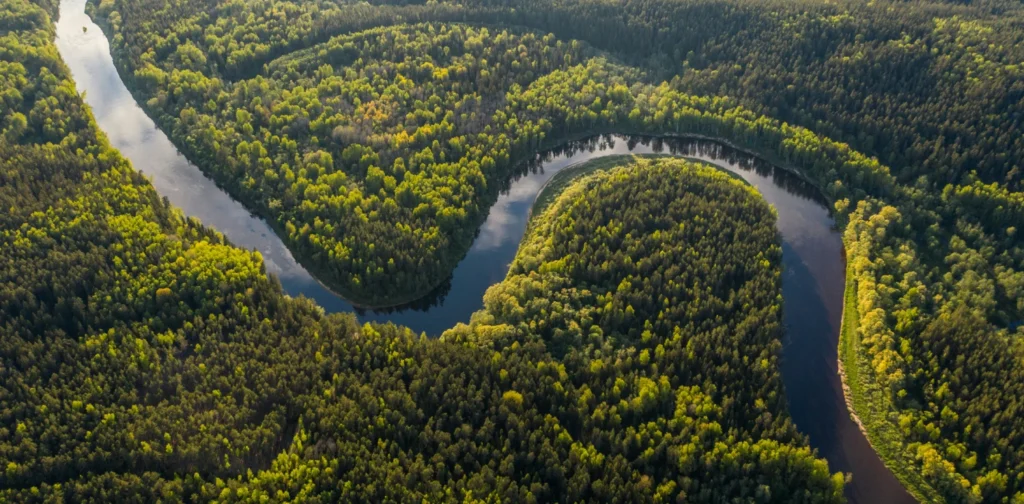
Photo: Ivars Utināns on Unsplash.
Tropical forests are home to most of the terrestrial biodiversity on Earth. However, data shows an alarming rate of deforestation as millions of trees are cut down every year. In order to halt deforestation, leaders from over 30 tropical forest countries launched “The Tropical Forest Forever Facility (TFFF)” to offer permanent incentives for forest conservation.
Global Deforestation Rate
At the COP26 in Glasgow in 2021, more than 100 world leaders had promised to end deforestation by 2030. However, an assessment published in October 2025 shows that countries are 63% off track on the pathway to that target.
In 2024 alone, nearly 8.1 million hectares were permanently lost. Clearance for permanent agriculture is the primary driver. It accounts for an average of about 86% of global deforestation over the past decade. Other drivers follow suit, such as mining. In the same year, 8.8 million hectares of tropical moist forests were degraded. Meanwhile, even though international public finance for forests rose to an estimated 5.7 billion USD in 2022–2024, it remains misaligned with forest goals.
Tropical Forest Forever Facility (TFFF)
TFFF is a permanent fund designed to support the conservation of tropical forests. It was launched in 2025 during COP30 in Belém, Brazil. The initiative, led by Brazil with other countries, proposes an innovative approach for forest conservation by mobilizing investments from governments, sovereign wealth funds, and institutional investors.
The TFFF is intended to operate as a blended finance model with an initial target of $125 billion in two parts: $25 billion from donor countries and $100 billion from private actors. Investment will go to 74 potentially eligible countries with tropical and subtropical moist broadleaf forests and an annual deforestation rate below 0.5%.
Unlike other forest conservation mechanisms, TFFF is not about funding countries to reduce their deforestation rates. Rather, it serves as a reward or incentive by paying directly to tropical forest countries for each hectare of forest they conserve, which is around $4 per hectare.However, payments are subject to deductions based on any deforestation or degradation. TFFF also requires that 20% of the received money be allocated to Indigenous People and local communities.
Concerns & Criticisms
Supposedly, the Tropical Forests Forever Fund (TFFF) is to be an unprecedented initiative that will play a vital role in tackling climate change. However, its mechanism is not without flaws.
A month after its launch, only $6.7 billion was pledged for the fund. Brazil and Indonesia each pledged $1 billion, and Portugal announced a $1 million investment. Norway pledged $3 billion and France $577 million, both with certain conditions. Meanwhile Germany provided $1.15 billion to be disbursed over 10 years.
A report from the Uruguay-based World Rainforest Movement raises concerns about how TFFF could enlarge the debt burden in the Global South and increase their dependency on the Global North. The report also says that TFFF lacks a credible plan to address the underlying cause of deforestation.
Meanwhile, the Global Forest Coalition (GFC) mentions that TFFF “commodifies forests, treating them as financial assets subject to investment returns, liquidation risks, and unguaranteed payouts.” It also says the design of TFFF is to finance only national governments rather than the actors who actually actively contribute to forest preservation.
Furthermore, Forest & Finance, a coalition of campaign and research organizations, has called for strong and detailed exclusion criteria for its investment portfolio. This is to ensure that TFFF’s portfolio does not include investments that cause significant environmental impact or could undermine its goals. The exclusion criteria should be inclusive, regularly audited, and fully transparent.
Addressing the Underlying Cause
The Tropical Forest Forever Facility (TFFF) can significantly contribute to tackling deforestation as long as it has a clear monitoring system. It needs a detailed technical standard to make sure each dollar invested goes to forest conservation and benefits Indigenous Peoples and local communities. The body that governs TFFF’s operations should also always be critical in making decisions with science and evidence.
Ultimately, addressing deforestation and forest degradation requires countries to come up with comprehensive policies and actions that would tackle the structural and industrial causes. Policymakers can eliminate or reform subsidies for activities that enable deforestation and forest conversion. They must ensure full accountability by government and business entities that harm forest ecosystems. In doing so, they should also empower the full participation of all stakeholders, including Indigenous Peoples and local communities as stewards of the land.
Editor: Nazalea Kusuma
 Behavior Change for the Planet: Is composting worth it?
  Building Bridges Between Environmental Policy and Mental Health
  We May Surpass 1.5°C Soon, But We Can Do Something About It
  From European Heat to the Himalayan Flood: The Transboundary Nature of Climate Risk
  Noise Pollution Is Making Us Sick, and Climate Change Is Making It Worse
  Beyond Fashion: The Environmental Cost Behind Animal Leather