

Nepal’s Five-Year Strategy to Clean Up the Mounting Waste in Mount Everest
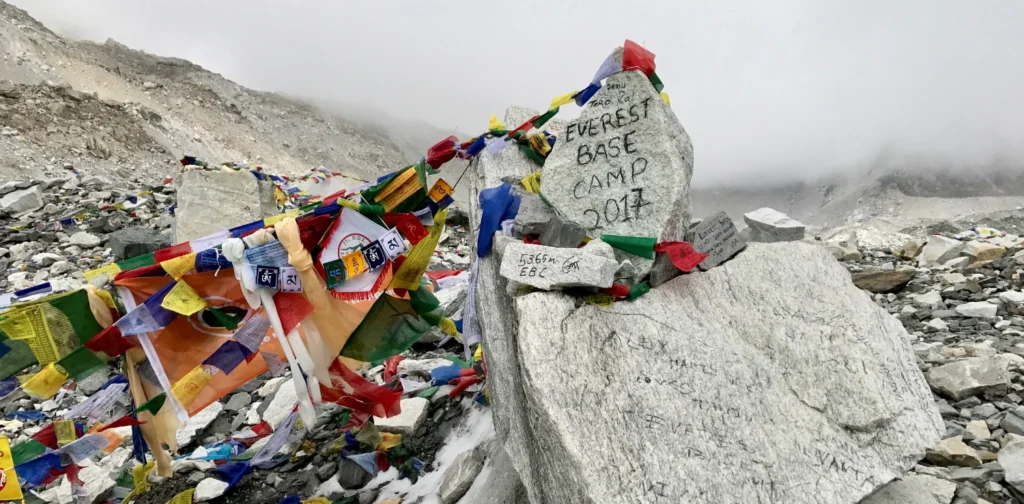
Everest Base Camp Trail, Khumjung, Nepal | Mari Partyka on Unsplash.
Waste is one of the planet’s biggest problems. It is even a problem at the highest altitude on Earth from sea levels, Mount Everest’s peak. Due to the high number of climbers, excrement and trash are sprawling across the area. The Nepalese government takes the matter into hand by launching a five-year strategy to clean up the Himalayas.
Mounting Waste in the Everest
Mount Everest, the crest of the Himalayan mountain range, is located between Nepal and Tibet. Despite standing at 29,029 feet and having an extremely dangerous environment, Mount Everest is a main tourism destination for mountaineers and amateurs alike. Unfortunately, the signs can be seen through the amount of trash left behind by the climbers, piling on the long path to the peak.
Each year, around 600 climbers who set foot on Mount Everest produce about 8 kilograms of waste each. The trash is dominated by used oxygen canisters, tents, food containers, and human excrement. Additionally, there are over 300 deceased human bodies in the area, which is a challenge on its own to retrieve.
This condition is worsened by the ongoing and persistent climate change. A study by the International Centre for Integrated Mountain Development (ICIMOD) shows that the Himalaya region is likely to lose its snow cover in quick succession, with its snowfall predicted to decrease by 18.9% to 32.8% by the end of the century. As a result, buried waste and human remains will be revealed after decades of coverage. The resurfaced waste will increase health and environmental risks for the communities downstream.
Ongoing Efforts
In 2014, Nepal implemented a regulation that required a team of climbers to pay a $4,000 deposit that would be refunded if each climber brought down at least 8 kilograms of waste. However, the scheme was deemed unsuccessful because climbers either brought back trash from lower camps only or decided to forfeit the deposit altogether.
Then, Nepali authorities took solid action to address this issue again in 2025. Endorsed by the Ministry of Culture, Tourism, and Civil Aviation, they launched a five-year strategy to clean up mountains in Nepal, especially Mount Everest. The strategy primarily focuses on preventive actions that place the biggest responsibility on waste producers. For example, it would require all climbers to bring down all the items they carry upward.
Furthermore, collaborative technological incorporation will be one of the main solutions this plan offers. Collaborating institutions will utilize advanced drone technology to observe garbage around the Khumbu region. Additionally, an integrated waste management system across Himalayan regions involving governments, expedition teams, and local communities will be set.
Toward Sustainable Tourism in Mount Everest
Indigenous communities around the region have been concerned about ecological degradation that happens due to tourism activities. As stewards of the land, their contribution to sustainability is key. For instance, the Sherpa, native Tibetan ethnic group, have been recycling waste, checking the legalities of each climber, and building a system to process human waste. But these efforts are not enough without full participation of all stakeholders.
Thus, education also plays an important role. The plan can address this need by adding environmental awareness into local curricula. The climbers will not be exempt from learning at a mandatory environmental orientation. All in all, governments must take the initiative to turn things around and move all relevant stakeholders to properly care for the wellbeing of Mount Everest for years to come.
Editor: Nazalea Kusuma

Co-create positive impact for people and the planet.
Amidst today’s increasingly complex global challenges, equipping yourself, team, and communities with interdisciplinary and cross-sectoral insights on sustainability-related issues and sustainable development is no longer optional — it is a strategic necessity to stay ahead and stay relevant.
 Whimsymaxxing and Beyond: Rethinking the Waste Behind Viral Trends
  Seeking Guidance from Karl Marx to Face the Climate Catastrophe
  Indonesia’s Greenwashing Diplomacy at COP31 and Beyond
  The Textile Industry Is Growing, and So Is Textile Wastewater
  EESG: We Need a New Economic Narrative for Sustainability in the Age of AI, Energy Crisis, and Geopolitical Divide
  The Continued Struggle for Equality and Dignity in Women’s Sportswear