

UK’s Local Power Plan to Support Community Energy Development
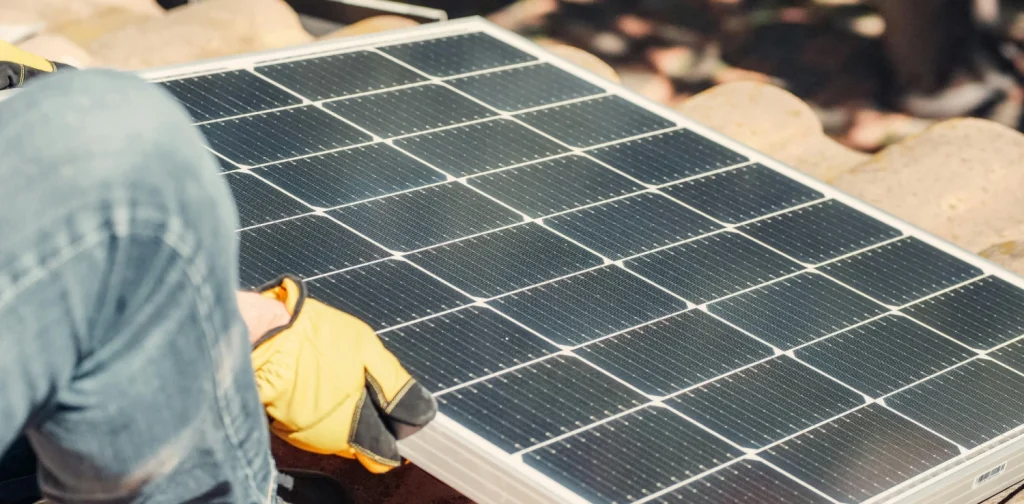
Photo: Kindel Media on Pexels.
The world continues to seek sustainable ways to generate electricity as the planet heats up. Wind, solar, water, and other renewable energy solutions are on the rise, yet much of the global population still face persisting barriers to accessing the benefits. Community energy offers a way to increase accessibility, affordability, and adaptability of renewable energy projects.
Growth and Barriers
Renewable energy has gained traction globally. An analysis by global energy think tank Ember Energy shows that renewable energy generation (5,072 TWh) overtook coal’s (4,896 TWh) in mid-2025, with solar showing the strongest growth. Solar and wind growth also outpaced electricity demand growth during that period.
However, growth must not only be measured by numbers, but also by access. Many communities around the world still lack access to affordable and reliable power. Most resort to using fossil fuels or creating makeshift solutions, whose emissions can be detrimental to people and planetary health.
With the renewable energy integration and accessibility issues in mind, community energy offers a solution. Community energy refers to the economic and operational participation in and/or ownership of energy projects by citizens, instead of the usual sole top-down ownership by government or business entities. This mechanism help ensure that renewable energy benefits can be shared more widely and equitably among members of the communities.
UK’s Local Power Plan
Community energy programs already exist worldwide in various forms. In the Italian Alps, the Magliano Alpi community built shared photovoltaic systems on the town hall roof and at other community facilities. They also developed tools to forecast energy generation and demand. Meanwhile, there is at least one community solar project in 44 states of the US, supported by federal and state funding.
In February 2026, the UK government followed suit. The Department for Energy Security & Net Zero and Great British Energy announced the Local Power Plan to invest up to £1 billion in community energy across the country. The program aims to ensure that every community in the UK has the opportunity to own a local energy project by 2030.
The idea is not new, as the country already has several examples of community energy. One is in Wales, where the Cambrian Village Trust established a micro-hydro plant to power a community cafe. The cafe became a hub for many local groups to hold their activities.
Funding and Other Support
Overall, the plan is hoped to lower bills for the community while strengthening local energy resilience. At the same time, it should also generate profits and jobs for them. As of February 2026, Great British Energy is conducting a consultation. It invites communities and local governments to express their interest or propose project ideas to assess their readiness and needs.
Still, projects like these require other enabling factors beyond funding. Empowering local communities who execute the plan remains a priority.
“We must move beyond short-term grants for physical infrastructure, such as heat pumps or solar panels, and provide long-term funding for the people behind it. Without stable support, vital local knowledge is lost each time a contract ends,” wrote Dr. Luke Gooding, a researcher from the University of York.
Editor: Nazalea Kusuma

Co-create positive impact for people and the planet.
Amidst today’s increasingly complex global challenges, equipping yourself, team, and communities with interdisciplinary and cross-sectoral insights on sustainability-related issues and sustainable development is no longer optional — it is a strategic necessity to stay ahead and stay relevant.
 Behavior Change for the Planet: Is composting worth it?
  Building Bridges Between Environmental Policy and Mental Health
  We May Surpass 1.5°C Soon, But We Can Do Something About It
  From European Heat to the Himalayan Flood: The Transboundary Nature of Climate Risk
  Noise Pollution Is Making Us Sick, and Climate Change Is Making It Worse
  Beyond Fashion: The Environmental Cost Behind Animal Leather