

Asia Pacific’s SDG Progress Faces Major Setbacks
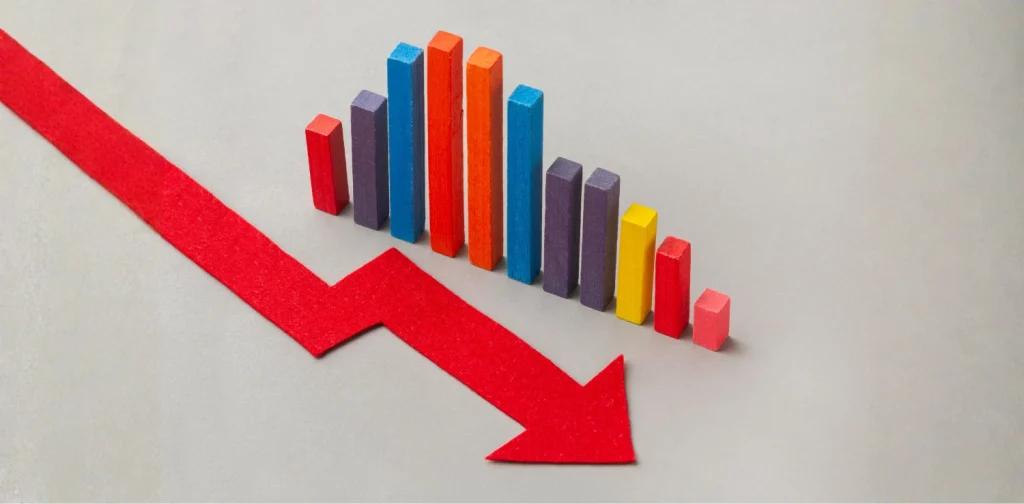
Photo by freepik.
Asia Pacific is a major geopolitical and economic region that covers a wide geographical area. However, amid rapid economic growth and social transformation, a 2026 report by the UN Economic and Social Commission for Asia and the Pacific (ESCAP) on SDG progress reveals that this region is falling behind in pursuing sustainable development targets.
Even though there are only a few years left before the 2030 Sustainable Development Goals (SDGs) deadline, ECSAP’s report states that the Asia Pacific region faces “a stark contradiction”. While Asia Pacific has made some remarkable gains in the economy, such as improving access to health and electricity infrastructures, this is overshadowed by environmental backsliding and widening inequality.
SDG Progress: Environmental Setbacks
The report notes that the Asia Pacific is not on track to achieve any of the 17 Goals. At its current pace, the region will risk missing 103 of the 117 measurable targets. Critical areas related to the environment face significant setbacks. For instance, progress for Goal 13 (Climate Action) remains a serious concern as the region still heavily relies on fossil fuels.
Asia Pacific also shows accelerating biodiversity loss that hampers progress toward Goal 15 (Life on Land). This is exacerbated by worsening land degradation and insufficient effort in promoting sustainable forest management. Progress for SDG 14 (Life below water) is also in serious decline as marine and freshwater ecosystems are under threat.
SDG Progress: Connecting Access, But Inequality Remains
Nonetheless, there are areas with positive progress. The report shows that Asia Pacific makes advancement toward SDG 3 (Good Health and Wellbeing). Notable progress shows through sustained reductions in maternal, newborn, and child mortality. There is also a decline in adolescent births. Meanwhile, improvement appears in official development assistance (ODA) for medical research and basic health sectors.
Positive progress also shows for Goal 9 (Industry, Innovation, and Infrastructure), where access to electricity is expanding rapidly. Most of the countries that were previously left behind in digital connectivity have also made significant strides, compared to 2015, when digital exclusion was the norm in Asia Pacific.
However, SDG progress toward equality remains slow. For Goal 10 (Reduced Inequalities), the report notes a little improvement in the share of the population living on less than half the median income. At the same time, rates of youth not in education, employment, or training (NEET) are increasing while labor rights compliance is deteriorating. Widening inequality occurs not only between countries but also within them.
The report also highlights persistent data gaps. This gap, especially for SDG progress on Goal 5 (Gender Equality) and 16 (Peace, Justice, and Strong Institutions), limits the understanding of whether the needs for the most vulnerable communities are being addressed.
Fundamental Shift Needed
As the deadline for SDGs gets closer, Asia Pacific needs a fundamental shift. Governments in the region must integrate climate action and environmental protection into development planning. There needs to be a stronger push for political commitment, financial investments, and cross-sectoral collaboration to balance the economic gains with equality and environmental protection.
“Our greatest collective challenge is also our greatest opportunity: to build a region that is not only wealthier but also smarter, healthier and more just,” wrote Armida Salsiah Alisjahbana, Under-Secretary-General of the United Nations and Executive Secretary of ESCAP.
Editor: Nazalea Kusuma

Co-create positive impact for people and the planet.
Amidst today’s increasingly complex global challenges, equipping yourself, team, and communities with interdisciplinary and cross-sectoral insights on sustainability-related issues and sustainable development is no longer optional — it is a strategic necessity to stay ahead and stay relevant.
 EESG: We Need a New Economic Narrative for Sustainability in the Age of AI, Energy Crisis, and Geopolitical Divide
  The Continued Struggle for Equality and Dignity in Women’s Sportswear
  Behavior Change for the Planet: Is composting worth it?
  Building Bridges Between Environmental Policy and Mental Health
  We May Surpass 1.5°C Soon, But We Can Do Something About It
  From European Heat to the Himalayan Flood: The Transboundary Nature of Climate Risk