

How Spogomi Addresses Waste Through Competitive Sport
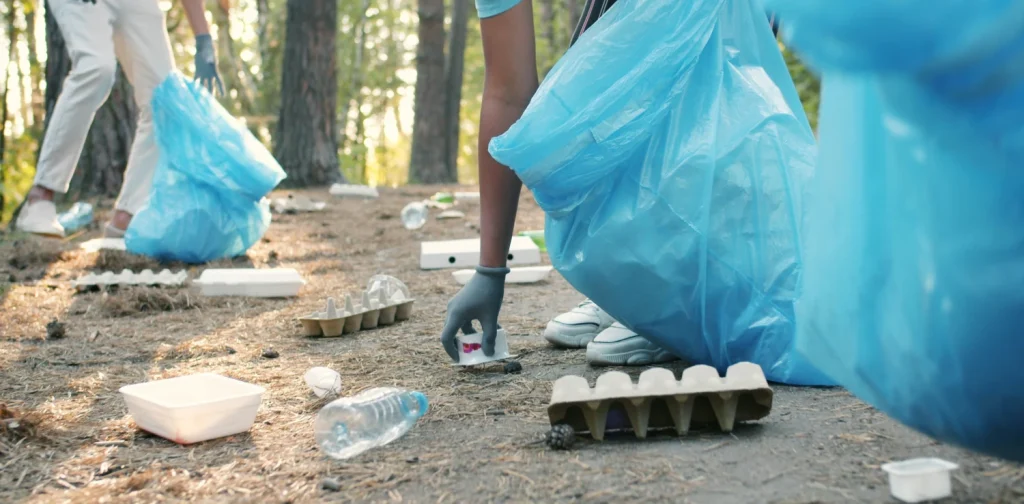
Photo: Vitaly Gariev on Unsplash.
The issue of waste has become a persistent challenge that is difficult to address. In practice, awareness of the importance of a clean environment does not always translate into action. Even picking up visible litter is not a common practice. But what if litter collection were turned into a competitive sport? Introducing: spogomi.
The Origin of Spogomi
Spogomi first emerged when a runner named Kenichi Mamitsuka began picking up trash during his morning runs in the Kagoshima area of Japan 20 years ago. Although he initially felt self-conscious as passersbys looked at him with puzzled expressions, the activity gradually became enjoyable. Mamitsuka later transformed this simple habit into an organized sport known as Spogomi. True to the essence of the activity, the term “Spogomi” itself is a combination of the words “sport” and “gomi,” which means “trash” in Japanese.
Currently, Spogomi is governed by the Nippon Foundation SPOGOMI Federation. The first Spogomi World Cup was held in 2023 in Tokyo, where teams representing 21 countries competed against one another. The number of teams continued to grow, and by the 2025 Spogomi World Cup, 34 teams had qualified for the event. The Japanese team, competing under the name Smile Story, won the 2025 World Cup, defeating Germany’s The Grandline-Cleaners by a margin of less than one pound of trash collected.
The Rules of Spogomi
What sets Spogomi apart from ordinary trash collection is the structured set of rules. Teams, typically made up of three participants, are given 45 minutes to collect trash within a designated area.
Participants are not allowed to run and must instead move at a brisk walking pace, while maintaining a distance of 32 feet from one another. They are also prohibited from entering private property or collecting hazardous items, such as broken glass. After the collection period, teams are given 15 minutes to return to base, with penalties applied for late arrival.
Once back at base, each team has 20 minutes to sort the collected trash into the appropriate categories. The final score is determined by both the weight and type of trash collected, with certain items, such as cigarette butts, assigned higher value and earning additional points.
Mamitsuka emphasized that Spogomi is accessible to everyone, regardless of age or gender. This emphasis on inclusivity reflects the broader reality that litter is a universal issue, requiring participation across all segments of society.
The Global Waste Problem
In its publication What a Waste 3.0, the World Bank reports that global waste production is increasing faster than previously projected, reaching 2.6 billion tonnes of municipal solid waste in 2022. Under a business-as-usual scenario, this amount is expected to rise to 3.86 billion tonnes by 2050, with plastic waste accounting for approximately 12.5% of the total.
Beyond the issue of volume, waste management also has significant implications for the climate. In 2022, the waste sector generated approximately 1.28 billion tonnes of CO2 equivalent, a figure projected to increase to 1.84 billion tonnes by 2050 without substantial changes.
At the same time, many parts of the world continue to face a persistent challenge in the form of uncollected waste. This affects not only cleanliness but also quality of life and pollution levels.
Can Spogomi Be the Solution?
Although many participants are initially drawn to Spogomi for its competitive aspect, the activity also aims to raise awareness of broader environmental issues. However, as noted by Professor Marianne Krasny of the Civic Ecology Lab at Cornell University, trash collection efforts alone do not fully address the roots of the problem.
People can play a more active role by advocating for wider environmental action, helping to drive structural changes that support more sustainable practices. Mamitsuka, as the initiator of the sport, has expressed a similar view. He emphasizes that Spogomi should encourage greater involvement within local communities. In this way, Spogomi can serve as a starting point for more meaningful environmental engagement.
Editor:Nazalea Kusuma

Co-create positive impact for people and the planet.
Amidst today’s increasingly complex global challenges, equipping yourself, team, and communities with interdisciplinary and cross-sectoral insights on sustainability-related issues and sustainable development is no longer optional — it is a strategic necessity to stay ahead and stay relevant.
 Behavior Change for the Planet: Is composting worth it?
  Building Bridges Between Environmental Policy and Mental Health
  We May Surpass 1.5°C Soon, But We Can Do Something About It
  From European Heat to the Himalayan Flood: The Transboundary Nature of Climate Risk
  Noise Pollution Is Making Us Sick, and Climate Change Is Making It Worse
  Beyond Fashion: The Environmental Cost Behind Animal Leather