

The Antarctic Ice Shelves Are Destabilizing in a Warming Climate
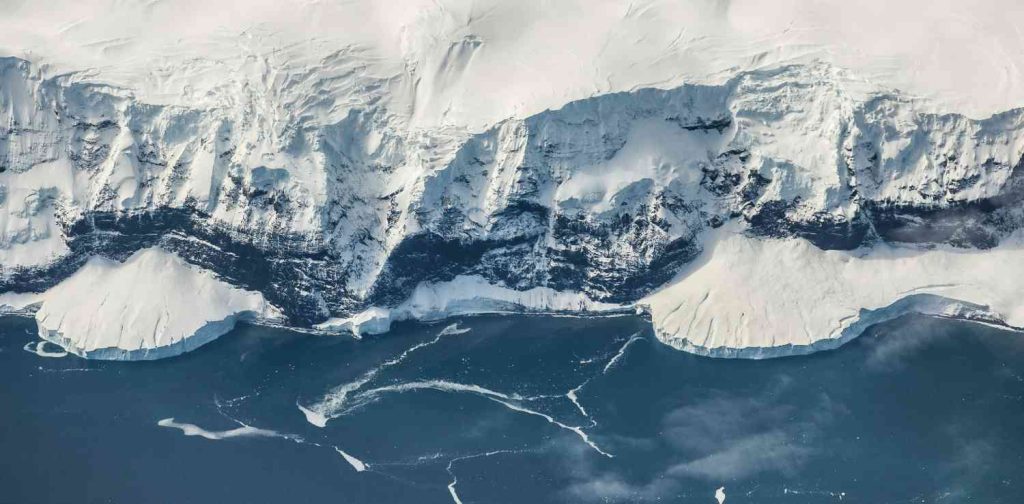
Photo: Matt Palmer on Unsplash.
Antarctica is a continent defined by its vast layers of ice, making it the driest and coldest landmass on earth. However, the escalating effects of global warming are destabilizing the ice shelves in this frozen frontier.
The Importance of the Antarctic Ice Shelves
Ice shelves are massive floating extensions of continental ice sheets that reach out into frigid coastal waters. Typically ranging from 50 to 600 meters in thickness, these resilient structures can persist for thousands of years. They are generally categorized into three types based on their origins. Some originate from glaciers, and others form from sea ice combined with local snowfall. Some are composite structures that incorporate elements of both. Among these, glacier-fed ice shelves are typically the largest and most expansive formations.
Antarctica serves as the global heart of these formations. It contains 15 major ice shelf areas, making it the highest concentration of ice shelves on earth. These structures fringe approximately 75% of the Antarctic coastline, covering a staggering 1.561 million square kilometers. Beyond their sheer scale, ice shelves also play a central role in regulating the continent’s overall mass balance and preventing rapid glacial retreat.
In addition to their structural importance, ice shelves are fundamental drivers of global ocean circulation. They facilitate thermohaline circulation, a process driven by differences in water temperature and salinity. In polar regions, the formation of extremely cold and dense water causes it to sink to the ocean floor, where it begins a global journey transporting heat, carbon, and nutrients throughout the Earth’s oceans. This mechanism is a cornerstone of the planet’s climate regulation, comprising critical systems such as the Atlantic Meridional Overturning Circulation (AMOC).
The Melting and the Consequences
Climate models suggest that Antarctic ice shelves and the AMOC are increasingly vulnerable to weakening, driven by warming ocean temperatures and a surge in freshwater from melting ice. A decades-long study conducted by researchers from Cambridge University in collaboration with the University of California reveals that an ocean warm mass, referred to as Circumpolar Deep Water (CDW), has expanded and shifted closer to the Antarctic continent over the last twenty years.
Earlier, researchers relied on ship-based measurements taken once per decade through international programs that documented temperature, salinity, and nutrient levels. Because these observations were intermittent, they offered only a fragmented view of long-term shifts in ocean heat distribution. To bridge this gap, researchers integrated continuous data from autonomous floats with the ship-based measurements using machine learning. This approach mapped CDW movement with unprecedented accuracy, uncovering a warming trend that threatens ice shelf stability.
As this warm CDW flows onto the continental shelf, it can flow into the cavities beneath ice shelves and melt them from the bottom up. This process erodes the structural integrity of the ice shelves and diminishes their capacity to hold back inland glaciers and ice sheets.
In the most extreme scenarios, the resulting collapse of the ice shelves could contribute to a global sea-level rise of up to 58 meters, while simultaneously disrupting the broader climate system. This phenomenon is inextricably linked to global warming, as more than 90% of excess heat is absorbed by the oceans so far, with the Southern Ocean absorbing the most anthropogenic heat.
Preserving the Ice
Given their critical role in the global climate system, preserving Antarctica’s ice shelves has become an urgent priority. Reducing greenhouse gas emissions remains the most foundational step, with a particular emphasis on efforts to limit global temperature rise to 1.5°C. Achieving this target depends largely on deep decarbonization through a global transition to clean and renewable energy. Hence, we need the rapid expansion and large-scale systemic implementation of clean energy technologies.
On top of that, research and policy initiatives must increasingly focus on closely monitoring the ice shelves and developing comprehensive strategies and innovative technological solutions. Effectively addressing the issue requires robust interdisciplinary collaborations to assess both the long-term and immediate impacts. For instance, while prevention of further destabilization is critical, mitigating potential “disaster scenarios” such as loss of ice, global sea level rise, water crisis, and ocean ecosystem degradation is imperative. For that, we need international multi-stakeholders cooperation.
Ultimately, a coordinated global response is required to support these efforts and ensure long-term success. Strong regulatory frameworks and research support, paired with transparent and inclusive decision-making processes, are essential to ensure that climate measures are not only scientifically effective but also socially responsible and equitable.
Editor:Nazalea Kusuma

Co-create positive impact for people and the planet.
Amidst today’s increasingly complex global challenges, equipping yourself, team, and communities with interdisciplinary and cross-sectoral insights on sustainability-related issues and sustainable development is no longer optional — it is a strategic necessity to stay ahead and stay relevant.
 From European Heat to the Himalayan Flood: The Transboundary Nature of Climate Risk
  Noise Pollution Is Making Us Sick, and Climate Change Is Making It Worse
  Beyond Fashion: The Environmental Cost Behind Animal Leather
  Addressing the Hidden Risk of Microplastics from Offshore Infrastructures
  Addressing Antimicrobial Resistance as More Than a Medical Issue
  Holding Harmful Industries Liable for Harm to Human Life and the Environment