

How Decentralized Renewable Energy (DRE) Can Advance The Gambia’s Agricultural Sector
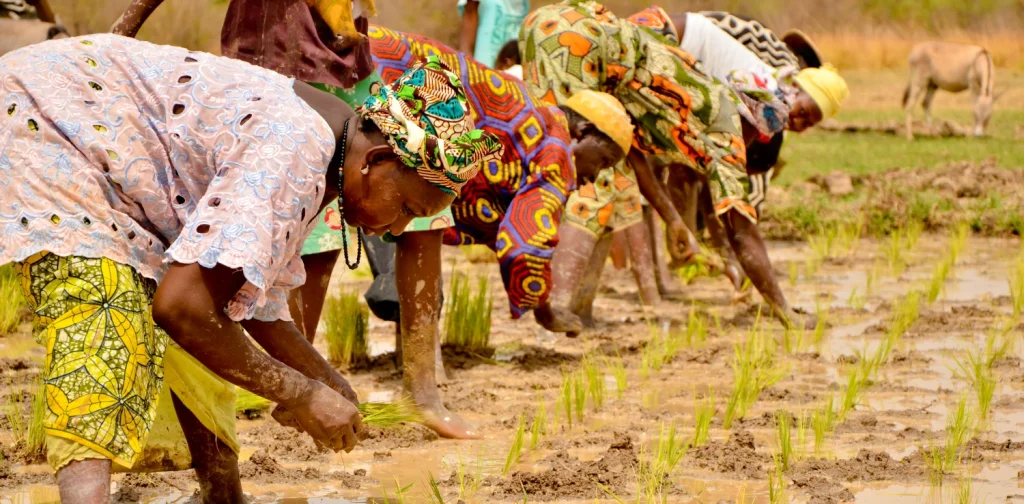
Photo: Sheena on flickr.
Agriculture serves as a cornerstone of rural livelihood globally, and The Gambia is no exception. Yet, despite its critical role, agricultural productivity remains constrained by systemic challenges, most notably limited access to electricity. In this light, decentralized Renewable Energy (DRE) emerges as a compelling alternative to conventional grid expansion in supporting The Gambia’s farms.
The Gambia, a West African nation spanning 11,295 km2, supports a population of 2.52 million. The country’s rural population remains heavily dependent on agriculture as their primary source of livelihood. According to the 2024 census, 47.2% of households engage in agricultural activities to meet basic needs and generate income. Beyond individual livelihoods, the sector is a pillar of the national economy, contributing around 20% to the Gross Domestic Product (GDP) in 2024.
Electricity Access for The Gambia’s Agricultural Sector
While the sector encompasses diverse value chains, it remains hindered by a heavy reliance on rain-fed farming. This dependence leaves the sector vulnerable to climate change. As the impacts of climate change worsen, The Gambia’s agricultural sector struggles with low productivity. The challenges are then further exacerbated by limited energy access, poor quality inputs, and overall inadequate infrastructure.
Data from the International Renewable Energy Agency (IRENA) indicates that electricity access among smallholder farmers in The Gambia varies significantly by location and commodity. It ranges from 48% for rural poultry farmers to 95% for maize farmers in peri-urban areas. On average, 75% of smallholder farmers have some form of electricity access. About 60% are connected to the national grid, 38% utilize solar photovoltaic systems with battery storage, and 2% rely on diesel generators. However, the cost and quality of this electricity stand as significant barriers.
The issue is a reflection of the country’s general energy provision. The national electrification rate has seen notable progress, reaching 73.7% rate in 2024. Nevertheless, this expansion is often overshadowed by an unreliable power supply caused by insufficient local generation and problems by transmission infrastructure. In 2024 alone, the national supply of 561 GWh failed to meet the 662 GWh demand. To bridge this gap, the government and various development partners are actively expanding grid density and prioritizing rural electrification.
Despite these efforts, electricity consumption within the agricultural sector remains remarkably low. This stagnation is likely due to a tariff structure that, while cross-subsidized, may still not align with the economic realities of farming. Ultimately, the negligible energy use also reflects a broader lack of mechanization and a limited base of energy-intensive processing activities. This suggests that electricity access alone is not enough to modernize the sector.
The Prospects for Decentralized Renewable Energy in The Gambia
Renewable energy is a key pillar of The Gambia’s strategy to address energy access, enhance supply security, and drive economic transformation. The country has significant renewable resources, most notably solar energy. While the share of renewables in the national electricity mix stood at 13% in 2024, the government has set a firm target to increase this to 30% by 2030.
For The Gambia, decentralized Renewable Energy (DRE) has emerged as a compelling alternative to traditional grid expansion. Unlike centralized systems that depend on large-scale power plants and extensive transmission infrastructure, DRE systems generate and distribute power on a localized scale, directly at the point of consumption. This model is particularly effective for The Gambia’s context, as it bypasses the logistical and financial hurdles of extending the national grid to remote areas.
There is currently a robust market for solar technology within agriculture in The Gambia. Specifically, solar water pumps, solar refrigeration units, and solar photovoltaics milling systems offer the most attractive financial profiles, boasting high internal rates of return and short discounted payback periods. By providing reliable power, decentralized renewable energy systems can significantly reduce post-harvest losses.
Barriers to DRE Integration
Despite its potential, the adoption of DRE in the agricultural sector faces several persistent challenges. On the demand side, smallholder farmers often lack the purchasing power necessary to invest in new systems. This is compounded by limited technical knowledge and a lack of access to reliable maintenance service, which has unfortunately led to a decline in trust toward DRE technologies.
On the supply side, the market suffers from a limited availability of high-quality equipment and a shortage of trained technicians to provide essential after-sales support. Additionally, technology providers often lack a nuanced understanding of the specific needs of the agricultural value chain, resulting in a mismatch between available solutions and the actual requirements of farmers. These issues are exacerbated by systemic barriers, including weak institutional coordination, a lack of enforced quality standards, and insufficient government incentives or public investment.
Overall, financing remains the most significant hurdle. The high upfront investment costs of DRE systems, coupled with limited access to credit and high interest rates, make integration difficult for the average producer. Furthermore, financial institutions are still reluctant to lend to the agricultural sector, particularly in rural areas where financial services are already sparse. Nevertheless, the underlying demand for DRE solutions remains high for smallholder farmers, driven by the urgent need for a more reliable power supply than the national grid can currently provide.
Recommendations for DRE Integration
To overcome these barriers, IRENA proposes several key interventions designed to improve the viability and uptake of decentralized renewable energy. First, the government must strengthen financial mechanisms and affordability by encouraging commercial banks and microfinance institutions to develop specialized credit products. The expansion of government-backed credit guarantee schemes tailored for agricultural DRE investments is also necessary to mitigate lender risk.
Second, the government and energy companies should build technical capacity and awareness among smallholder farmers and the local energy workforce. Targeted campaigns that highlight the specific economic benefits and productivity gains of DRE solutions are a good first step. These efforts should exist alongside specialized training programs designed to familiarize farmers and local technicians with the operation, maintenance, and repair of DRE systems. After all, improving farmers’ confidence in the technology requires not only better knowledge on their part but also the assurance that a competent local support network exists for repair services.
Finally, strengthening policy and institutional support is critical for long-term integration. The government should implement fiscal incentives, such as tax rebates or exemptions, for essential DRE components to lower market prices. To protect farmers from substandard equipment, it is vital to establish rigorous quality standards and technical certifications for both hardware and installation services. Above all, DRE should be systematically integrated into the national agricultural planning to ensure that government policies directly support food security goals.
Global Implications
The potential in integrating decentralized renewable energy into the agricultural sector extends far beyond the borders of the Gambia. Across the globe, agriculture remains a foundational pillar of societies as the backbone of global food security. Because these components are energy-intensive, DRE technology offers a universal solution for building more resilient food systems. By refining the combination of specialized technology, accessible financing, and robust capacity building, the model currently developing in The Gambia can serve as a blueprint for agricultural communities worldwide, especially for agriculture-dependent, developing nations at the frontline of climate change.
Editor: Nazalea Kusuma
Co-create positive impact for people and the planet.
Amidst today’s increasingly complex global challenges, equipping yourself, team, and communities with interdisciplinary and cross-sectoral insights on sustainability-related issues and sustainable development is no longer optional — it is a strategic necessity to stay ahead and stay relevant.
 Behavior Change for the Planet: Is composting worth it?
  Building Bridges Between Environmental Policy and Mental Health
  We May Surpass 1.5°C Soon, But We Can Do Something About It
  From European Heat to the Himalayan Flood: The Transboundary Nature of Climate Risk
  Noise Pollution Is Making Us Sick, and Climate Change Is Making It Worse
  Beyond Fashion: The Environmental Cost Behind Animal Leather