

How Climate Change Is Redrawing The Food Map
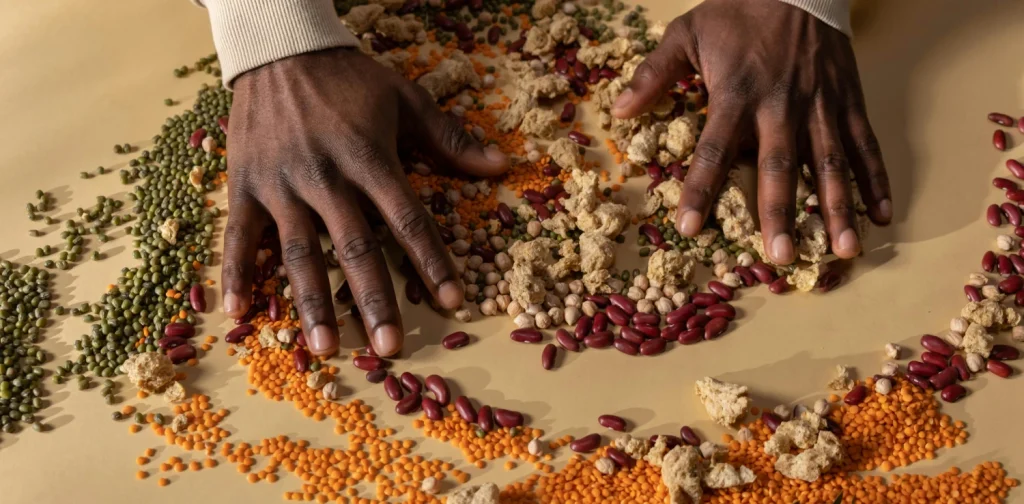
Photo: cottonbro studio on Pexels.
For most of human history, the planet’s food map was fairly predictable. Fertile plains fed nations. Monsoons arrived on schedule. The same fields grew the same crops for generations. Now, that map is being redrawn, and the new version is far less forgiving.
Climate Change and Food Production
Global warming is undeniable, with temperature records rising every year. With it, comes the changing climate that may look like both colder winters and longer dry seasons.
For the global food map, climate change acts as a volatility multiplier. It increases the probability of both bumper crops and crop failures as well as how harvest looks across seasons. In turn, the changes push commodity markets toward more pronounced booms and busts. But volatility is only part of the story. The deeper shift is geographically evident. The places that feed the world are moving, and the places that can least afford disruption are taking the hardest hits first.
A Stanford study published in Nature in June 2025 found that every additional degree Celsius of global warming drags down the world’s ability to produce food by roughly 120 calories per person per day. In a world still grappling with hunger, that is alarming. But the impact becomes even less abstract when we consider the global food map.
The Shifting Food Map: Northward Creep
Traditional breadbaskets like U.S. agriculture rank among the hardest hit in yield projections. Meanwhile, regions in Canada, Russia, and parts of China may temporarily benefit from warming conditions.
Another study states that the agricultural frontier is shifting northward by up to 1,200 kilometers in parts of North America and East Asia. By 2099, roughly 76% of the boreal region could reach crop-feasible growing conditions compared to just 32% today.
Yet this northward creep of viable farmland on the food map is not a simple win. Those newly thawed lands come with thin soils, unreliable water balances, and limited infrastructure. After all, you cannot simply relocate centuries of farming knowledge and development.
The Shifting Food Map: At Risk and Vulnerable
The 2025 State of Food Security and Nutrition report from UN agencies shows a slight downward trend in global hunger rates. However, indicators like food unaffordability, malnutrition, and regional disparities remain firmly entrenched. Progress at the headline level is masking deterioration underneath.
More than 87 million people are already facing hunger in East and Southern Africa, and 52 million are projected to be acutely food insecure in West and Central Africa by mid-2026. These are regions that contributed least to the emissions driving climate change. At the same time, they are ones with the fewest resources to adapt.
Additionally, 80% of the world’s people rely on just three agricultural commodities: maize, rice, and wheat. The production of these staples is concentrated in a small number of breadbasket regions. So, if the crisis hits more than one breadbasket region simultaneously, the scale of economic disruption can be severe. This is not a future scenario. This is the system operating right now, under increasing stress.
Living with the New Food Map
Climate change is redrawing the food map. While the new picture presents a serious issue, it is not hopeless. Adaptation and mitigation must begin—urgently, at a scale that matches the problem.
Food system investment should prioritize climate-vulnerable regions. Funding for food and emergency assistance is already falling significantly short, and the dismantling of programs like USAID creates gaps that will compound hunger in future years if not addressed by other actors.
At the same time, agricultural research funding should also go toward climate-vulnerable regions, especially ones that heavily supply the global food map. The research should urgently look into diversification and prioritize crop varieties that can survive heat stress, erratic rainfall, water crisis, and degraded soil.
Finally, no less important is leadership. Governments and policymakers need to treat food security as a security issue in the fullest sense. Persistent inequality, hunger, price inflation, and biosecurity threats have the power to spiral into broader instability. And ultimately, no country is insulated from that when supply chains are global.
Editor: Nazalea Kusuma
Co-create positive impact for people and the planet.
Amidst today’s increasingly complex global challenges, equipping yourself, team, and communities with interdisciplinary and cross-sectoral insights on sustainability-related issues and sustainable development is no longer optional — it is a strategic necessity to stay ahead and stay relevant.
 The Continued Struggle for Equality and Dignity in Women’s Sportswear
  Behavior Change for the Planet: Is composting worth it?
  Building Bridges Between Environmental Policy and Mental Health
  We May Surpass 1.5°C Soon, But We Can Do Something About It
  From European Heat to the Himalayan Flood: The Transboundary Nature of Climate Risk
  Noise Pollution Is Making Us Sick, and Climate Change Is Making It Worse