

Behavior Change for the Planet: Is composting worth it?
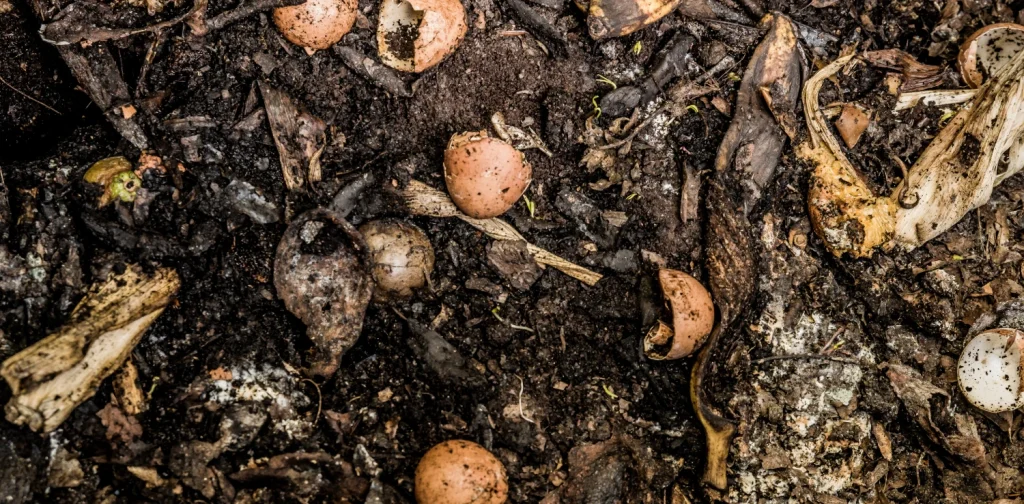
Photo: Philip Cohen on Flickr.
Most of us were told as children not to waste food. Yet, fewer of us were taught what actually happens to it when we do. When food waste ends up in a landfill, it does not simply disappear. Buried under layers of other waste and cut off from oxygen, it decomposes. It breaks down anaerobically, producing methane, a greenhouse gas roughly 80 times more potent than carbon dioxide over a 20-year period. Composting offers a straightforward alternative pathway to that cycle.
What Composting Actually Is, and What It Does
Composting is the process of allowing organic matter, such as food scraps, garden waste, and paper, to break down aerobically into a nutrient-rich material. The key difference from landfill decomposition is the presence of air. Because compost heaps are turned and aerated, the bacteria at work produce far less methane. According to research, composting food waste produces 38% to 84% less greenhouse gas emissions than sending the same material to a landfill.
The end product, compost itself, is not simply “dirt”. It is a soil amendment with many benefits. Compost improves soil structure, increases microbial biodiversity, retains moisture, reduces erosion, and decreases reliance on synthetic fertilizers. For home gardeners, that means richer soil for growing food and flowers. For farmers, it also means reduced input costs. Meanwhile, for cities, it means less material reaching landfills.
In essence, the process allows waste to feed back into the food system. Compost from food and agricultural waste helps create healthy soil that grows more nutritious food, which produces more nutrient-rich scraps, which then can become more compost. Composting is, when it works, a genuinely circular process.
Worthwhile Behavior Change
Food waste accounts for around 8% of global greenhouse gas emissions. In the US alone, for instance, it is responsible for 58% of all landfill methane. And globally, 61% of food waste in 2019 came from households, according to UNEP’s Food Waste Index Report. Therefore, composting is a recommended household practice that would create significant impact.
For home composting, you may need a backyard bin, an underground setup, or countertop composter. All of those work. However, they require outdoor space, which many urban dwellers simply don’t have. It also requires a certain level of knowledge. For example, wrong inputs (meat and dairy can attract pests)or neglect can cause unpleasant smells or failure to break down at all. None of these are insurmountable, but they are real barriers.
So, for people without outdoor space, the alternatives are worth knowing. Bokashi composting is a fermentation system using inoculated bran. The good part is that it can be done entirely indoors in a sealed container and handle meat and dairy.
Beyond Individual Practice
On a more systemic level, community composting sites are expanding in many urban areas. With those, residents can drop off their scraps to a shared facility. Additionally, many cities now offer curbside organic waste collection. The system collects and composts food scraps at scale, removing the burden from the individual entirely.
In the Global South, though, the picture is more complex.Food waste makes up the majority of waste streams in Southeast Asia. And the good news is that over 50% percent of solid waste in developing countries could be readily composted.
However, scaling composting in low- and middle-income contexts requires infrastructure, policy support, and market development for compost products. As World Bank notes, the technical potential is high, but the financing and policy environment has often not kept pace. After all, individual action alone will not solve a structural waste management problem.
So What Should You Actually Do?
If you have outdoor space: a basic compost bin or heap is low-cost, low-effort after the initial setup. Add fruit and vegetable scraps, coffee grounds, eggshells, dry leaves, and cardboard. Avoid meat, dairy, and oily foods in open systems. Turn it occasionally. In a few months, you have compost to add to soil, whether for a garden, houseplants, or donation to a community garden.
If you don’t have outdoor space, look into your community. You should check whether your city or district facilitates a curbside collect-and-compost. You can also look for community compost drop-off points. And if none of those are available, advocate for them. You can even start one. Sustainable soil health and proper waste management depend on systems-level change, not just individual bin choices.
Ultimately, composting will not single-handedly reverse climate change. But as a habit that costs almost nothing, produces something useful, and demonstrably reduces waste in landfill and the methane your food waste would otherwise generate, it sits in a category of individual actions where the science and the practicality actually line up.
Editor: Nazalea Kusuma
Co-create positive impact for people and the planet.
Amidst today’s increasingly complex global challenges, equipping yourself, team, and communities with interdisciplinary and cross-sectoral insights on sustainability-related issues and sustainable development is no longer optional — it is a strategic necessity to stay ahead and stay relevant.
 Building Bridges Between Environmental Policy and Mental Health
  We May Surpass 1.5°C Soon, But We Can Do Something About It
  From European Heat to the Himalayan Flood: The Transboundary Nature of Climate Risk
  Noise Pollution Is Making Us Sick, and Climate Change Is Making It Worse
  Beyond Fashion: The Environmental Cost Behind Animal Leather
  Addressing the Hidden Risk of Microplastics from Offshore Infrastructures