

Why Does Child Labor Persist?
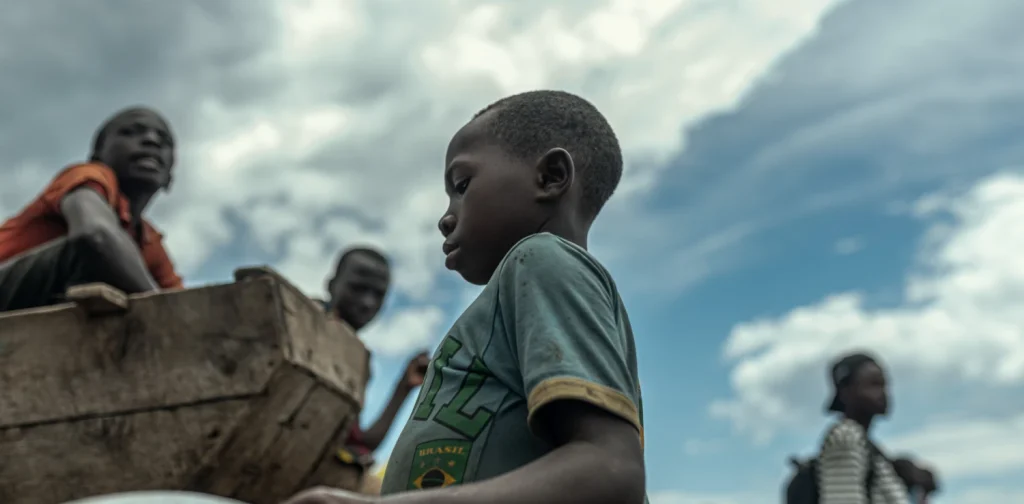
Photo: Edouard MIHIGO on Pexels.
Children are born with many dreams and aspirations they wish to realize. Yet, not all children share the same fate. Disparities in economic conditions, access to education, and geopolitical circumstances present a harsh reality for those who are less fortunate. When children lack an equal starting point in life, many end up trapped in child labor.
Understanding Child Labor
At an age where they still need their parents’ care and affection, many children are forced to fend for themselves. They work to support themselves and, sometimes, their families. . Even more concerning, these children often do hazardous work for meager wages. This is the reality of children in forced labor.
Child labor is work that deprives children of their childhood, potential, and dignity, while also endangering their physical and mental development. Although the forms of child labor vary, the term primarily refers to work involving children in slavery, prostitution, illegal activities, or tasks that compromise their safety. Studies indicate that child laborers are highly susceptible to stress, anxiety, and even depression. All the while, their heavy workloads with inadequate pay offer no real solution to break out of the cycle of poverty. They do not even provide a sustainable means of basic daily survival.
Despite decades of efforts to end child labor, its prevalence has remained unchanged. According to the International Labour Organization (ILO), approximately 138 million children worldwide are in child labor. This staggering number constitutes nearly 8% of the global child population. Agriculture accounts for more than half of the total global child labor (61%), followed by the service (27%) and the industrial (12%) sectors.
Persistent Drivers of Child Labor
Child labor does not occur without reason. The Convention on the Rights of the Child includes the rights to education and to a standard of living adequate for the child’s health and wellbeing, among others. When children are deprived of them, they are more likely to get roped into child labor. This is a connection supported by data from countries with high rates of child labor.
In Burkina Faso, 42% of children have reportedly engaged in child labor. They are often required to work in cotton production or agriculture because they lack basic needs, including education, economic stability, and future employment opportunities. A comparable situation hails from Somalia. There, children experience limited access to healthcare, nutrition, water, education, and protection. Barriers to these essential services, intensified by the climate crisis and conflict, have significantly pushed thousands of children to be child soldiers and child laborers.
Access to education is also a persistent key factor. Insufficient educational opportunities, combined with lack of awareness, often push children to seek ways to financially support their families. In Bangladesh, children as young as five to seven years old work in dried-fish processing plants in Cox’s Bazar rather than attending school. On a similar vein, child labor is the reason behind 44% of school dropouts in Yemen. Many Yemeni children struggle to balance studying and helping their families economically amid prolonged conflict, reducing their focus on learning and increasing the risks of dropping out.
Underlining all factors pertaining to child labor is poverty and lack of social protection. UN data reveals that 333 million children globally live in extreme poverty, and nearly one billion experience multidimensional poverty. Worse, 1.4 billion of children are without any basic social protection. The cost-of-living crisis and geopolitical tensions across the globe become the breeding ground for poverty and unrest, forcing children to bear heavy burdens with little to no safety net.
Addressing Systemic and Fundamental Issues
Ending child labor requires systemically addressing fundamental issues in a child’s life. This means ensuring that all children have equitable access to education, healthcare, and social protection, among others. Leadership and robust laws by governments must be at the frontline. For instance, in 2026, Barbados and Saint Lucia reported the lowest child labor rates, at 1%. Through comprehensive legal reforms and international conventions, their governments have significantly reduced child labor by enhancing child protection measures and broadening access to education.
Furthermore, improving access to quality education is key. Education will empower children to realize their potential and develop relevant skills, which creates economic opportunities. Learning processes that integrate theoretical knowledge with practical experience, including vocational training and apprenticeships, are also essential to facilitating their safe transition into the workforce.
Still, initiative and participation from businesses is critical. Implementing responsible business practices that comply with business and human rights (BHR) principles throughout the value chain should be the standard, but many still fall through the cracks. Ultimately, a combination of stringent policies, supply chain transparency, and responsible production and consumption sits at the core of child labor eradication efforts, with a long way to go in a tumultuous world.
Editor: Nazalea Kusuma

Co-create positive impact for people and the planet.
Amidst today’s increasingly complex global challenges, equipping yourself, team, and communities with interdisciplinary and cross-sectoral insights on sustainability-related issues and sustainable development is no longer optional — it is a strategic necessity to stay ahead and stay relevant.

Chrisantha Cecilia Yobelina Tumanggor
Chrisantha Cecilia Yobelina Tumanggor is a Reporter and Research Assistant at Green Network Asia. She holds a bachelor’s degree in Environmental Engineering from ITERA. She has interests in sustainability, particularly environmental issues and gender equality.
 F for Fairness: A year on, TFFF must reach the people who protect forests
 Risk of Transboundary Air Pollution Increases as Extreme Heat Continues
 Whimsymaxxing and Beyond: Rethinking the Waste Behind Viral Trends
 Seeking Guidance from Karl Marx to Face the Climate Catastrophe
 Indonesia’s Greenwashing Diplomacy at COP31 and Beyond
 The Textile Industry Is Growing, and So Is Textile Wastewater