

Addressing the Harsh Reality of Temporary Labor Migration Programs
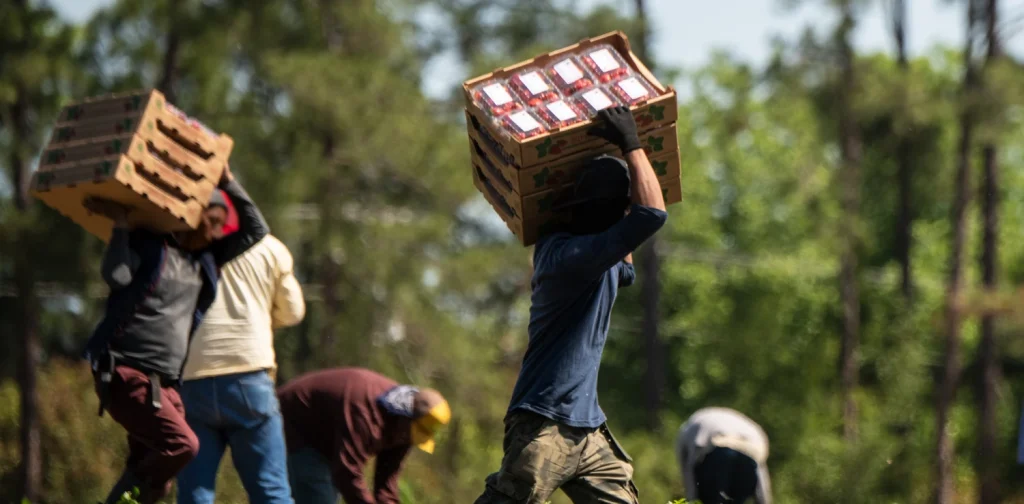
Photo: U.S. Department of Agriculture on Flickr.
The labor market is ever-changing. With the looming climate crisis, political unrest, and rapid technological advancement, global economies are precarious, making the job market more fragile than ever. People are looking for livelihoods everywhere, even to other countries. Temporary labor migration is an attractive option for many, but the reality is concerning.
A Symbiotic Relationship?
Economic factors are one of the most prominent motives for people to migrate. Fueled by the prospect of earning higher income in developed countries, many people apply for temporary labor migration programs every year.
Temporary labor migration programs are a type of employment that allows people from outside a country to work on a short-term basis there. Many industrial countries operate temporary migration schemes and receive workers from all over the globe, mostly from developing states. In 2023 alone, Organisation for Economic Co-operation and Development (OECD) countries with seasonal worker migration programs authorized around 615,000 candidates.
According to the International Organization of Migration (IOM), employment fields for seasonal migrant workers include agriculture, forestry, fishing, industrial production, construction, transport and storage, and accommodation and catering services. A study points out that seasonal migrant workers are mostly placed in 3D (difficult, dirty, and dangerous) fields with labor shortage. This labor shortage happens because the domestic workforce finds the working conditions in those sectors unappealing. So, to keep their businesses going, employers find ideal fulfillment for their labor demands in temporary migrant workers.
Problems in Temporary Labor Migration Programs
The struggle begins long before the job. Before candidates start working, they have to pay relatively large sums to cover the preparation for temporary labor migration programs. The rigorous process of acquiring a visa, taking an English proficiency test, and applying for health insurance can leave them indebted before the program even starts.
A survey in 2024 revealed that roughly 1,028 migrant workers had incurred debt upon departing to the UK. They took out a loan from family, friends, financial institutions, and informal money lenders.
Unfortunately, the amount of money they pay upfront does not guarantee their wellbeing during employment. There are cases upon cases of the mistreatment of migrant workers, from late wages and unsafe working conditions to abuse and harassment.
Early in 2026, the Employment Appeal Tribunal (EAT) in the UK accepted an appeal by a group of approximately 90 Latin American seasonal farm workers. They claimed that their employer was conducting mistreatment and exploitation, such as unpaid wages and racial discrimination.
“Many are misled by the advertisements of large farms that promise good treatment and medical access, but this is far from the truth,” said seasonal worker Aida Luna Silvestre.
Meanwhile, the temporary labor migration programs in the US are not any better. Over the past years, there have been cases of work accidents and sexual harassment toward seasonal migrant workers. One of them comes from a wholesale greenhouse company. There, young migrant workers spend ten hours a day working with constant exposure to chemicals without safety gear.
All in all, inadequate labor standards enforcement in temporary labor migration programs contributes to the rising human rights violation against these workers. Additionally, limited access to trade unions and legal representations makes their position even more vulnerable.
Improving Protection Measures for Temporary Migrant Workers
The core design of temporary labor migration is tying the workers with their employers. Mostly, they are prohibited from changing employers. Thus, the International Labour Organization (ILO) recommends the liberalization of the program. Allowing workers to flexibly shift from one job to another should be the minimum requirement for their protection.
Furthermore,liberalization leads to increased responsibility from the state. It makes it that the state is responsible for the laborers’ mobility and wellbeing. For example, governments should include scenarios for migrant workers in disaster management, healthcare, and climate action plans.
Additionally, diplomacy is essential. One of the diplomatic tools for the protection of temporary migrant workers is bilateral cooperation among states. Through agreements, the involved countries and the private sectors are bound to commit to a mutual understanding to build fair, safe, and decent working environments for temporary migrant workers.
Ultimately, the protection of seasonal migrant workers and their rights is a shared responsibility. A synergized effort among home countries, target countries, and the private sectors is key to building mutualistic symbiotic relationships that would benefit all parties involved, especially the workers themselves.
Editor: Nazalea Kusuma

Co-create positive impact for people and the planet.
Amidst today’s increasingly complex global challenges, equipping yourself, team, and communities with interdisciplinary and cross-sectoral insights on sustainability-related issues and sustainable development is no longer optional — it is a strategic necessity to stay ahead and stay relevant.
 All Pain, No Gain for Women from the Tobacco Industry’s So-Called Generosity
  Upholding the Women in Agriculture Who Are Feeding Africa
  The Role of Trade Unions in Peacebuilding
  Red Flags in the EU’s Industrial Accelerator Act (IAA)
  Untangling the Root Causes Underneath Lesotho’s Suicide Crisis
  Looking into the Inadequate Legal Recognition for Women’s Tenure Rights Across the Global South