

From Anxiety to Action: How Youth Climate Activism Is Evolving
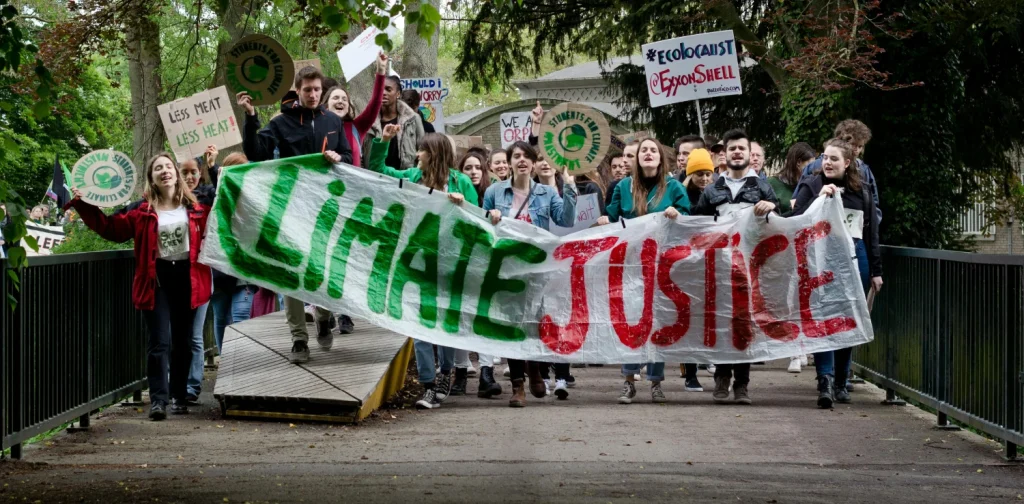
Photo: Vincent M.A. Janssen on Pexels.
Young people are feeling agitated regarding climate change, and rightfully so. Around 84% of youth aged 16-25 across ten countries reported being at least moderately worried about climate change, with 59% saying they were very or extremely worried. As their future is at stake, this fear and anxiety have been key drivers in sparking global youth movements, such as Fridays for Future, Extinction Rebellion, and the Sunrise movement, among many others. This marks early youth climate activism that focused on awareness, moral pressure, and street mobilization.
However, the narrative is changing. Now, youth are evolving toward policy literacy, legislative engagement, legal action, and economic influence. The pivotal reposition is that youth are no longer simply asking to be heard. They are learning how power works.
Political and Policy Involvement
Youth climate activism is arguably becoming more intersectional, policy-aware, and pragmatic. Youth realize that media cycles are shorter, and institutions are long-term. They recognize that lasting climate action requires governance change.
In the United States, for instance, young people are embracing political conversation and climate litigation. They staged sit-ins at congressional offices, delivered 100,000-signature petitions, and pushed Democratic presidential candidates to release their climate plans, which resulted in President Biden signing the Inflation Reduction Act in August 2022. A year later, in August 2023, the US courts ruled in favor of 16 young climate litigants from Montana against their state, a landmark victory.
Another notable example of youth climate activism is that of Sibusiso Mazomba, a South African who led youth advocacy at the African Climate Alliance. He played a pivotal role in the #CancelCoal campaign, which successfully blocked new coal procurement in South Africa’s energy plans in 2024.
Mazomba has also served as a junior negotiator for South Africa’s official UNFCCC delegation since COP26, highlighting the presence of youth in international dialogues. For instance, the campaign for climate resilience in the SIDS, initiated by a youth-led organization called Pacific Island Students Fighting Climate Change, garnered international support and was formalized as a part of a resolution adopted by the UNGA in 2025, calling on the ICJ to issue an advisory opinion on the obligations of states in relation to climate change.
From Digital Activism to Consumer Behavior
Youth’s increasing realization of the urgency to “walk the talk” is also evident in the growth of their digital activism. They utilize social media to raise awareness for climate change, and the results of their efforts bring about an exponential burgeoning of eco-consciousness.
One notable example is the Fridays for Future (FFF) movement, a global, youth-led protest that went viral after Greta Thunberg began posting her strike on Twitter/X and Instagram. Students skip school on Fridays to demand climate action from their governments. The use of hashtags like #FridaysForFuture allows students across the globe to align their actions. FFF has over 14 million people from 185 countries participating in mobilizations organized by children and youth, showcasing how young people can leverage social media to push for climate action.
Additionally, young people are also playing a key role in shaping the economy. Their concern about the climate crisis also translates into everyday decisions, including what to buy and where to buy it.
For instance, Gen Z prefers to purchase from businesses that demonstrate commitment to sustainability, with 77% willing to spend more on sustainable products. This highlights their clear preference for products and producers aligned with their ethical values and buying power. As Gen Z becomes the largest consumer group, with growing economic influence, they are poised to shape consumer markets, set new expectations, and drive sustainability progress.
Challenges Remain
However, young people’s conviction and efforts do come with a price. Many youth activists have confessed to going through significant stress and burnout. The potential for long-term adverse impact on young people’s health and wellbeing is a key structural challenge that movements must actively address to sustain themselves over time.
Another key obstacle is finance. Access to funding remains a critical obstacle despite young people’s increasing influence. Closing the climate finance gap in ways that prioritize youth-responsive activities, especially in high-risk climate regions, is one of the most unresolved challenges for transformative youth climate justice. Youth-led projects in the Global South receive significantly less funding than established international organizations, despite bearing a disproportionate burden of climate impacts.
At a structural level, traditional power dynamics continue to restrict youth agency. Traditional institutional structures allow adults to unilaterally cut youth resources and funding without consultation, with limited opportunities for intergenerational collaborations. Youth organizations remain limited by institutional control rather than informed by community needs. For instance, transformation into non-profits plays a role in diluting the radical demands of youth movements to fit within more palatable or fundable frameworks.
Symbolic inclusion presents another challenge. Decades of formal youth representation in global climate governance, yet young representatives continue to witness tokenized forms of participation and a lack of influence.
The gap between presence and power is stark. One youth delegate described how young people were included in an advisory board to “show off how inclusive they are”, but were laughed at as soon as they raised substantive topics. This reveals the persistent gap between symbolic inclusion and genuine influence in global climate governance.
Youth Climate Activism, Moving Forward
Adverse emotions can be harnessed for action: anxiety into urgency, urgency into organization, and organization into institution building.
Instead of being paralyzed by fear, many young people are converting climate anxiety into collective infrastructure. Eco-anxiety may lead to symptoms of depression in young people who do not engage in group activities to address climate change. This proves that collective organizing is not just an output of anxiety; it is an antidote to it.
As such, youth climate activism has made significant progress, yet substantial growth remains. Still, one thing is clear: youth climate activism is no longer defined solely by urgency but by endurance. If the first wave of youth activism demanded attention, the next wave is demanding meaningful, structural change.
Editor: Kresentia Madina & Nazalea Kusuma

Co-create positive impact for people and the planet.
Amidst today’s increasingly complex global challenges, equipping yourself, team, and communities with interdisciplinary and cross-sectoral insights on sustainability-related issues and sustainable development is no longer optional — it is a strategic necessity to stay ahead and stay relevant.
 India’s Supreme Court Declared Menstrual Health and Hygiene as Fundamental Rights
  Impacts of E-waste Pollution on Animals and Human Health
  Africa’s Solar Energy Surge: Why 2025 Was a Breakthrough Year
  Agrihoods: Integrating Farms and Urban Neighborhoods into Sustainable Communities
  Women in Waste Management: Asia’s Circularity Runs on Women. Its Policies Still Don’t
  Embracing the Business Value of Sustainability