

Global Shifts in Forest Dynamics and Their Impact on Biodiversity and Resilience
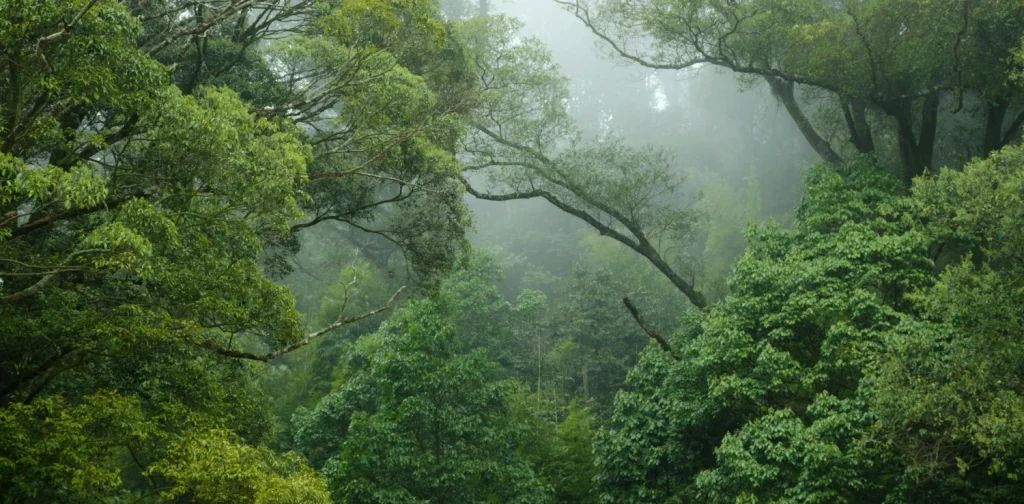
Photo: Lingchor on Unsplash.
Forests are a fundamental component of terrestrial ecosystems with a critical role in environmental stability. Currently, forests cover approximately one-third of the Earth’s land surface. However, intensified human activities have increasingly threatened their extent and ecological integrity. Beyond the reduction in overall forest area, these anthropogenic activities have also altered the composition, structure, and functional diversity of forest ecosystems on a global scale.
The Shift in Forest Ecosystems
A study conducted by researchers at Aarhus University, Denmark, indicates that the world’s forests are undergoing significant ecological changes, characterized by declining biodiversity and reduced resilience. These trends are particularly evident in tropical and subtropical regions, where ecosystems are highly diverse and closely interconnected.
The primary change is the increasing dominance of fast-growing and naturalized tree species. This shift appears to be reshaping forest composition, placing pressure on slow-growing and native tree species. Concerningly, this elevates their risk of decline or extinction.
Slow-growing trees are typically characterized by thick leaves, high wood density, and long lifespans. These traits enable them to function as structural and ecological foundations of forest ecosystems, contributing substantially to ecosystem stability, resilience, and long-term carbon storage. However, because they need relatively stable environmental conditions, they are increasingly vulnerable to competition from faster-growing species. Rising temperatures further exacerbate this vulnerability, particularly for more climate-sensitive species such as spruce and beech.
In contrast, fast-growing species like acacia and eucalyptus often outcompete slow-growing trees due to their rapid growth rates in a short period of time. The same study reports that 41% of naturalized tree species, defined as species occurring outside their native range, are fast-growing. Although their rapid growth gives competitive advantages, their establishment outside native ecosystems may increase their susceptibility to pests and climatic disturbances. This heightened vulnerability can reduce forest stability and compromise the effectiveness of carbon storage.
Anthropogenic Activities and Their Impacts
According to the study, these shifts in forest dynamics are closely associated with anthropogenic activities. Human-induced climate change, deforestation for infrastructure developments, logging, and the global trade in tree species are the major driving forces. For instance, fast-growing species can produce timber and biomass rapidly. This makes them more favorable in commercial contexts despite their lower ecological resilience.
In recent years, large-scale tree-planting initiatives have been promoted as part of carbon offsetting strategies for global corporations. However, evidence suggests that many such projects may be ineffective. Some analyses indicate that more than 90% of rainforest carbon offsets do not correspond to the claimed levels of emissions reduction. Moreover, industrial-scale plantations frequently rely on one or two fast-growing, naturalized, or invasive species, a practice that may undermine ecological integrity and thereby making such interventions potentially counterproductive.
Restoring Forest Diversity
Under these conditions, forest management strategies must shift toward a more proactive, targeted, and regulated approach. Reforestation efforts should be carefully planned, with a focus on native and slow-growing species that have declined or become locally extinct and that exhibit greater resilience to climate change and regional pests.
Interventions such as facilitating seed dispersal can help counteract the homogenizing effects associated with naturalized species. Additionally, efforts should prioritize the restoration of functional megafauna and the management of invasive species to enhance ecosystem stability and biodiversity.
Regarding carbon offsetting, stricter frameworks to safeguard planetary health and human rights must be in place. For example, regulations should mandate robust biodiversity standards into certification processes and explicitly prohibit the conversion of natural ecosystems into monoculture plantations. Furthermore, monitoring should extend beyond carbon sequestration metrics to include ecological indicators such as species richness, habitat quality, and ecosystem resilience. By adopting this approach, the carbon market is not only about corporate sustainability strategies. It can simultaneously contribute to both climate mitigation and biodiversity protection.
Ultimately, these efforts are intended to support ecosystem functions associated with conservative traits. After all, enhancing forest diversity and promoting long-term ecosystem stability and resilience are critical to the continued wellbeing of people and the planet.
Editor: Nazalea Kusuma

Co-create positive impact for people and the planet.
Amidst today’s increasingly complex global challenges, equipping yourself, team, and communities with interdisciplinary and cross-sectoral insights on sustainability-related issues and sustainable development is no longer optional — it is a strategic necessity to stay ahead and stay relevant.
 What Fading Butterfly Colors Reveal About Environmental Stress
  The Right to Be Cold and What It Means for Indigenous Inuit
  All Pain, No Gain for Women from the Tobacco Industry’s So-Called Generosity
  Upholding the Women in Agriculture Who Are Feeding Africa
  The Role of Trade Unions in Peacebuilding
  Red Flags in the EU’s Industrial Accelerator Act (IAA)