

How Can We Support Better Mountain Waste Management Systems?
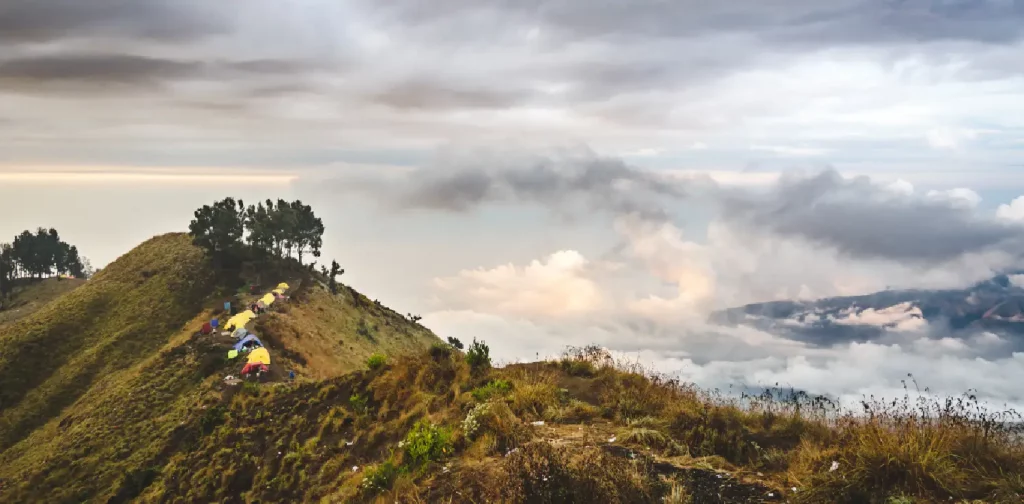
Photo: Jonas Verstuyft on Unsplash.
Waste accumulation has been a persistent problem in many parts of the planet, including mountains. Considering its vital role for the people and planet, safeguarding mountain ecosystems’ health is crucial. Therefore, what are the efforts needed to support mountain waste management?
Issues and Challenges
Mountains have a significant role in supplying water, food, and energy to the people living in and near them. They also provide habitats for various animal and plant species. Unfortunately, they are not immune to the problem of waste accumulation.
The issue of mountain waste grows along with the population, consumption, and tourism growth. In 2021, a global survey of 1,750 mountaineers from 74 countries shared that almost all respondents had seen litter and waste during their mountain trips, with plastic being the most common type.
Lack of waste management efforts can cause people to resort to open burning to get rid of the accumulated waste, which can cause pollution and even wildfires. Furthermore, the hazardous substances from plastic and other waste can contaminate the waterways, soil, and snow if left unmanaged. However, implementing mountain waste management remains challenging due to limited cost, infrastructure, data, and the general lack of awareness from the visitors.
Improvement Areas
In 2022, the Norway-based organization GRID-Arendal launched a policy brief exploring the issues and possible solutions to mountain waste management. The document was produced with the Secretariat of the Basel, Rotterdam, and Stockholm Conventions, the United Nations Environment Programme, and the International Climbing and Mountaineering Federation as a part of the publications for the International Year of Mountains 2022.
The policy brief identified several key areas for improvement:
- Policy: Implement policies to limit plastic usage in the mountains and promote mountain plastic waste management. The policies should be locally adapted, understandable, practical, and well-communicated.
- Financing: Diversify the financing method for mountain waste management implementation, including through extended producer responsibility, deposit-return schemes, fees, taxes, fiscal incentives, and fines.
- Infrastructure: Establish better collection and transport systems to help address limited economies of scale in mountain regions.
- Outreach: Raise awareness on the issue through campaigns and shifting to more sustainable practices while doing mountain activities.
The abovementioned key areas must be combined and practiced by relevant stakeholders, including governments, the private sector, civil society, and the research community.
For Better Mountain Waste Management
Today, safeguarding, conserving, and maintaining mountain ecosystems have never been more crucial in light of the climate crisis and other threats caused by human activities. Keeping the mountains free from waste can support the ecosystems’ resilience for the people and planet.
The policy brief concludes with several recommendations for relevant stakeholders to support mountain waste management, some of them are:
- Undertake further research and monitoring on the specific challenges and solutions to address plastic waste in the mountains.
- Promote actions towards plastic waste-free mountains aligning with and responding to the Mountain Partnership’s 2022 Aspen Declaration and the Mountain Partnership Strategy 2022-2025.
- Financing further work on pollution and waste management in mountain regions.
- Promote a collaborative approach among mountain communities at all levels in developing and implementing waste-free initiatives.
- Encourage developing and using methodologies, tools, and guidance on preventing and managing plastic waste.
- Support mountainous countries’ engagement at the global level, including in the negotiations for an international legally binding instrument on plastic pollution with consideration of mountain areas’ specific socioeconomic and geographic circumstances.
Read the full document here.
Editor: Nazalea Kusuma
 Looking into Green Ramadan Initiatives Worldwide
  The Widespread Impacts of Severe Drought in Somalia
  Ensuring Access to Justice for Women and Girls
  The Invisible Infrastructure: What ASEAN’s Carbon Market Needs Most
  Indonesia Ruled to Recognize Chronic Illness as a Disability
  Clean Cooking as a Developmental Multiplier in Africa