

How Losing Sleep Is a Climate and Equality Issue
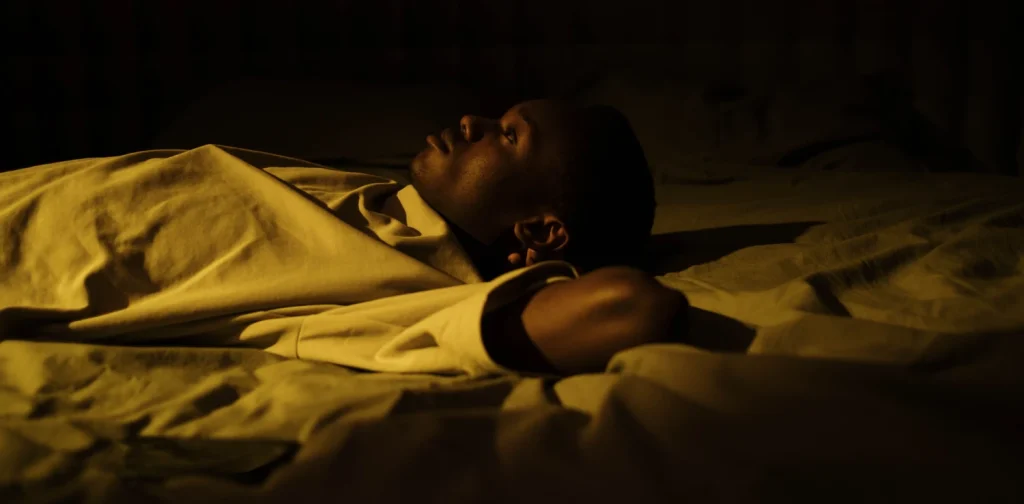
Photo: cottonbro studio on Pexels.
Science says our bodies need a certain amount of sleep to rest so they can function well and stay healthy. Society, meanwhile, mostly thinks of sleep as a personal responsibility. Something like: “Go to bed earlier. Put down your phone. Wake up rested.” But what that framing misses is that for a growing number of people around the world, losing sleep is not about succumbing to bad habits. Increasingly, sleep is being stolen by heat.
What Heat Does to Sleep
The human body falls asleep by cooling itself down. Core body temperature drops in the evening as a physiological cue that triggers sleep onset. So, when nighttime air temperatures stay too high, that cooling process is disrupted: sleep takes longer to start, lasts fewer hours, and is less restorative when it comes. On warm nights above 30°C, research found that sleep declines by more than 14 minutes compared to cooler nights. This phenomenon hits older adults, women, and residents of lower-income countries hardest.
Losing sleep is not a minor inconvenience. It accumulates into a debt that impairs memory, decision-making, reaction time, and emotional regulation. The consequences of that condition then spill directly into work life, school life, and our health.
The scale of the problem is now measurable at a global level. According to a 2026 analysis from Climate Central, the average person lost nearly 56 hours of sleep per year due to high ambient temperatures between 2020 and 2025. That time is more than double the temperature-related sleep loss recorded in the early 1970s. Cities across West Asia registered the highest losses.
And the projections ahead are starker still. By 2099, rising temperatures could cause a person to lose 50 to 58 hours of sleep in a year. Moreover, just like other climate loss and damage, losing sleep does not come equally. Lower-income countries are projected to suffer losses roughly three times larger than wealthier ones.
The Intersectionality of Losing Sleep
Low-income communities have always faced hotter sleeping environments. Urban heat islands concentrate in the neighborhoods with the least green cover, the oldest housing stock, and the fewest resources to insulate against heat. A study of marginalized communities in Los Angeles, USA, found that indoor bedroom temperatures in lower-income homes averaged 5°C higher than outdoor temperatures at night. That 5°C rise was associated with 23 fewer minutes of sleep. Which means, the ones losing sleep more than others are people working physical jobs that demand full cognitive and physical capacity the next morning.
Access to air conditioning, the most obvious fix, is itself a function of wealth. Cooling systems are far from universally accessible. On top of that, their use generates its own heat and emissions, deepening the same crisis that makes them necessary in the first place. Meanwhile, children face compounding vulnerability to heat stress. Sleep disruption becomes another layer of the broader developmental and health risks that extreme heat already imposes on younger bodies.
The intersectionality here is worth naming plainly. The communities losing the most sleep to heat are also, in most cases, the communities contributing least to the emissions driving temperatures up and those whose labor depends most directly on being rested. They are also the ones with the least political power to demand urban cooling infrastructure.
The Structural Fixes
The individual fixes like fans, wet sheets, open windows, can only go so far. The structural ones, though harder to execute, matter more. A practical starting point is treating nighttime heat as a public health metric rather than a weather footnote. The Lancet Countdown on Health and Climate Change now tracks sleep loss as a climate health indicator, a signal that the medical community is catching up to what low-income communities have lived through for years.
Other fixes lie in the urban planning, such as expanding access to cooling centers and green infrastructure in heat-vulnerable urban neighborhoods as well as revising building codes to require heat-resilient design in low-income housing. Though, of course, at its most fundamental, the key fix is for the world’s governments to step up and curb global warming. Ultimately, losing sleep is a climate issue, a health issue, an urban planning issue, and most of all, an equality issue. A holistic cure of sleepless nights begins with recognizing that restoring sleep equity means fixing the systems, housing, energy, urban planning, that have always made some people’s nights hotter than others.
Editor: Nazalea Kusuma

Co-create positive impact for people and the planet.
Amidst today’s increasingly complex global challenges, equipping yourself, team, and communities with interdisciplinary and cross-sectoral insights on sustainability-related issues and sustainable development is no longer optional — it is a strategic necessity to stay ahead and stay relevant.
 Indonesia’s Greenwashing Diplomacy at COP31 and Beyond
  The Textile Industry Is Growing, and So Is Textile Wastewater
  EESG: We Need a New Economic Narrative for Sustainability in the Age of AI, Energy Crisis, and Geopolitical Divide
  The Continued Struggle for Equality and Dignity in Women’s Sportswear
  Behavior Change for the Planet: Is composting worth it?
  Building Bridges Between Environmental Policy and Mental Health