

Preserving a People’s Identity by Protecting Art and Cultural Heritage amid Conflicts
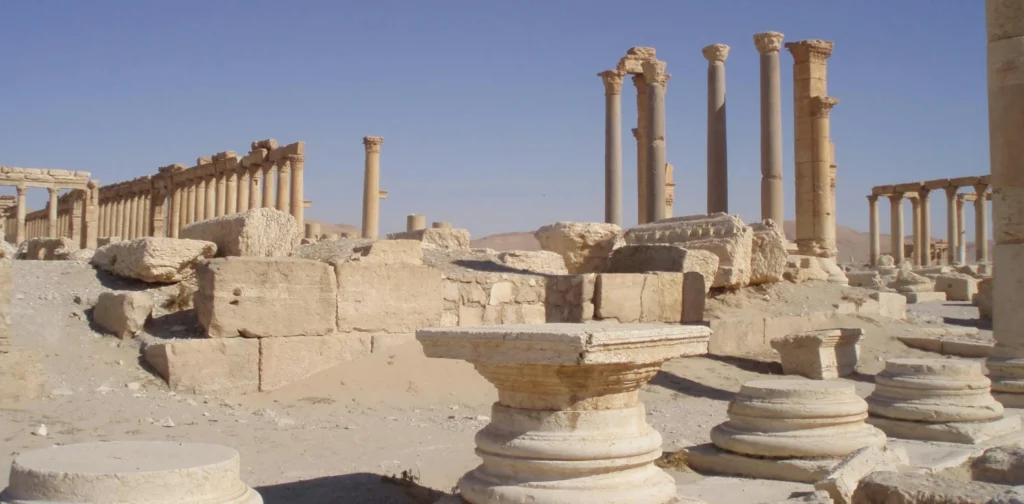
Palmyra, Syria | Photo: Joe Planas on Unsplash.
During times of war, the loss of art and cultural heritage is often a largely unseen and under-discussed casualty. Yet, it is no less important. For centuries, the destruction of art and cultural heritage has been used as a means of erasing the identity of a people and imposing superiority while earning monetary gain.
Why Is Art and Cultural Heritage So Important?
The art that a society creates reflects the story of its people during a particular moment in history. Art contributes to identity and a sense of self. Furthermore, art and culture is a large part of the ties that bind people together, something they can be proud of.
As art and culture gets passed down from one generation to another, it becomes an important heritage. In the present times, the tourism industry thrives because countries promote their unique cultural heritage. Through cultural sites and artworks, visitors can learn about, appreciate, and learn from people from different places and different times.
So, when art and cultural heritage is destroyed, it is an attack on freedom of expression as well as identity and history. All around the world, from ancient sieges to more modern hostilities, the same pattern emerges. In war, hostile parties often target these physical representations of a community’s individuality.
Learning from History
In 330 BCE, Alexander the Great captured the ancient city of Persepolis, the then-capital of the Achaemenid empire. He burned many of its palaces to the ground, destroying art and religious writings and taking spoils of war, symbolically marking an end to Persian rule. Various historical accounts suggest that he later regretted this, lamenting the great loss of all the accumulated knowledge and beauty. Even today, the ruins of Persepolis stand as an example of how preserved history offers us a valuable and rare glimpse into the past.
Another example hailed from World War 2, with, perhaps, the most well-known modern example of cultural looting. Nazi forces seized over half a million works, in an attempt to eliminate “degenerate” art and create their own super-museum. They seized those artworks by force and stored them in salt mines and castles around Germany and Europe. Among those stolen included works by famous artists such as Leonardo da Vinci, Gustav Klimt, and Raphael.
However, this prompted one of the first large-scale conversations among governing bodies about how to protect cultural heritage. As the war was coming to an end, the Allied powers created the Monuments Men, a team of soldiers tasked with recovering and returning the stolen art. After World War 2, the United Nations also adopted the Hague Convention of 1954 for the Protection of Cultural Property in the Event of Armed Conflict. It was the first international effort of its kind devoted to creating a system to protect cultural heritage.
Policy and Technology
Since then, new tactics have developed. Through technological innovation and policymaking, efforts emerge to protect cultural heritage even amidst armed conflicts.
The 2015 bombings of the UNESCO World Heritage of Palmyra during the Syrian Civil War brought condemnation and outcry from archaeologists and the international community. Any artifacts from Palmyra that were not destroyed were sold on the black market for economic benefit.
In the aftermath, many respected museums around the world, such as the Louvre, “offered asylum” to Palmyran artifacts. Academic institutions utilized technology to virtually reconstruct parts of the monument. The International Criminal Court issued the Policy on Cultural Heritage, citing Palmyra as an example for why heritage crimes should be examined as more serious offenses. The ICC has continued to revisit and re-examine this issue, highlighting that it could rise to become a war crime.
Ukraine, similarly, has seen the destruction and looting of hundreds of cultural sites, cathedrals, and museums since the escalation of war in 2022. As a response, many private organizations are aiming to use 3D and laser scanning technology to help document important buildings for restoration. There is also the Museum of Stolen Art, a digital exhibition of Ukraine’s destroyed artwork.
Ways to Protect Cultural Heritage
There is still more work to be done. Emerging technology has an important part to play in documentation and re-creation efforts. Therefore, continuous interdisciplinary research and development is crucial to protect cultural heritage. At the same time, the frameworks of international law must include how art and physical sites of cultural and historic values are of intrinsic importance to a people’s identity. Thus, the destruction of such heritage must be prosecuted as a war crime or crimes against humanity.
Editor: Nazalea Kusuma
 Urgency to Protect Migratory Species as Extinction List Expands
  How Spogomi Addresses Waste Through Competitive Sport
  What Fading Butterfly Colors Reveal About Environmental Stress
  The Right to Be Cold and What It Means for Indigenous Inuit
  All Pain, No Gain for Women from the Tobacco Industry’s So-Called Generosity
  Upholding the Women in Agriculture Who Are Feeding Africa