

Recognizing the Role of Local Communities in Biodiversity Conservation
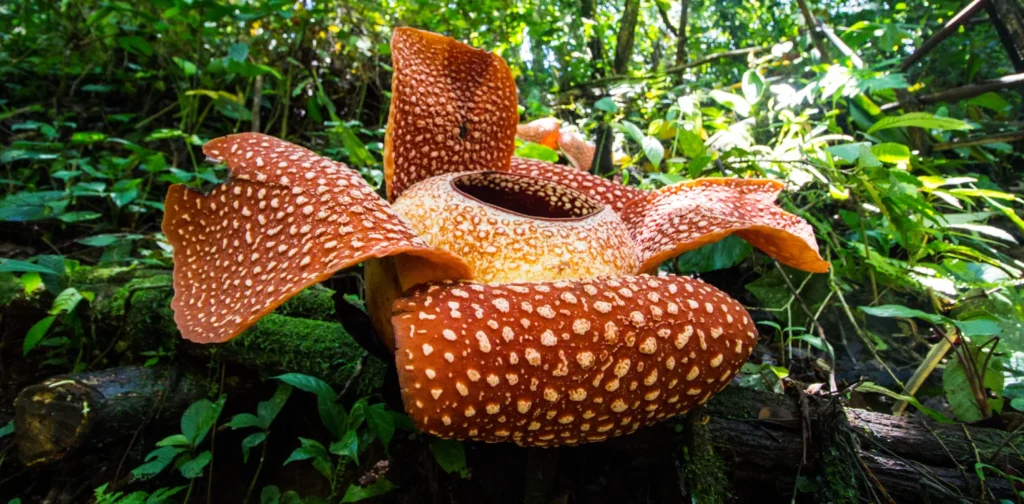
Rafflesia arnoldii flowers blooming in the Bukit Daun Register 5 Protected Forest, Bengkulu, Indonesia. | Photo: Sofian Rafflesia on Wikimedia Commons.
Biodiversity plays an important role in maintaining life-sustaining ecological functions like pollination, soil health, clean water availability, and food chain balance. In this light, the preservation of biodiversity becomes a critical aspect of planetary health and, consequently, our survival. However, it is not a light undertaking. Biodiversity conservation efforts must involve all relevant people from various walks of life. The role of local communities, as the ones most closely connected to biodiversity around them, is vital.
Local Communities in Biodiversity Conservation
Besides Indigenous people, local and grassroots communities have an essential role in biodiversity conservation. Their involvement can make-or-break a conservation plan. Their close proximity to biodiversity’s natural ecosystems and habitats puts them at the forefront of protection, preservation, and restoration efforts.
For example, in Peru, conservationists and researchers visited the homes of local fishermen to engage them in discussions about whale sharks. Through these efforts, local fishermen understood that whale sharks were harmless, and there was no need for violence in their frequent encounters. This understanding led to them joining the whale shark conservation efforts as collaborators. Now, the fishermen provide researchers with real-time information about whale sharks’ appearances and behaviors. They also join the researchers at sea for further study sometimes.
Meanwhile, in Papua, Indonesia, Alex Waisimon leads a grassroots movement to protect endemic bird species from illegal hunting. Alex established a school of nature to break the chain and opened a bird-watching ecotourism business that provides a source of income for the local community.
Another notable contribution hailed from West Sumatra, Indonesia. The local community there played a major role in the 2025 rediscovery of Rafflesia hasseltii in the Sumatran forest area, specifically in Sijunjung Regency. They helped provide the necessary information for researchers from the National Research and Innovation Agency, Bengkulu University, and Oxford University.
Lack of Recognition
Unfortunately, the significant role of local communities in biodiversity conservation is often under-recognized or even overlooked. In the rediscovery of Rafflesia hasseltii, for instance, the publication by Oxford University failed to mention the names of local guides and researchers who contributed to the efforts.
A shame, as in addition to their contribution to conservation efforts, local communities also play a significant role in ensuring that research findings and information disseminated to the public are accurate. In the case of the rediscovery of Rafflesia hasseltii, the claim of “rediscovery of Rafflesia hasseltii after a 13-year absence” turned out to be false. According to data from the Bengkulu Rare Flower Care Community (KPPL) cited in the report, the Rafflesia hasseltii had bloomed three times between 2023 and 2024.
Moreover, the role and capacity of local communities are often underestimated, particularly due to the influence of modern development paradigms. This is evident in the use of terms like “empowerment”, which often carries a hierarchical assumption that local communities are powerless, underdeveloped, or lacking in knowledge. Yet, local communities often possess traditional ecological knowledge that has proven effective in environmental conservation and in line with meeting socio-economic needs.
However, this assumption is not always incorrect. Sometimes, local communities do need education and capacity building—in addition to economic empowerment—to prevent harmful behaviors to local biodiversity like poaching, land use change, and escalating human-wildlife conflict.
Inclusivity for Sustainability
Recognizing local communities as key actors in biodiversity conservation is a fundamental first step. The next step is to enhance their role and potential. Addressing the bias in development practices that view local communities as “lacking capacity” and addressing the resulting power imbalances, are among the necessary steps.
Furthermore, although Indigenous people and local communities possess valuable ecological knowledge, their potential contribution is often hindered by various factors. These include a lack of supportive policies and structural inequalities such as limited legal rights, limited access to education and economic opportunities, and strong pressure from corporations and/or the state. Therefore, these issues must be addressed.
Ultimately, biodiversity conservation requires the involvement of all stakeholders—governments, businesses, and civil society—in various areas, including research, policy development, protected area management, and species population monitoring. Collaboration based on local knowledge, with transparency and accountability as well as respect for community rights, will create more effective, equitable, and sustainable biodiversity conservation efforts.
Translator: Nazalea Kusuma
The original version of this article is published in Indonesian at Green Network Asia – Indonesia.
 Urgency to Protect Migratory Species as Extinction List Expands
  How Spogomi Addresses Waste Through Competitive Sport
  What Fading Butterfly Colors Reveal About Environmental Stress
  The Right to Be Cold and What It Means for Indigenous Inuit
  All Pain, No Gain for Women from the Tobacco Industry’s So-Called Generosity
 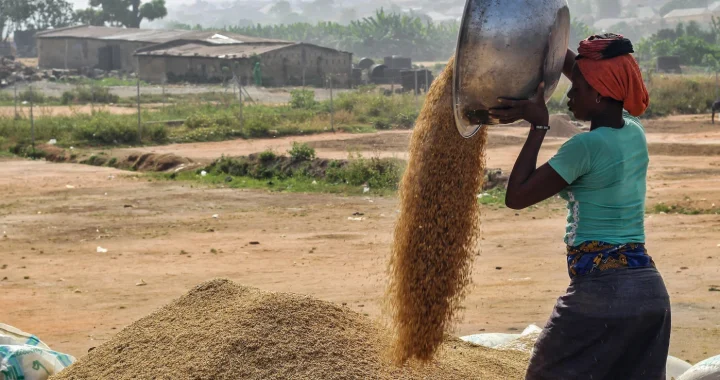 Upholding the Women in Agriculture Who Are Feeding Africa