

Underscoring Preparedness to Face Strong El Niño Amidst Global Crises
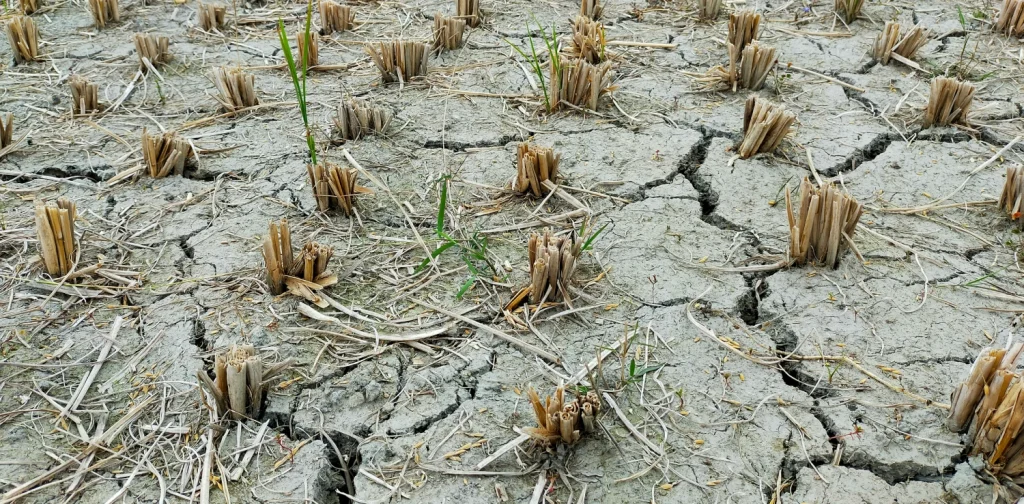
Photo: Md. Hasanuzzaman Himel on Unsplash.
The weather affects many aspects of our lives, including the food on our plate. The climate pattern has been forecasted to intensify amid ongoing global crises, with the strong El Niño cycle in mid-2026 that can potentially disrupt food supply chains worldwide. In this light, world leaders must buckle up and improve preparedness in climate-sensitive sectors.
Strong El Niño Forecasts
“El Niño is not just on our doorstep—it is inside the house and turning up the heat. And this is only a warm-up act,” said UN Secretary-General António Guterres. The World Meteorological Organization’s July climate update indicates that El Niño will continue to steadily intensify during August–October 2026.
El Niño and its counterpart, La Niña, are phases that make up the El Niño-Southern Oscillation (ENSO), a powerful climate phenomenon driving changes in temperature and weather worldwide. Both have quite contrasting effects. Trade winds, or the wind blowing from East to West along the equator, weakens during El Niño, but becomes stronger during La Niña. La Niña cools sea-surface temperature below average. Conversely, El Niño warms the sea-surfaces in the central and eastern tropical Pacific Ocean.
The impact of El Niño goes beyond the sea surface. It warms the global climate and typically has its most evident effect around 1–2 years following its development. The 2023–2024 cycle was considered among the five strongest events ever, with sea surface temperature peaking at 2.0°C above the 1991–2020 average. Combined with greenhouse gas-induced climate change, the strong El Niño cycle drove 2024 to become among the hottest years on record at 1.55°C above pre-industrial levels.
This year’s event has already begun developing as early as May. Using a multi-model ensemble forecast, WMO reveals that sea-surface temperature can exceed 2.9°C, higher than in previous cycles. The UN agency also predicts the trajectory will peak around November.
From the Weather to World Hunger
El Niño can trigger drought in some regions and heavy rainfall in others. Both impact food security all the same.
During the 2015-2016 cycle, El Niño triggered the worst drought event of 35 years in southern Africa. Ainembabazi, Rusike & Keizire (2018) found that the severe drought caused low yields of maize, a major food staple in the area. Botswana, which already experienced poor maize production even before the drought, reported 78% reduction.
Reduced agriculture productivity drives food insecurity and economic stress, especially for smallholder farmers. Nations are then forced to use their food reserves, or resort to imports that cause rising prices. On the other hand, the low crop yields also means fewer export commodities for countries in South and Southeast Asia, who make up around 80% of the global rice exports.
Meanwhile, the same event that causes drought also triggers excessive rainfall and flooding. This phenomenon notably occurs in parts of South America and East Africa. In Peru, El Niño happening from January to March 2017 damaged over 60,000 hectares of crops and left 18,000 hectares completely unusable. Scientists have also warned of this year’s strong El Niño threats in Peru’s fishing industry, with warming sea temperature causing a decline in fish stocks.
Compounding Crises
Despite having been observed for years, what makes the current strong El Niño projections worrying is how it is happening against the backdrop of supply chain turmoil and ongoing climate crisis.
A World Bank note reveals that the US-Iran conflict has thrown global fertilizer markets askew, leading to price increase by 35% compared to last year. If the strong El Niño persists until 2027, rice output could fall by 20-50%, particularly in South Asia, Southern Africa, and parts of East Asia. Thus, food insecurity can get worse in already vulnerable countries.
Meanwhile, the planet is already heating up due to greenhouse gas-induced climate change driven by human activities. We feel it more each day with temperatures getting higher both on land and at sea, leading to massive melting of ice and sea level rise.
The UN Secretary General emphasized how fossil fuels are “fanning the flames of this crisis”, and called for expansion to stop. He added, “The warm-up act is over. We cannot afford to wait for the main event.”
Actions Now
The forecast for strong El Niño should serve as the starting point for leaders and governments to strengthen preparedness for what’s to come. After all, it is humans who can put in the work to prevent hazards, not the predictions themselves, no matter how accurate. Managing risks today becomes the key to avoiding bigger costs when the emergency eventually breaks out. After all, the cost is more than financial. Human lives, biodiversity, and even cultures are at risk.
Efforts are underway, at various levels and across the globe. Governments in the Latin American region are rolling out national and local plans to face potential drought and flooding, from activating water-monitoring systems in Colombia to clearing drainages to anticipate floods in Ecuador. Across the Central American Dry Corridor, the Food and Agriculture Organization supports smallholder farmers with short-cycle seeds, water harvesting systems, and livestock protection.
No less importantly, financing is a pillar of this adaptation. Governments must properly allocate resources to strengthen systemic emergency responses, including disseminating timely weather alerts to enable communities to stay ahead of hazards. Mobilizing direct and unconditional cash transfers for communities, who may already struggle with the climate crisis, can help ensure that those with the highest vulnerability have safety nets in an emergency.
Editor: Nazalea Kusuma
Co-create positive impact for people and the planet.
Amidst today’s increasingly complex global challenges, equipping yourself, team, and communities with interdisciplinary and cross-sectoral insights on sustainability-related issues and sustainable development is no longer optional — it is a strategic necessity to stay ahead and stay relevant.
 Noise Pollution Is Making Us Sick, and Climate Change Is Making It Worse
  Beyond Fashion: The Environmental Cost Behind Animal Leather
  Addressing the Hidden Risk of Microplastics from Offshore Infrastructures
  Addressing Antimicrobial Resistance as More Than a Medical Issue
  Holding Harmful Industries Liable for Harm to Human Life and the Environment
  Clearing the Air of Despair Surrounding the Climate Crisis with Data