

Critical Mineral Database for Transparent and Responsible Trade and Supply Chain
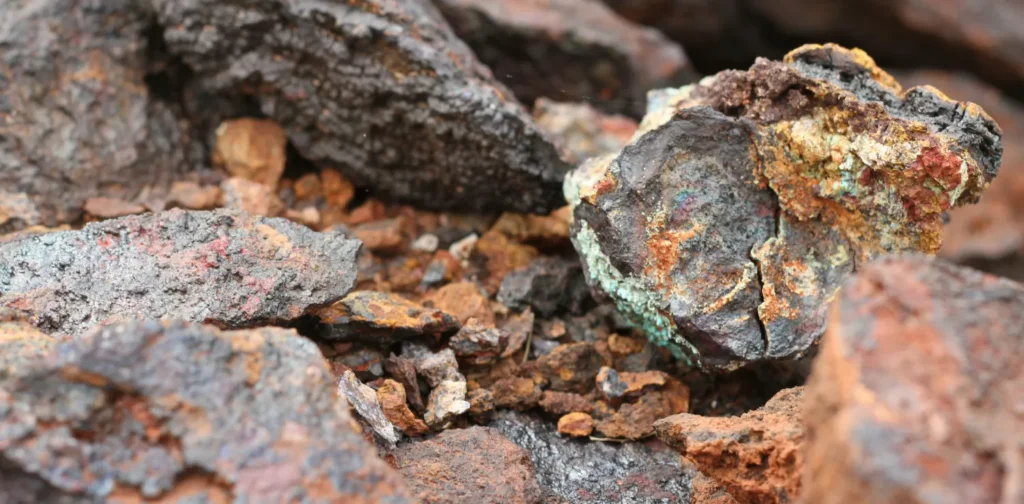
Photo: Paul-Alain Hunt on Unsplash.
Clean energy transitions bring along technological and infrastructure developments that support them. Nickel, lithium, and other critical minerals are essential to this progress, meaning demands increase as the transition accelerates. In this light, the Asian Development Bank (ADB) and the World Trade Organization (WTO) developed a database to ensure a transparent and responsible critical mineral trade and supply chain.
Essential Components in Energy Transition
According to global progress so far, critical minerals are the raw materials necessary for renewable energy, clean technologies, and the overall effort to achieve a just and sustainable energy transition. For example, lithium, cobalt, and nickel are crucial for the battery technology in solar panels and electric cars.
Their criticality varies in each country depending on the availability of supplies. Some countries might refer to these minerals as ‘strategic minerals’ because of their significance to their economies.
Data by the International Energy Agency (IEA) shows a strong growth in critical mineral demands throughout 2023. Lithium saw the biggest increase of 30%, while nickel, cobalt, graphite, and other minerals increased by 8–15%. That year, electric vehicle sales almost reached 14 million, while solar PV and wind turbines grew by 75% since the previous year.
Trade in Critical Mineral Database
While all these growths signify progress in the energy transition, failure to monitor supply chains and irresponsible extraction could lead to massive environmental damage. The Trade in Critical Mineral (TiCM) database aims to track mineral locations and availability to support sustainable mining practices.
Launched by the Asian Development Bank (ADB) and the World Trade Organization (WTO) at the end of 2024, the TiCM database provides detailed insights into minerals essential for green technologies. It has three main components:
- Trade and tariff data: Providing data on export and import flows of critical mineral-related products and applied and preferential tariff rates from most favored nations (MFN).
- Trade policies: Providing searchable trade measures according to product, economy, source, type of measure, and year.
- Visualizations: Displaying visualization of critical mineral ecosystems in the forms of bar charts, tree maps, and network graphs to show trade patterns and trading route evolution.
The database covers information for raw and semi-processed materials, intermediate goods, and finished goods. Most data are sourced from the WTO database, such as the Trading Monitoring Database and the ePing SPS & TBT platform.
Responsible Mining Practices
Our natural resources are mostly finite, so ensuring responsible use and minimizing harm to create significant progress is crucial. The TiCM database aims to help key stakeholders in the industry, particularly policymakers and government officials, make informed decisions that support responsible mining practices. Additionally, it can serve as a source of data and information for researchers and contribute to the overall efforts for transparency in critical minerals trade and value chains.

Kresentia Madina
Madina is the Assistant Manager of Stakeholder Engagement at Green Network Asia. She holds a bachelor’s degree in English Studies from Universitas Indonesia. As part of the GNA In-House Team, she supports the organization's multi-stakeholder engagement across international organizations, governments, businesses, civil society, and grassroots communities through digital publications, events, capacity building, and research.
 EESG: We Need a New Economic Narrative for Sustainability in the Age of AI, Energy Crisis, and Geopolitical Divide
  The Continued Struggle for Equality and Dignity in Women’s Sportswear
  Behavior Change for the Planet: Is composting worth it?
  Building Bridges Between Environmental Policy and Mental Health
  We May Surpass 1.5°C Soon, But We Can Do Something About It
  From European Heat to the Himalayan Flood: The Transboundary Nature of Climate Risk