

Health Impact Investment Platform Aims to Strengthen Primary Healthcare Services
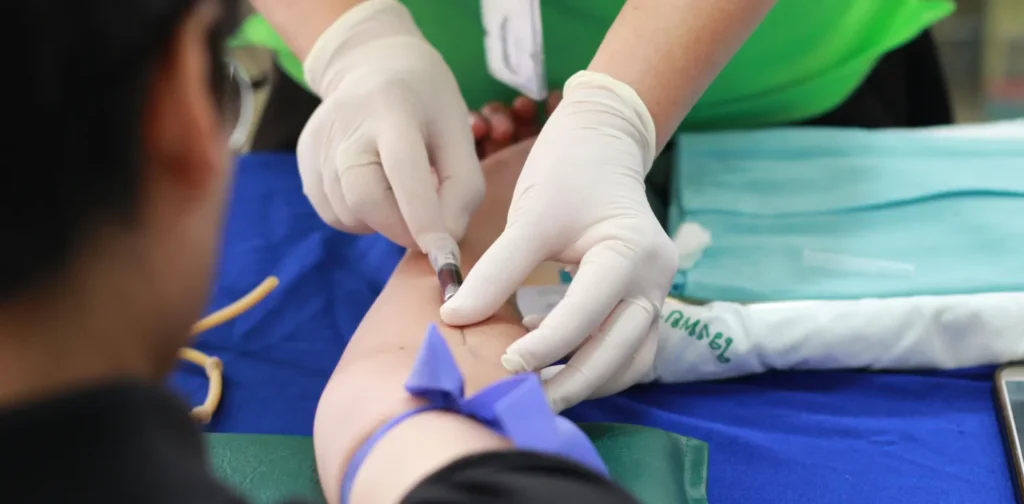
Photo: Pranidchakan Boonrom on Pexels.
Health is the foundation for leading a good life, yet the global health infrastructure is vulnerable in crisis due to various factors. Among them, financing and investment are crucial in realizing a resilient healthcare system. The Health Impact Investment Platform by the World Health Organization and Multilateral Development Banks aims to direct investment opportunities to build country-level healthcare strategies, focusing on low- and middle-income countries.
Underinvestment in Health Sector
Despite its importance, the health sector still faces multiple challenges that exacerbate its vulnerability against shocks. These challenges vary from worker shortage to technological gaps to a lack of accessibility to quality health facilities in remote areas. Low- and middle-income countries often experience worse conditions, leading to more severe health impacts in crisis.
Strengthening the health sector, as it is with sustainability efforts in other sectors, often clashes with insufficient financing. According to WHO’s estimation, reaching the health-related SDGs will require an additional US$371 billion annually by 2030 for low-income and low- and middle-income countries.
The Health Impact Investment Platform
In 2023, the WHO and Multilateral Development Banks introduced the Health Impact Investment Platform to improve investment and resilience of primary healthcare in vulnerable communities globally.
“Primary health care is the most equitable, cost-effective, and inclusive way to improve health and well-being, helping to keep people healthy, prevent diseases, and detect outbreaks at their earliest stage,” said Dr Tedros Adhanom Ghebreyesus, WHO Director-General.
Participating in this initiative are the African Development Bank, European Investment Bank, and the Islamic Development Bank, with other multilateral banks considering involvement in the future. In 2024, the European Investment Bank and the WHO kickstarted the platform’s first round of investments by signing an initial contribution of €10 million.
Additionally, the Islamic Development Bank also made a contribution of USD 10 million specifically to improve technical assistance for countries to assess investment needs and make health-related strategies. The organizations are also developing plans for the platform’s first investment phase involving 15 countries, including Burundi and South Sudan.
Improving Access, Strengthening Infrastructure
With the increasing risk of diseases and threatening life conditions due to climate change and other crises, expanding access to universal healthcare coverage has never been more urgent. The Health Impact Investment Platform signifies the vital role of financial service institutions as the foundational blocks for improving the quality, access, and resiliency of health infrastructure.
Of course, this effort requires equally committed actions to halt the climate crisis and limit its impacts. Our health and wellbeing hinge on the awareness, dedication, and efforts from governments, businesses, and organizations in creating a better world for all.
Editor: Nazalea Kusuma
Co-create positive impact for people and the planet.
Amidst today’s increasingly complex global challenges, equipping yourself, team, and communities with interdisciplinary and cross-sectoral insights on sustainability-related issues and sustainable development is no longer optional — it is a strategic necessity to stay ahead and stay relevant.
Kresentia Madina
Madina is the Assistant Manager of Stakeholder Engagement at Green Network Asia. She holds a bachelor’s degree in English Studies from Universitas Indonesia. As part of the GNA In-House Team, she supports the organization's multi-stakeholder engagement across international organizations, governments, businesses, civil society, and grassroots communities through digital publications, events, capacity building, and research.
 Impacts of E-waste Pollution on Animals and Human Health
  Africa’s Solar Energy Surge: Why 2025 Was a Breakthrough Year
  Agrihoods: Integrating Farms and Urban Neighborhoods into Sustainable Communities
  Women in Waste Management: Asia’s Circularity Runs on Women. Its Policies Still Don’t
  Embracing the Business Value of Sustainability
  American Farmers Call for Government Support Amidst PFAS Contamination