

Hong Kong’s Producer Responsibility Schemes for Improved Waste Management
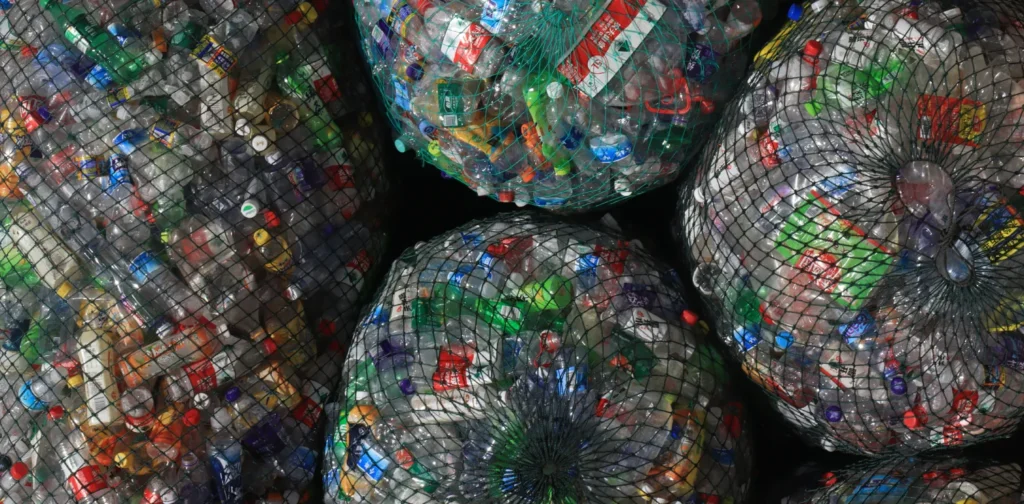
Photo: Sha Zou on Unsplash.
Plastics are everywhere—the tiny ones are even said to have infiltrated our bodies. Accelerating waste management is urgent, and it requires participation from governments as regulators, businesses as plastic producers, and consumers. In Hong Kong, the government establishes the Producer Responsibility Schemes as a key policy tool for the country’s waste management strategy.
Hong Kong’s Producer Responsibility Schemes
One million plastic bottles are purchased every minute, and 400 million tonnes of plastic waste are produced yearly. In Hong Kong, official statistics stated that around 2,120 tonnes of plastic waste went to landfills every day in 2023. It accounted for almost 20% of the total municipal solid waste, with plastic beverages comprising 4–5%.
Most beverage plastic bottles are made from polyethylene terephthalate (PET), which is said to be relatively recyclable. To ramp up the recycling system in the country, the Hong Kong government introduced the Producer Responsibility Scheme (PRS) in 2021 as a key policy tool in the waste management strategy.
Under the scheme, manufacturers, importers, wholesalers, retailers, consumers, and all relevant stakeholders must share the responsibility for collecting, recycling, treating, and disposing of end-of-life products. This is also a part of an overall effort to prevent and reduce the environmental impacts of untreated waste.
Mechanisms on Plastic and Carton Beverage Containers
Managing plastic beverage containers and carton waste is the last mechanism established under the Producer Responsibility Schemes. Previously, other mechanisms were established for three products: plastic shopping bags, electrical and electronic equipment, and glass beverage containers.
The mechanism will cover beverage products between 100 milliliters and 2 liters, except for refillable plastic containers, sealed plastic cups for bubble tea and other similar drinks, and drink pouches.
Considering reviews and public consultations received between February and March 2021, the PRS for plastic beverage containers and cartons will adopt a market-led approach. It allows stakeholders to fulfill their legal responsibilities related to waste management through different market-led arrangements instead of government-appointed ones like the previous mechanisms.
Meanwhile, the government’s role continues in a legislative capacity, which includes formulating frameworks, determining the qualifications and responsibilities of relevant stakeholders, monitoring the mechanisms, and ensuring compliance with legal requirements by all relevant parties.
Encouraging Responsible Waste Management
To encourage public participation in the scheme, the government plans to set a minimum rebate level of 0.1 USD per container returned as of the current proposal. The Producer Responsibility Schemes for plastic and carton beverage containers are set to be implemented in 2026 at the earliest.

Kresentia Madina
Madina is the Assistant Manager of Stakeholder Engagement at Green Network Asia. She holds a bachelor’s degree in English Studies from Universitas Indonesia. As part of the GNA In-House Team, she supports the organization's multi-stakeholder engagement across international organizations, governments, businesses, civil society, and grassroots communities through digital publications, events, capacity building, and research.
 Conservation Paradox: Managing the Overabundance of Endangered Koalas in South Australia
  Green Burnout: Sustainability Workers and Climate Activists Are Quietly Falling Apart
  The Warning Signals of Climate Change
  How Land Use and Climate Change Shape the Increasingly Precarious Balance of Global Deadwood Stocks
  The Injustice of Climate Finance: How Climate Change Is Draining Developing Nations
  The Need for One Health in Conservation