

How India Encourages Critical Mineral Recycling
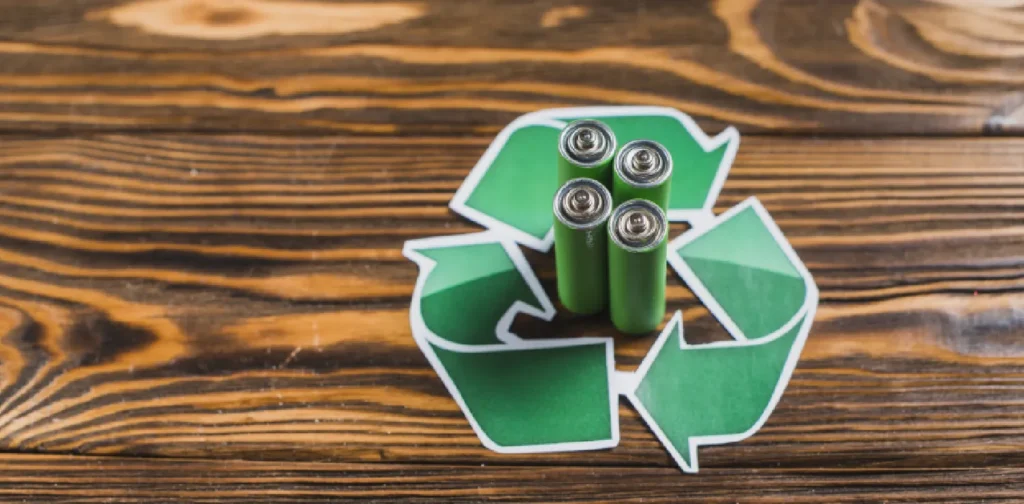
Photo: Freepik.
The worldwide transition to clean energy highlights the need for critical mineral supply, such as nickel and cobalt, as essential components to its technology and infrastructure. To support the country’s climate strategy, India establishes the National Critical Mineral Mission, with critical mineral recycling as one of the components.
Clean Energy and Circularity
Critical minerals are essential to clean energy technologies and infrastructure. In 2023, data from the International Energy Agency shows that lithium demand grew by 30%, which went hand-in-hand with a substantial increase in electric vehicle sales and solar PV and wind turbine demand.
This growth emphasizes the need for critical mineral supplies, which can lead to over-extraction concerns and environmental pressure. Fortunately, these minerals have the potential and feasibility to be recovered and recycled after the infrastructure’s lifespan ends, and then reintroduced into the system. Critical mineral recycling will contribute to promoting circularity in the clean energy systems.
Regions and countries have begun their approach in this aspect. For instance, the European Union has been continuously updating its regulations and list of waste for a better waste management system. In April 2025, India established a national initiative for critical minerals, with critical mineral recycling as one of its components.
India’s Critical Mineral Recycling Plan
India set up the National Critical Mineral Mission (NCMM) as a framework for self-reliance in critical minerals. The country aims to reach 50% electric power capacity from non-fossil sources by 2030, and eventually achieve net-zero emissions by 2070.
“The National Critical Mineral Mission (NCMM) envisions securing a long-term sustainable supply of critical minerals and strengthening India’s critical mineral value chains encompassing all stages from mineral exploration and mining to beneficiation, processing, and recovery from end-of-life products,” said Nirmala Sitharaman, India’s Union Finance Minister.
In the critical mineral recycling component, the government aims to formulate separate guidelines to streamline the informal mineral recycling sector in the country. Creating an incentive scheme to encourage recycling is also included in the component’s objective, focusing on 24 critical minerals seen as strategic for the country’s clean energy goals. The government will allocate 15 billion rupees (about 174 million USD) for recycling, as part of a 163 billion rupee (almost 1.9 billion USD) investment for the critical mineral sector.
Looping the Circle
A green transition must not mean trading one harm for another. The progress to build clean energy infrastructure and systems must continue without straining our resources to the point of no return. In this light, critical mineral recycling offers a key solution to strengthen the circularity within the industry. More research, proper planning, responsible implementation, and continuous monitoring and evaluation are crucial to ensure safe and just progress for people and the planet.
Editor: Nazalea Kusuma

Kresentia Madina
Madina is the Assistant Manager of Stakeholder Engagement at Green Network Asia. She holds a bachelor’s degree in English Studies from Universitas Indonesia. As part of the GNA In-House Team, she supports the organization's multi-stakeholder engagement across international organizations, governments, businesses, civil society, and grassroots communities through digital publications, events, capacity building, and research.
 Farmer Loneliness, the Overlooked Mental Health Crisis Within the Food System
  Conservation Paradox: Managing the Overabundance of Endangered Koalas in South Australia
  Green Burnout: Sustainability Workers and Climate Activists Are Quietly Falling Apart
  The Warning Signals of Climate Change
  How Land Use and Climate Change Shape the Increasingly Precarious Balance of Global Deadwood Stocks
  The Injustice of Climate Finance: How Climate Change Is Draining Developing Nations