

Looking into Vietnam’s Robust Investment in Education
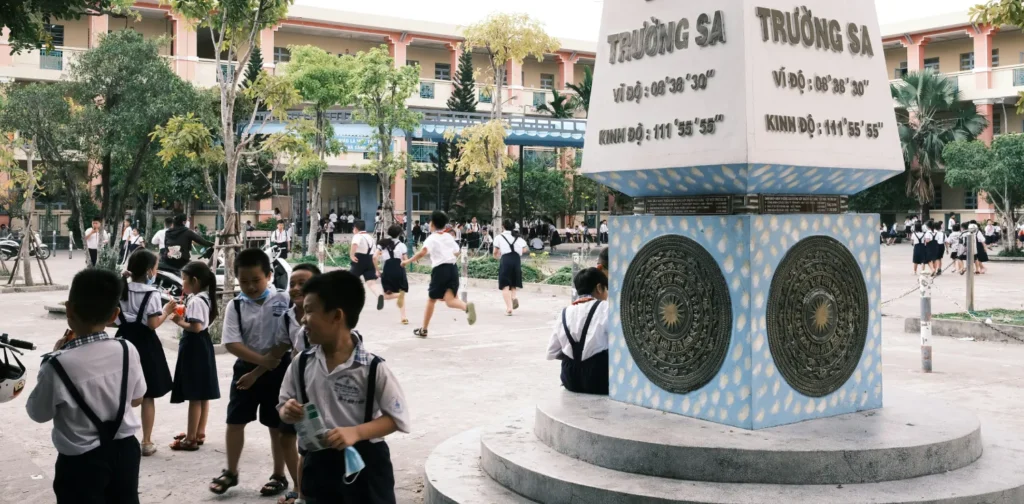
Photo: Trung Nhan Tran on Unsplash
Education is one of the most important elements in accelerating a nation’s development. In doing so, this idea needs support from policy as well as political and whole-of-society commitment. Vietnam has taken a big step to put education at the top of socioeconomic development plans. After the country’s robust investment in education, the result speaks for itself.
Education in Vietnam
In 2012, Vietnam successfully ranked 17th out of 65 countries in its first Programme for International Student Assessment (PISA) test, OECD’s assessment of 15-year-olds’ reading, mathematics, and science knowledge and skills. Vietnam’s rank was only five positions below Finland, which has one of the best education systems globally. In 2016, in a similar test called TIMSS, Vietnam was at the same level as the USA and UK, whose GDP per capita were way above Vietnam’s.
Vietnam’s test achievements may come from the country’s reflection of its long-term vision and commitment to education. Ho Chi Minh, the founding father of Vietnam, once said, “For the sake of ten years’ benefit, we must plant trees. For the sake of a hundred years’ benefit, we must cultivate the people”. This value does not stop in a proverb only, but is also implemented in Vietnam’s real efforts to improve its education system through investment and policy.
Vietnam’s Investment in Education
In recent years, Vietnam has consistently allocated at least 20% of total budget expenditure to education. The country’s investment in education focuses on three crucial aspects: access to pre-school; school infrastructure, especially in cities and rural areas; and pedagogical universities, which are higher education institutions that focus on teaching and education methods.
While all aspects are essential, investing in pre-schools is believed to have long-lasting effects on the country’s education. The government consistently invests in universal pre-school and early childhood care services, which begin even before the child enters pre-school.
Moreover, Vietnam’s attention to the quality of its education workforce is also notable. In 2018, Vietnam’s Ministry of Education and Training released professional standards for teachers and principals of schools and lecturers at pedagogical universities. Additionally, eight pedagogical universities were sponsored by the World Bank to be included in the Enhancing Teacher Education Project (ETEP), with a total investment of around US$ 100 million.
This project successfully built nine training modules for teachers for each grade level (elementary, middle, high school) to meet the professional teaching standards to face the new general curriculum.
Enabling Policy
Strong political commitment is required to make systemic changes. In Vietnam, the commitment aligns with the vision of Vietnam’s Doi Moi in the 1980s, when the labor market shifted towards high-skilled jobs. Thus, education was reprioritized as a basis for social and economic development to support the country’s restoration.
This commitment also relates to Vietnam’s policy of enhancing investment in education. In 2013, Vietnam ratified one of the most significant education legislations in the country’s history: Resolution 29. This regulation has allowed many crucial investments in Vietnam’s education system, which brings education to the core of the country’s socioeconomic development plans.
Whole-of-Society Commitment
In a comparative analysis with several Asian countries, Vietnam’s education system transformation stands out in terms of early childhood focus and supporting cultural factors. From the 65 countries that participated in the PISA test, Vietnam ranks 8th in terms of parental pressure. This shows the high level of parental commitment to their children and the schools; they even willingly contribute as volunteers in the schools.
Vietnam’s journey shows that consistent investments, policy efforts, and supporting cultural factors significantly contribute to improving its education system, which is demonstrated through high test rankings. Participation, commitment, and tangible actions from the government, other stakeholders in the education sector, and parents are central to creating real improvements.
Editor: Nazalea Kusuma & Kresentia Madina
 The Widespread Impacts of Severe Drought in Somalia
  Ensuring Access to Justice for Women and Girls
  The Invisible Infrastructure: What ASEAN’s Carbon Market Needs Most
  Indonesia Ruled to Recognize Chronic Illness as a Disability
  Clean Cooking as a Developmental Multiplier in Africa
  Congo Basin Peatlands Are Releasing Ancient Carbon