

Restoring India’s Waterways Through Canal Rehabilitation Project
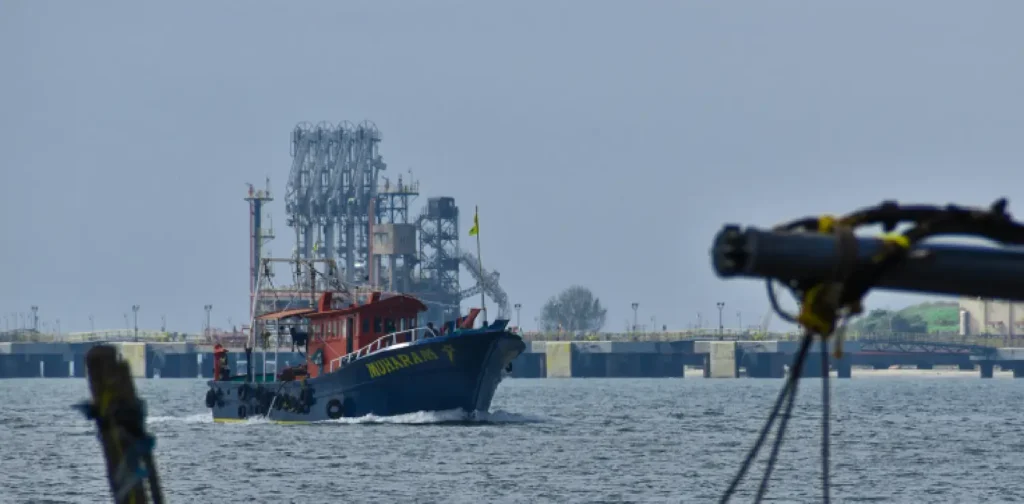
Photo: Goutham Binuraj on Unsplash.
Waterways, such as rivers and canals, are essential to support the social and economic activities in an area. However, in many places, urban development and pollution have slowly eroded their conditions and functions. In Kochi, India, the local government partners with the United Nations Environment Programme in a canal rehabilitation project to restore the city’s waterways.
Canals Amid Urbanization and Pollution
Canals and rivers support a city’s drainage management and transport system. In Kochi, one of India’s major port cities, the waterways were once an essential infrastructure for transporting people and goods, providing a daily water supply, and draining excess water to the sea.
However, the conditions of these canals have long been deteriorating due to poor waste dumping behavior and a lack of maintenance. The Thevara-Perandoor Canal, one of the city’s major canals, is highly polluted with household waste and oil spillage from nearby railway stations. The lack of maintenance and care leads to overgrown vegetation, which becomes a breeding ground for mosquitoes.
Kochi’s rapid urbanization rate also interferes with the flows and dynamics of the canals. Additionally, sea-level rise, extreme rainfall, and other climate-induced events increase the risks of flooding in the city, underscoring the urgency for canal rehabilitation to restore its functions.
Canal Rehabilitation in Kochi
In a new canal rehabilitation project supported by the United Nations Environment Programme (UNEP), the local government of Kochi sets a goal to restore the city’s waterways. The project is part of UNEP’s Generation Restoration Cities initiative, which advances nature-based solutions to address urgent environmental issues in urban areas.
Spanning 11.5 kilometers, the Thevara-Perandoor Canal has long been the subject of canal rehabilitation projects by multiple actors. However, progress often stalled due to minimal public and political support, which resulted in a lack of tangible actions on the ground.
The new project aims to tackle this barrier by raising awareness among residents and officials about the importance of a healthy and clean canal network to support livelihoods and address climate change. One is through drawing, essay-writing competitions, and photo exhibitions that portray the past primes, current conditions, and future visions of the canal.
Furthermore, the Centre for Heritage, Environment and Development, as the project’s implementing actor, has consulted hydrologists, urban planners, and other experts on the rehabilitation approach. Rajan Chedambath, Director of the Centre for Heritage, Environment and Development, highlights a phased approach, starting with pollution reduction and dredging, and gradually moving to the narrowing of the canals.
Healthy, Clean, and Resilient Environment
Urban life moves with infrastructure and the built environment as the foundation. Therefore, ensuring healthy, clean, and resilient urban spaces, like canals and city parks, is essential to support the social and economic wellbeing of urban societies.
“Until a few years back, nobody appreciated the importance of the canals. But the constant flooding and the other issues surrounding the canal mean that people and political leaders now are thinking very seriously about doing something about it,” said Chedambath. “People have realized that the state of the canals directly impacts life everywhere in the city, maybe even its future existence.”
Editor: Nazalea Kusuma

Kresentia Madina
Madina is the Assistant Manager of Stakeholder Engagement at Green Network Asia. She holds a bachelor’s degree in English Studies from Universitas Indonesia. As part of the GNA In-House Team, she supports the organization's multi-stakeholder engagement across international organizations, governments, businesses, civil society, and grassroots communities through digital publications, events, capacity building, and research.
 The Widespread Impacts of Severe Drought in Somalia
  Ensuring Access to Justice for Women and Girls
  The Invisible Infrastructure: What ASEAN’s Carbon Market Needs Most
  Indonesia Ruled to Recognize Chronic Illness as a Disability
  Clean Cooking as a Developmental Multiplier in Africa
  Congo Basin Peatlands Are Releasing Ancient Carbon