

Right to Education in South Africa: How does the BELA bill affect this?
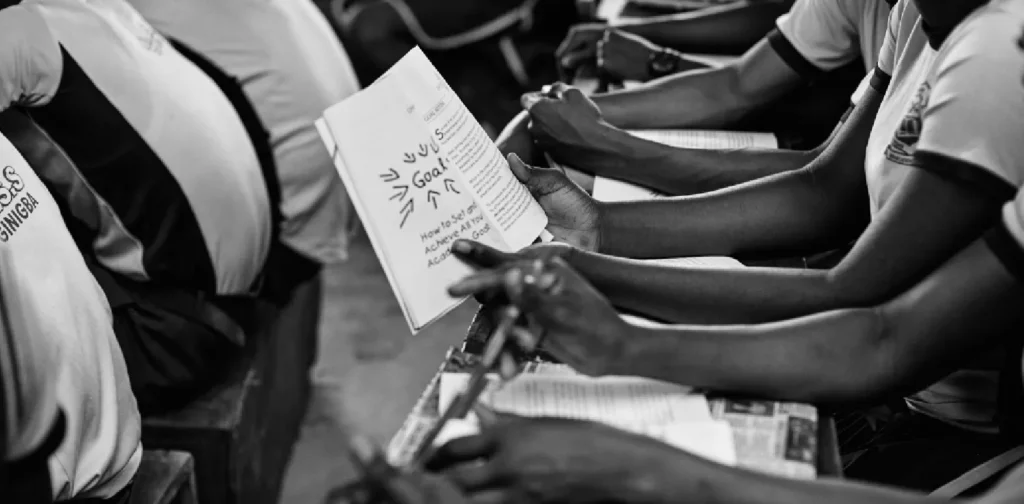
Photo: Emmanuel Ikwuegbu on Unsplash.
Education is an essential tool for addressing poverty and inequality. First and foremost, though, education is included in the Universal Declaration of Human Rights; yet, it remains unattainable for roughly 244 million children and youth worldwide. President Cyril Ramaphosa has signed a new education bill into law in South Africa to strengthen the right to education. How are the responses so far?
Right to Education in South Africa
South Africa’s constitution recognizes the right to education. Since the apartheid ended in 1994, the country saw significant expansion in its early education system, with 92,4% of children attending early education in 2022. However, progress has been less significant in secondary and higher education.
Furthermore, challenges persist in racial disparity in educational attainment. Even though the number of Black people completing secondary education has tripled, from 9.4% in 1996 to 34.7% in 2022, only 9.3% had tertiary education in 2022. The number is significantly smaller than that of the white population (39.8%).
Controversies of the BELA Bill
In September 2024, South Africa’s President Cyril Ramaphosa officially signed the Basic Education Laws Amendment (BELA) Bill into law. President Ramaphosa stated that the signing was an important step towards resolving the longstanding challenges and supporting the right to education in the country.
“It lays a firm foundation for learning from an early age. Grade R, the reception year before Grade 1, will now be compulsory. This will enhance our focus on Early Childhood Development,” said the President. Other notable things include more effective regulation for homeschooling and the ban on corporal punishment.
The new legislation also addresses admission and language aspects of school policy. Under Clause 4 and Clause 5, schools are allowed to develop their admission policy and choose languages of instruction out of the 11 official languages. However, it also grants the National Department of Basic Education the authority to decide on the final outcome, which was previously held by school boards.
While the government seeks to unify the standards across all schools to ensure equality, critics emerged over the concern of erasing children’s ability to speak their mother tongue and denying local communities governance. “The debate centers on whether centralizing control will promote fairness or undermine local decision-making,” wrote Professor Wayne Hugo from the University of KwaZulu-Natal.
Delayed Implementation
In response to the critics, Clauses 4 and 5 are under review, delaying their implementation by three months. This review could result in Clauses 4 and 5 being upheld, changed, or removed. President Ramaphosa called for collaboration from key stakeholders to ensure the right to education for children regardless of their identities.
“For our education system to work for all, we have to work better, smarter, and in a more cooperative manner,” said the President.
Editor: Nazalea Kusuma
Kresentia Madina
Madina is the Assistant Manager of Stakeholder Engagement at Green Network Asia. She holds a bachelor’s degree in English Studies from Universitas Indonesia. As part of the GNA In-House Team, she supports the organization's multi-stakeholder engagement across international organizations, governments, businesses, civil society, and grassroots communities through digital publications, events, capacity building, and research.
 The Warning Signals of Climate Change
  How Land Use and Climate Change Shape the Increasingly Precarious Balance of Global Deadwood Stocks
  The Injustice of Climate Finance: How Climate Change Is Draining Developing Nations
  The Need for One Health in Conservation
  Opportunities and Challenges in Implementing Biodiversity Credits for Biodiversity Financing in Indonesia
  How Climate Change Is Redrawing The Food Map