

Asian Development Bank Unveils New Environmental and Social Framework

Photo: Freepik.
Development projects are essential to improving social, economic, and environmental wellbeing. In practice, frameworks and standards are required to ensure these projects do not turn out to be greenwashing or backfire and end up causing harm. The Asian Development Bank has renewed its Environmental and Social Framework (ESF) for borrowers and clients in an effort to adapt to current trends and future needs.
Responsible Development Projects
Financing is a crucial catalyst for development projects, and multilateral development banks play a significant role in providing it. More than that, financial service institutions have a huge responsibility to ensure that the projects they are funding will not cause further harm to people and the planet.
In 2009, the Asian Development Bank (ADB) approved the Safeguard Policy Statement as a guide for the bank, its borrowers, and clients in identifying, assessing, and managing environmental and social risks and impacts in its projects. After 14 years of implementation, the bank approved an update to the policy to provide more robust protection and more effective environmental and social assessment management.
Updates on Environmental and Social Framework
ADB’s Environmental and Social Framework (ESF) was developed through four years of consultation with key stakeholders, including civil society organizations and private sector clients. Overall, the policy update aims to balance between aligning with peer institutions’ approaches and following international good practices and current issues.
Several notable new standards include labor and community health and safety, stakeholder engagement, climate change, and biodiversity. In particular, the labor and community health and safety standards aim to protect children, workers, and vulnerable groups against all forms of sexual abuse. Meanwhile, stakeholder engagement standards aim to foster meaningful engagement, clear disclosure, and more effective grievance mechanisms.
Furthermore, the proposed ESF will require ADB projects to implement a new integrated approach to risk classification and adaptive management to enhance efficiency and reduce costs, with consideration of country-specific contexts. The new policy update will also give clearer descriptions and distinctions of the environmental and social responsibilities, goals, and aspirations of the ADB and borrowers and clients.
Multi-stakeholder Participation
The Environmental and Social Framework will begin to roll out in January 2025 and become effective in January 2026. ADB will also carry out capacity-building programs and other necessary resources to equip borrowers and clients with the support required to implement the new policy.
Ultimately, this framework underscores the significant importance of multi-stakeholder participation and how financial service institutions can contribute to sustainable development. ADB President Masatsugu Asakawa said, “Clearer standards and broader protections are critical, and this framework represents a significant step forward in our efforts to ensure that development is inclusive, sustainable, and beneficial to all.”
Read the full document here.
Editor: Nazalea Kusuma

Kresentia Madina
Madina is the Assistant Manager of Stakeholder Engagement at Green Network Asia. She holds a bachelor’s degree in English Studies from Universitas Indonesia. As part of the GNA In-House Team, she supports the organization's multi-stakeholder engagement across international organizations, governments, businesses, civil society, and grassroots communities through digital publications, events, capacity building, and research.
 The Invisible Infrastructure: What ASEAN’s Carbon Market Needs Most
  Indonesia Ruled to Recognize Chronic Illness as a Disability
  Clean Cooking as a Developmental Multiplier in Africa
  Congo Basin Peatlands Are Releasing Ancient Carbon
 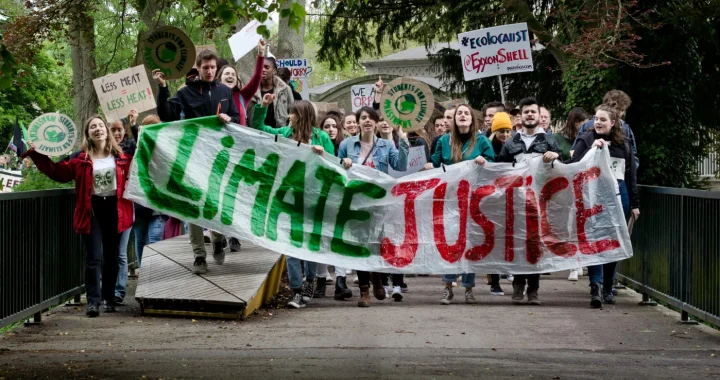 From Anxiety to Action: How Youth Climate Activism Is Evolving
  India’s Supreme Court Declared Menstrual Health and Hygiene as Fundamental Rights