

Attempting Data Center Circularity Through Waste Heat Recovery
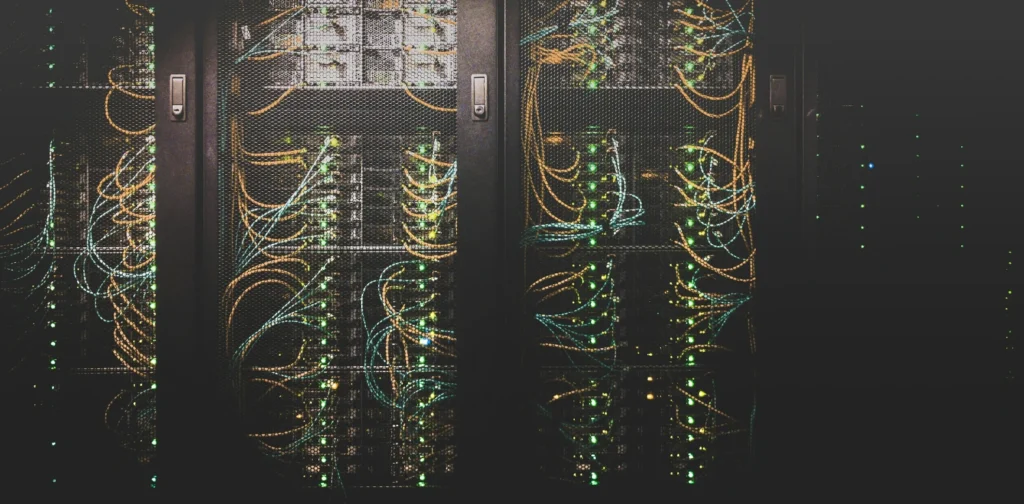
Photo: Taylor Vick on Unsplash.
Every time we ask ChatGPT a question or stream a movie online, we are slowly and collectively using energy that contributes to adverse environmental impacts. In this light, research has started exploring innovative solutions to reduce the harm through a more circular approach. Nordic countries like Finland and Sweden, for instance, are recovering waste heat from data centers and redirecting it to heat buildings.
The Environmental Impacts of Data Centers
Data centers are the indispensable force behind digital technologies. These giant facilities house the infrastructure that provides the connectivity we rely on every day. In the United States alone, there are more than 4,000 data centers, which account for 4% of the country’s total electricity usage.
These centers use vast amounts of resources, particularly energy and water. For instance, a single search on ChatGPT requires ten times the energy usage as a regular Google search. Estimates suggest that ChatGPT uses as much as 40 million kilowatts of energy per day, enough to charge millions of phones or power skyscrapers for over a year. In most instances, the energy comes primarily from fossil fuels, which significantly contribute to greenhouse gas emissions that drive climate change. Then, the resulting heat from the computing process is offset by water.
How much? Well, a single data center can use around 2 megawatts of electricity and millions of gallons of water to cool down the systems. The United States uses about 17 billion gallons of water just for its data center cooling. With the rise of Artificial Intelligence, the consumption and impact have just begun to increase and are only expected to continue growing exponentially. Projections show that within the next few years, data centers could consume as much water as 10 million people do.
Waste Heat Recovery in the Nordic
In countries like Finland and Sweden, the technology industry is partnering with the government to find solutions toward circularity. One way is to use the waste heat generated by these massive data centers to heat homes and commercial buildings in the surrounding areas. This is also known as waste heat recovery.
Cities are tapping into this mechanism. The heating of about two-thirds of the town of Mantsala in Finland is powered by this newly emerging heat recovery technology, with other similar projects already in the works. In Stockholm, a partnership between the city of Stockholm, the power grid operators, and the heating and cooling company Stockholm Data Parks aims to utilize the valuable resource that is waste heat and have data centers be part of the circular energy system for the city.
As major players in the data center boom, tech giants have also contributed to this research and development. In 2022, Microsoft announced a project to build a “data center region” in Southern Finland. Supposedly, it would run on “clean energy”—producing no carbon emissions—and be able to provide heating to some of the largest cities in the country. Google has also announced a project in that region to recover the waste heat from their data centers and redirect it for other uses, such as heating other buildings.
In Sweden, a company is launching an “ecosystem site”, which brings together data centers, storage capacities, and heat recovery technology under one site. It will be integrated into its host city’s district heating system, thus improving sustainability and driving down costs.
A Circular Economy in the Age of AI
Recent years see a great buzz about the rise of AI and its use in everyday life. In places like the US, data centers are being marketed as an advantage for local economies despite their damaging environmental and social impacts. Some states even offer tax incentives for the construction of more centers.
The extensive training required to build these AI models and the increasing scale of their usage underscore growing concerns about the amount of energy required to maintain them. Thus, it is essential now, more than ever, to close the loop on data center resource use. Key stakeholders must continue to find ways to reduce the resource usage of data centers. Pushing for carbon-conscious AI development, integrating renewable energy for energy generation, and establishing strict regulations and policies are some encouraging steps to safeguard the planet and our collective future alongside technological advancement.
Editor: Nazalea Kusuma & Kresentia Madina
 India’s Supreme Court Declared Menstrual Health and Hygiene as Fundamental Rights
  Impacts of E-waste Pollution on Animals and Human Health
  Africa’s Solar Energy Surge: Why 2025 Was a Breakthrough Year
  Agrihoods: Integrating Farms and Urban Neighborhoods into Sustainable Communities
  Women in Waste Management: Asia’s Circularity Runs on Women. Its Policies Still Don’t
  Embracing the Business Value of Sustainability